
Smart Move-Up Guide for North Shore Homeowners
Move-Up Buyers
By Kathleen Militello
The Smart Move-Up Playbook for North Shore Homeowners
How to use the equity you’ve quietly built since 2020 to upgrade into a bigger, better home in Essex County—without feeling like you’ve stepped onto a financial roller coaster you didn’t sign up for.
Chapter One: The Sunday Night Realization
On a Sunday night in Beverly, the dishwasher hummed, the dog paced, and the house felt two sizes too small. Emma stepped over a Lego village in the hallway, nudged a backpack off the dining chair, and caught her husband Mark’s eye across the table. No one had to say it out loud: they had outgrown the starter colonial they bought in 2014.
They loved their street, their neighbors, the ten-minute drive to the beach. But the kids were bigger, the home office was a corner of the bedroom, and every holiday meant folding tables and strategic elbow placement. The question wasn’t if they should move up. It was whether they could do it without wrecking their finances—or their nerves—in a still-competitive Essex County real estate market.
How Much Equity Are North Shore Homeowners Sitting On?
Since 2020, home values across the North Shore of Boston have climbed steadily, driven by limited inventory, coastal demand, and a shift toward suburban living. While exact numbers vary by town and street, many homeowners from Lynn to Newburyport have seen double-digit percentage gains in their property values over the last several years, according to regional reporting from outlets like Northshore Magazine and national portals such as Realtor.com and Forbes that track suburban equity growth trends.
For a practical example: a home purchased around $550,000 in 2018–2019 in parts of Salem, Peabody, or Beverly may now appraise closer to the mid-$700,000s or higher, depending on condition and location. That difference—after subtracting your remaining mortgage balance and selling costs—is your usable equity. For many move-up buyers North Shore MA wide, that equity is now six figures. If you live on the North Shore of Boston, that is worth noting because it can become the down payment, closing costs, and cushion that make upgrading your home Massachusetts feel not only possible, but strategic. You can also use it to explore North Shore real estate opportunities that fit your next chapter.
💡 Pro Tip: Before you browse listings, ask Kathleen and her preferred lender to run a realistic equity estimate and net sheet. Knowing your true numbers early will shape every decision that follows.

A clear picture of your equity turns vague dreams of more space into concrete options.
Quietly, there’s also a newer path emerging for North Shore move-up buyers who want to step into their next home before they’ve sold the one they’re in now. It’s called Cash2Keys, a program through AnnieMac that’s designed specifically for owners in strong-but-shifting markets like Essex County—one that can rearrange the usual “sell first, then buy” order in a way that feels surprisingly calm.
If the idea of exploring a “buy first, sell later” option makes your shoulders drop a little, this is a conversation worth having. Call Kathleen Militello at (978) 500-1480 or visit EssexCountyHomesforSale.com to walk through how Cash2Keys might look with your actual numbers and goals, and to search available properties that match your wish list.
The Sequencing Question: Sell-Then-Buy vs. Buy-Then-Sell
Once Emma and Mark understood they had roughly $350,000 in equity, the next decision was sequencing. Do they sell first, then buy? Or buy first, then sell? Each path has trade-offs, especially in Essex County real estate 2026 conditions, where desirable homes still move quickly but buyers are gaining a bit more breathing room than in the frenzy years of 2021–2022.
Option 1: Sell, Then Buy
Upside: You know exactly how much cash you have. Your offer on the next home can be stronger, with a larger down payment and possibly no home-sale contingency.
Stress Point: You may need temporary housing if you don’t find your next place quickly—especially if your current home sells in a week, which is still common for well-priced North Shore listings.
This path works best if you’re comfortable with an interim rental, staying with family, or negotiating a rent-back period where you remain in your sold home for a few weeks or months while you shop.
Option 2: Buy, Then Sell
Upside: You move once. You can be choosy and wait for the right combination of space, school district, and coastal access without a ticking clock.
Stress Point: For a short period, you may carry two mortgages or rely on bridge financing. This requires strong income, excellent credit, and a realistic sense of how quickly your current home will sell.
📌 Key Takeaway: The “right” sequence is less about rules and more about your risk tolerance, cash reserves, and how specific your next-home wish list is. In a still-lean inventory environment, many North Shore move-up buyers choose to secure the next home first—then execute a fast, well-prepared sale. You can always view Essex County listings in advance to understand what your options look like.
Bridge Financing Options: Connecting the Two Homes
For homeowners who want to buy before they sell, bridge financing can act like a temporary plank between two solid docks. It’s not designed as a long-term solution, but it can give you just enough time to move strategically instead of reactively.
Traditional Bridge Loan: A short-term loan secured by your current home that provides funds for the down payment on your next home. These often come with higher interest rates and fees, as outlined by sources like Investopedia and Bankrate, but they can be effective if you’re highly confident your current home will sell quickly in the North Shore market.
Home Equity Loan: A lump-sum loan based on the equity in your existing property. This can serve as your down payment on the new home. Once you sell, you pay off the equity loan and your old mortgage together at closing.
HELOC (Home Equity Line of Credit): More flexible than a loan, a HELOC functions like a revolving line of credit against your equity. You draw only what you need for deposits, inspections, or closing costs, then pay it off when your current home sells.
Sale-Leaseback or Extended Rent-Back: In some cases, you can sell your current home to a buyer who allows you to rent it back for a defined period. This isn’t a loan at all, but it functions as a time bridge, giving you cash in hand and a roof over your head while you shop.
Tucked alongside these traditional tools is a little-known option that can feel almost fictional until you see it modeled with your own numbers: a program called Cash2Keys through AnnieMac. For the right North Shore move-up buyer, it can quietly flip the script—letting you become a buyer first and a seller second, without trying to thread the needle of two closings on the same Thursday.
The mechanics are worth a real conversation, not a paragraph summary. If the idea of buying your next Essex County home before you sell your current one makes your shoulders drop an inch, reach out to Kathleen to learn whether Cash2Keys could be the quiet advantage behind your next move and to find your next home with confidence.
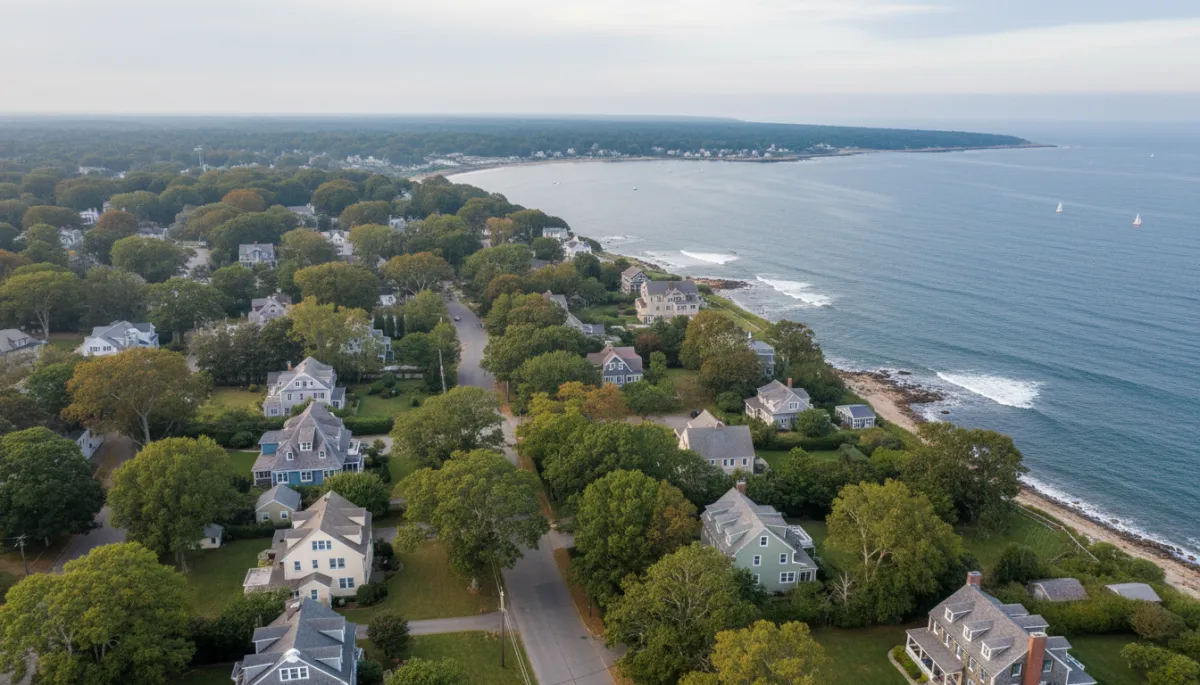
Financing choices are easier when you understand how quickly homes like yours sell nearby.
⚠️ Warning: Bridge financing magnifies both opportunity and risk. Before signing, run worst-case scenarios: What if your home takes 60–90 days to sell? What if you need a price adjustment? A seasoned local lender and agent can model these outcomes with you.
What to Look For in Your Next North Shore Home
Move-up buyers North Shore MA wide tend to be very clear on what isn’t working in their current home. The key is translating that frustration into a focused, future-proof wish list that reflects how you actually live along the coast and commuter corridors of Essex County.
1. Space That Works, Not Just Square Footage
A true home office with a door that closes (or two, if both partners work from home).
A flexible bonus room that can shift from playroom to teen lounge to guest space over the next decade.
Storage that respects New England life—mudrooms, basement space, and closets that can handle winter gear, sports equipment, and beach chairs.

Thoughtful layouts often matter more than sheer size when you upsize on the North Shore.
2. School District and Educational Options
Many move-up buyers are motivated by school years that suddenly appear on the horizon. Whether you’re considering public schools in towns like Hamilton-Wenham, Manchester-by-the-Sea, or North Reading, or you’re weighing private and parochial options, spend time with school reports, commute patterns to after-school activities, and the real distance between home and the fields, rinks, and arts programs you’ll actually use.
3. Commute and Hybrid Work Realities
In 2026, many professionals are still in hybrid arrangements—two or three days in Boston, the rest at home. When evaluating commute, consider:
Proximity to commuter rail stations in towns like Salem, Beverly, and Newburyport.
Realistic drive times on Route 128 and I-95 during the days and hours you’ll actually travel.
Whether your new home has quiet spaces suitable for video calls on non-commute days.
4. Coastal Access and Lifestyle
One of the defining questions on the North Shore is how close you want to be to the water—and what you’re willing to trade for it. Walking distance to the beach in Marblehead or Manchester may mean a smaller lot or older systems. A bit farther inland in Danvers or Middleton might deliver more land, newer construction, and quieter streets. Clarify which matters more for this next chapter: daily ocean walks, a yard big enough for a net and fire pit, or both at different scales.

The best move-up purchase balances lifestyle upgrades with financial comfort for the long haul.
Timing the Essex County Market in 2026
National and regional data for 2026 suggest a market that still favors sellers but is more measured than the peak pandemic years. In Essex County, inventory remains tight, yet buyers are seeing slightly longer days on market and more room for negotiation in certain segments—particularly at higher price points or for homes that need significant updates. Mortgage rates hovering in the mid-6% to 7% range have cooled some speculative demand but have not eliminated competition for well-located, move-in-ready homes.
For move-up buyers, that combination can be surprisingly favorable. You may still sell your existing home quickly and at a strong price, while having a slightly more navigable landscape as a buyer—especially if you’re moving from a smaller, highly sought-after price point into a slightly less crowded tier. This mirrors patterns seen in other strong suburban counties tracked by Redfin and Zillow, where mid-range and luxury homes remain active but not frenzied. It’s an ideal time to explore North Shore real estate and map out your options.

Planning around likely 2026 market conditions helps you move once, calmly, and on purpose.
💡 Pro Tip: Instead of trying to “time the top,” focus on timing your life. If the next five to ten years clearly call for more space, better layout, or a different school district, that horizon is often more important than squeezing every last dollar out of market cycles.
Putting It All Together: Your Personal Move-Up Playbook
For Emma and Mark, the path eventually looked like this: a detailed equity review, a conversation with their lender about a short-term HELOC, a clear list of “must-haves” and “nice-to-haves,” and a decision to buy first using a strong pre-approval—then list their starter home in turnkey condition. Their story is fictional, but the steps are very real and repeatable:
Quantify your equity with up-to-date market data and a realistic net sheet.
Decide whether you are a sell-then-buy or buy-then-sell household based on risk tolerance, cash reserves, and life logistics.
Explore bridge financing options—bridge loan, home equity loan, HELOC, or rent-back—and run best- and worst-case timelines.
Build a North Shore–specific wish list that prioritizes function, schools, commute, and coastal lifestyle over abstract square footage.
Align your move with likely Essex County real estate 2026 conditions—but anchor your decisions in the next decade of your life, not the next quarter’s headlines.
A thoughtful move-up isn’t about chasing the biggest house you can technically afford. It’s about using the equity you’ve earned to right-size your life—more breathing room, better daily rhythms, and a home that fits the people you’re becoming. Local professionals, from lenders to planners to agents like Kathleen Militello, can help you translate today’s numbers into a plan that feels calm, deliberate, and genuinely sustainable.
Your current home has done its job. The question now is whether it’s time for a different one to carry you through the next season—one with enough space for late-night homework at the kitchen island, early-morning coffee on a quieter porch, and a front door that opens onto the North Shore life you’ve been imagining for years. When you’re ready, you can browse North Shore move-up homes and see what’s possible.
Frequently Asked Questions About Moving Up on the North Shore
How much equity do I really need to move up comfortably?
There’s no single magic number, but most North Shore move-up buyers feel comfortable when they have enough equity to cover a 20% down payment on the next home, plus closing costs, plus a cushion for moving expenses and minor updates. In practice, that often means at least six figures in usable equity, especially if you’re moving from a starter colonial in Salem, Peabody, or Beverly into a larger home in a strong school district.
The key is not just the total amount, but how it translates into monthly comfort. A good local lender will model different price points and down payment scenarios so you can see, in black and white, what your life looks like at each level—before you fall in love with a house that stretches you too thin.
💡 Pro Tip: Ask your lender for three scenarios: conservative, realistic, and “reach.” Seeing the monthly payment range often clarifies what “comfortable” really means for your household.
Should we sell first or buy first in the 2026 Essex County market?
In 2026, Essex County is in that in-between phase: still low on inventory, but calmer than the peak pandemic frenzy. That means both paths—sell-then-buy and buy-then-sell—are viable, but which one fits you comes down to three things: your risk tolerance, your cash reserves, and how specific your wish list is.
If the idea of carrying two mortgages, even for a short time, makes your stomach flip, a sell-first strategy with a rent-back or short-term rental may let you breathe easier. If you’re targeting a very particular pocket—say, a walkable street in Manchester-by-the-Sea or a certain elementary school in Hamilton-Wenham—then buying first with a strong pre-approval and a clear sale plan for your current home can give you the precision you need without constant clock-watching.
📌 Key Takeaway: There is no morally superior path. Choose the sequence that lets you sleep at night and still say “yes” when the right house appears.
Is bridge financing a smart idea, or is it too risky?
Bridge tools—whether a traditional bridge loan, home equity loan, or HELOC—are neither heroes nor villains. They’re simply leverage, and leverage amplifies whatever situation you’re in. Used thoughtfully, they can give you the breathing room to buy the right North Shore home instead of the only one available the week your condo sells. Used carelessly, they can leave you feeling overextended if your home takes longer to sell or needs a price adjustment.
A good litmus test: if your agent can show you recent, hyper-local data that homes like yours in your price band and town are consistently selling within 30 days at or near list price, and your lender has run 60–90 day worst-case scenarios that still work, bridge financing can be a strategic tool. If either of those pieces feels shaky, it may be wiser to tighten the plan or adjust your timing.
⚠️ Warning: Never sign a bridge loan agreement you don’t fully understand. Insist on plain-language explanations of payments, timelines, and exit strategies before you commit.
Are we “too late” to benefit from the Essex County market in 2026?
Many North Shore homeowners quietly worry they “missed the boat” by not moving in 2021 or 2022. But markets are not one-time trains; they’re more like tides. In 2026, prices have largely stabilized at a higher plateau, and while the days of 20 offers on day one are mostly behind us, the underlying drivers—limited land, coastal demand, strong schools—are still very much in play.
For move-up buyers, that can actually be an advantage. You’re likely selling into a market that still respects your home’s value while buying in an environment with a bit more negotiating room and fewer bidding-war theatrics. The real question isn’t, “Did I time this perfectly?” It’s, “Does moving now support the next decade of our lives?” When the answer to that is yes, you are not late. You are right on time.
“Trying to outsmart the market is a full-time job. Designing a life that fits you is a better use of your energy.”
What should we prioritize when choosing a move-up home on the North Shore?
Think of your next home as the setting for the next chapter of your story, not just a bigger box with more bedrooms. On the North Shore, that means getting brutally honest about how you actually live: hybrid work schedules, school and activity runs, winter gear explosions, beach days, aging parents, maybe even boomerang kids down the line.
In practice, most move-up buyers are happiest when they prioritize:
Function over flash—a floor plan that works on a random Tuesday in February, not just in listing photos.
Schools and commute—the daily routes you’ll actually drive and the districts you truly care about.
Coastal lifestyle—your personal mix of ocean access, yard space, and neighborhood feel.
Granite can be swapped out. A three-season porch can be added. But a sunlit kitchen where everyone lands after school, a quiet office that makes hybrid work bearable, or a 10-minute drive to the beach you actually visit? Those are the details that make a house feel like it was worth the move.
Final Thoughts
At some point, every beloved home becomes a stepping stone. The walls that once felt cozy start to close in, the “temporary” office in the bedroom becomes a permanent eyesore, and the dining room table doubles as a homework station, craft zone, and tax-prep desk. When that happens, it’s not a failure of gratitude; it’s a quiet signal that your life has grown—and your surroundings are ready to catch up.
Moving up on the North Shore in 2026 doesn’t have to feel like a high-wire act with no net. With a clear view of your equity, a thoughtful plan for sequencing, a sober look at financing options, and a wish list rooted in how you actually live, you can trade chaos for clarity. The goal isn’t perfection; it’s alignment—between your home, your money, and the future you’re building in this stretch of coastline you’ve chosen on purpose.
The next step doesn’t have to be dramatic. It might be as simple as emailing a local agent for an equity review, running numbers with a lender, or driving through a neighborhood you’ve always been curious about at school-pickup time. Those small, concrete actions are how “someday” quietly turns into a set of keys in your hand, a new set of memories waiting to be made, and a front door that finally fits the size of the life you’re living on the North Shore. When you’re ready, you can view Essex County listings and take the first step toward your next home.


