
North Shore History: Sea, Stone, and Story
North Shore Massachusetts history, coastal New England history, Boston North Shore heritage
Tides of Time: The Story of Massachusetts’ North Shore
On a raw March evening in 1692, a crowd pressed against the timbered walls of Salem’s meetinghouse, breath frosting in the air, lanterns sputtering in the wind off the harbor. Inside, a young servant girl shivered beneath the gaze of magistrates as neighbors whispered accusations of witchcraft. Outside, the masts of trading ships creaked at their moorings on what is now Derby Street, the same tide that carried molasses and fish now carrying fear. This is where North Shore Massachusetts history tightens into a single, breathless moment—sea, superstition, and survival bound together.
Salem: Colonial Crossroads and the Shadow of 1692
A Port is Born on Naumkeag Waters
Long before English sails appeared, the Naumkeag people fished these waters and walked the salt marshes of what would become Salem. In 1626, Roger Conant led a small band of settlers here, seeking calmer ground after tensions in Cape Ann. By 1629, the Massachusetts Bay Company recognized the harbor’s promise, and Salem—named for the Hebrew word “shalom,” or peace—became one of the earliest permanent English settlements in New England, predating Boston’s founding in 1630.
Imagine a winter morning in 1635. John and Mary Hibbins step out of their timber-frame house near what is now Essex Street, the ground frozen, the air thick with woodsmoke. Their children trail behind as John shoulders a barrel of dried cod bound for a waiting shallop at the waterfront. The settlement is small—rough houses, a meetinghouse, a few muddy lanes—but the harbor is lively. Fishermen call to one another, and a ship from England rides at anchor, its hold carrying cloth, iron goods, and news from across the Atlantic. For families like the Hibbins, survival depends on the sea, the soil, and a fragile web of trust with neighbors and Native people.
Salem Witch Trials: A Year that Echoes Through Centuries
By 1692, Salem Village (present-day Danvers) and Salem Town were tense communities grappling with war on the Maine frontier, political uncertainty after the revocation of the Massachusetts charter in 1684, and deep religious anxiety. When a group of girls, including Abigail Williams and Betty Parris, began to convulse and cry out, local ministers and magistrates saw the Devil’s hand. Over the course of that year, more than 200 people were accused and 20 were executed, most hanged at Gallows Hill or Proctor’s Ledge.
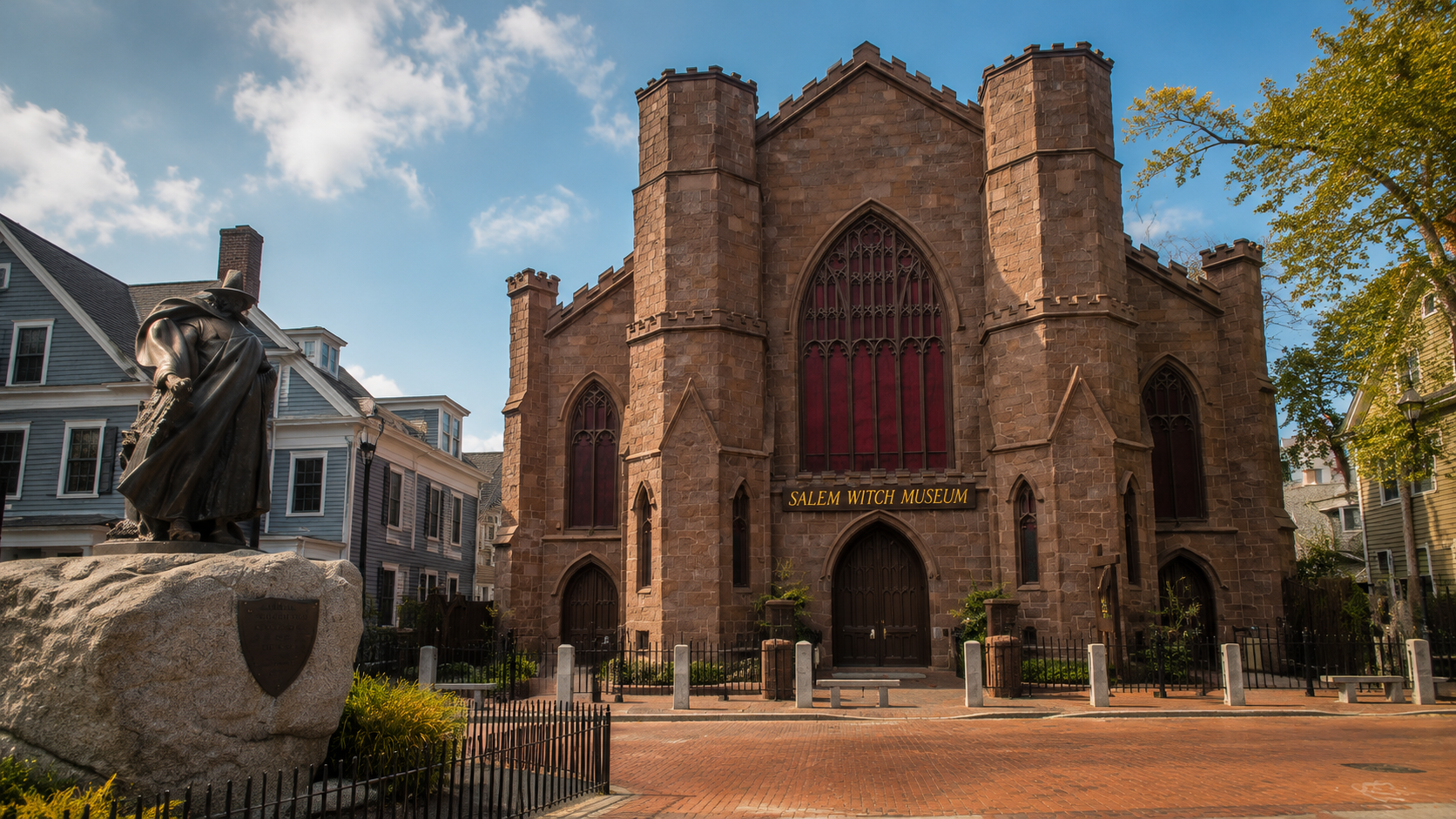
The records of the trials—preserved in court documents and sermons—give us unnervingly detailed glimpses into 17th-century life: property disputes, family rivalries, and the language of Puritan faith. Today, visitors trace this history along Washington Street and Charter Street, where the Old Burying Point Cemetery dates to 1637. Institutions like the Salem Witch Museum interpret the trials, while memorials near Liberty Street honor the names of those condemned. Salem’s story is more than witchcraft, but 1692 remains a stark reminder of how fear can overtake a community.
A Coast of Sails: Maritime Heritage and the Age of Schooners
Fishing Fleets and the Grand Banks
From the 17th century onward, North Shore harbors were tied to the cold, rich waters of the Grand Banks off Newfoundland. Crews from Salem, Marblehead, and Gloucester salted and dried cod on shore, then shipped it to Europe, the Caribbean, and South America. This trade underwrote everything from fine houses along Salem’s Chestnut Street to modest cottages in fishing villages along Cape Ann. The region’s Massachusetts maritime heritage is written in ledgers listing barrels of cod and in weathered headstones honoring those “lost at sea.”
Picture a 19th-century Gloucester fishing captain, Samuel Carver, standing on the deck of his two-masted schooner at dawn. The year is 1875; the harbor is already stirring. Dozens of schooners crowd the inner harbor off Rogers Street and Stacy Boulevard. The air smells of pitch, salt, and coal smoke. Samuel studies the sky, thinking of the voyage ahead to the Grand Banks. His crew—many of them recent immigrants from Portugal and Nova Scotia—haul lines and stow barrels. At home on Prospect Street, his wife has lit a candle in the window, a small flame that will burn until his return or the news that he won’t. Families across the North Shore lived by such rhythms: departures at first light, anxious waits, and the boom of cannon or church bells when a fleet returned safely.
Gloucester: America’s Oldest Fishing Port
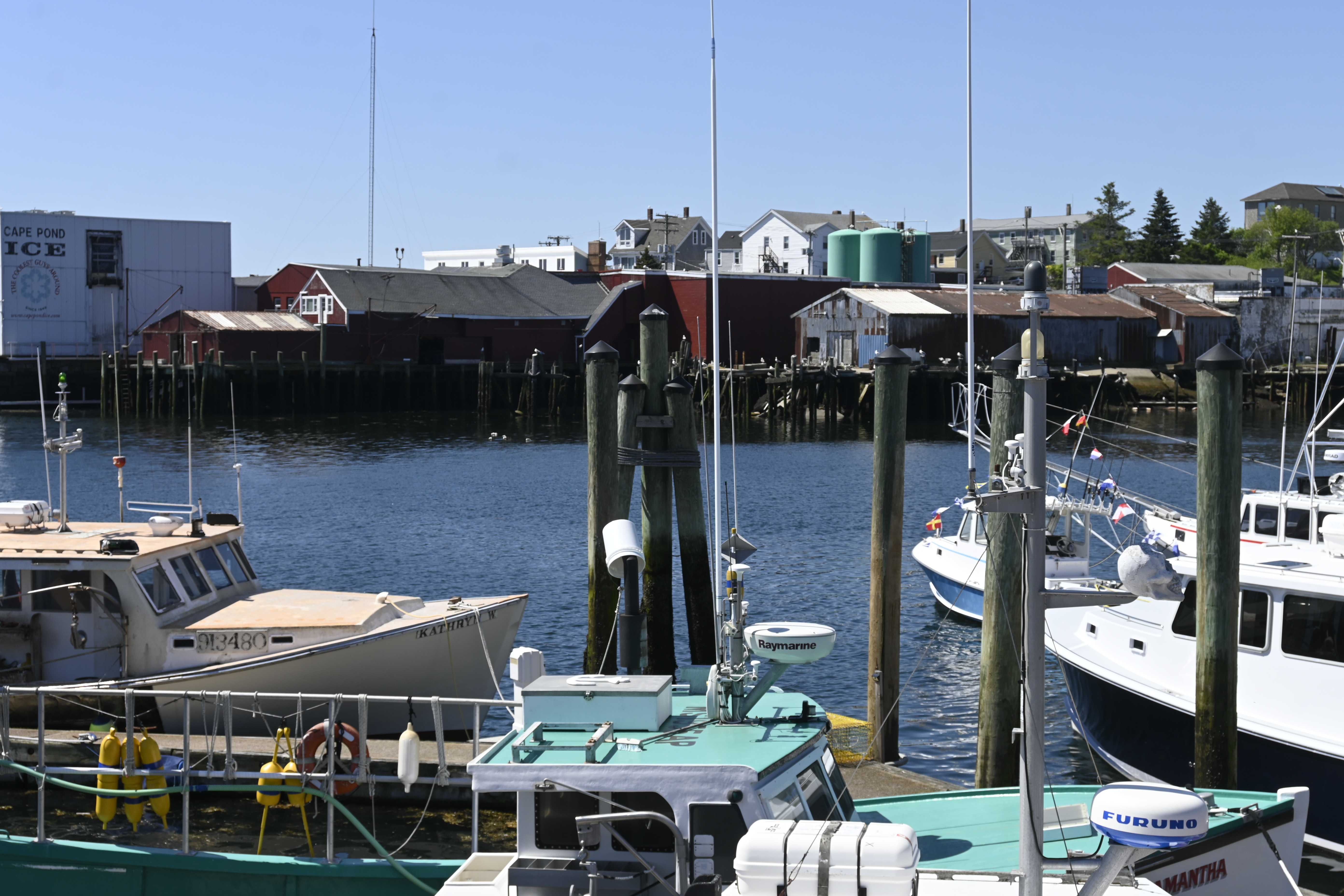
Gloucester’s claim as America’s oldest fishing port reaches back to 1623, when English fishermen established a seasonal station at Stage Fort, now Stage Fort Park. By the 19th century, Gloucester had become one of the busiest fishing ports on the Atlantic, sending hundreds of schooners to the Banks each year. Between the 1830s and early 1900s, thousands of Gloucester fishermen were lost at sea, a sacrifice commemorated by the “Man at the Wheel” statue on Western Avenue, erected in 1925 for the city’s 300th anniversary.
Today, Gloucester fishing history is preserved in museums, memorials, and working docks where modern vessels unload their catch. The story is not only one of tragedy but of innovation—faster schooner designs, ice-cooled holds, and later steam and diesel-powered boats. Organizations such as the Gloucester maritime history collections and local archives help document this evolution from handlines to high-tech sonar.
Gloucester’s harbor still bears the working imprint of four centuries at sea.
Marblehead and the Fight for Independence
“Birthplace of the American Navy”
Marblehead’s narrow streets and granite wharves speak quietly of revolution. In the 18th century it was one of the leading fishing ports in British North America, sending fleets to the Grand Banks and beyond. When tensions with Britain escalated, Marblehead’s mariners and merchants threw their weight behind the Patriot cause. In 1775 and 1776, General George Washington relied on Colonel John Glover’s Marblehead Regiment—experienced sailors and fishermen—to ferry troops across rivers and icy waters, most famously during the crossing of the Delaware in December 1776.
Marblehead is sometimes called the “birthplace of the American Navy” because of vessels like the Hannah, commissioned in 1775 as one of the first armed ships of the Continental forces. Privateers based out of Marblehead and neighboring ports harried British shipping, blurring the line between commerce and combat. Walking today along Washington Street, Front Street, and the crooked lanes above the harbor, you can still see houses from the 1700s that belonged to captains, merchants, and seamen who risked everything on the outcome of the Revolution.
Summer on the Shore: Gilded Age Escapes and Grand Estates
Bostonians Discover the “Gold Coast”
By the late 19th century, industrial wealth in Boston was reshaping the coastline from Swampscott through Manchester-by-the-Sea, Beverly, and Magnolia. Where fishermen’s cottages and small farms once dominated, lavish summer estates rose on rocky promontories. The North Shore Gilded Age brought shingled “cottages” with sweeping verandas, carriage houses, manicured lawns, and private beaches—seasonal playgrounds for families seeking sea breezes and distance from the city’s heat and smoke.
Picture a July afternoon in 1898. On a bluff in Manchester-by-the-Sea, a Boston banker’s daughter named Eleanor steps out onto a wide porch overlooking the Atlantic. Her family’s summer house, with its turrets and deep eaves, catches the ocean wind. Below, carriages rattle along Summer Street while guests in white linen stroll toward Singing Beach, its famously squeaking sand warm underfoot. Eleanor’s world is filled with tennis matches, orchestra concerts at seaside hotels, and excursions by steam train from Boston’s North Station. Yet even here, the rhythms of older North Shore Massachusetts history remain: lobstermen haul traps off the rocky points, and local farmers deliver milk and produce to the back door of the estate’s kitchen.
Estates, Street Names, and Surviving Landmarks
Many of the grandest estates have been subdivided or lost, but traces remain in street names, stone gateposts, and a few preserved properties. In Beverly, the area once known as Beverly Farms and Prides Crossing became a byword for upper-class summer society. The Shingle Style architecture popularized here influenced coastal design nationwide. Today, as you drive along Route 127 from Beverly to Gloucester, glimpses of long drives, stone walls, and sweeping lawns hint at this era of summer privilege layered atop older fishing and farming communities.
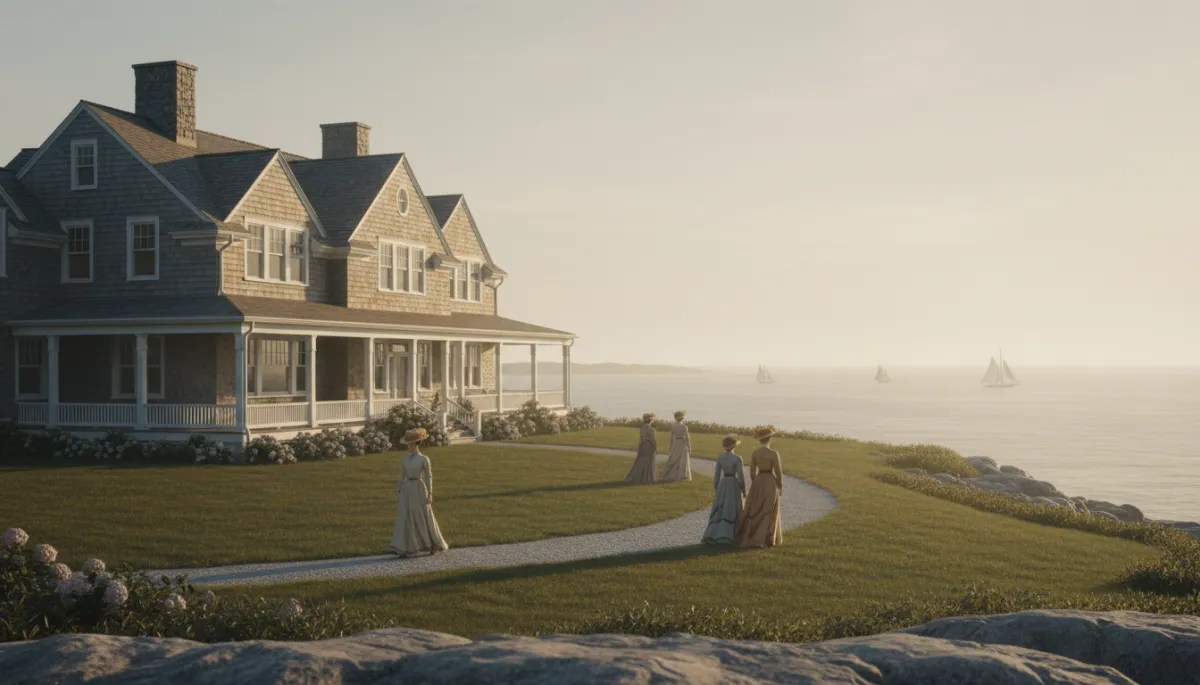
Gilded Age estates layered new summer rituals onto centuries-old working shores.
Rockport: From Granite Quarries to Artists’ Colony
Stone, Salt Air, and the Sound of Hammers
At the tip of Cape Ann, Rockport once rang with the clatter of granite quarrying. In the 19th century, its stone paved streets and built seawalls across the Northeast. Lanes like Granite Street recall this era, when derricks and rail lines carried massive blocks from inland quarries to waiting schooners in Sandy Bay. Quarry work was dangerous and physically demanding, and many families balanced it with fishing and small-scale farming to make ends meet.
Painters, Photographers, and the Lure of Motif No. 1
By the late 19th and early 20th centuries, Rockport’s quarries began to quiet, and another industry took root: art. The town’s picturesque harbor, rocky shoreline, and weathered fish shacks drew painters, photographers, and writers. The red fishing shack known as Motif No. 1, rebuilt after the 1978 blizzard, became one of the most painted buildings in America. Rockport’s transformation into an artists’ colony mirrored a broader North Shore trend—from purely working harbors to mixed communities where tourism, the arts, and heritage travel now play important roles.
Rockport’s working waterfront inspired generations of artists and photographers.
Ipswich and Essex: First Period Houses and Shipwrights’ Legacy
Ipswich: One of America’s Oldest Towns
Settled in 1633, Ipswich is often cited as having more intact First Period houses (built roughly between 1625 and 1725) than any other town in the United States. Along High Street, County Road, and the streets climbing Town Hill, you can see steep-roofed timber-frame homes with central chimneys and diamond-pane windows. Many are listed on the National Register of Historic Places, anchoring Ipswich Massachusetts history in beams and bricks rather than myth alone.
Ipswich’s prosperity in the 17th century grew from agriculture, fishing, and mills along the Ipswich River. The town also played a role in early resistance to royal authority; in 1687, residents protested a tax imposed by the unpopular governor Sir Edmund Andros, earning Ipswich a reputation as “the birthplace of American independence” in some local lore. Today, walking past the 1657 John Whipple House or the 1720 Heard House, visitors can easily imagine the colonial-era family life that once filled these rooms: spinning wheels by the hearth, salted fish in the cellar, and the constant creak of timber in winter winds.
Essex: Shipbuilding on the Salt Marsh Edge
Just up the Essex River from Ipswich Bay, the small town of Essex built big reputations in wood. From the 17th through the early 20th centuries, Essex yards launched hundreds of fishing vessels, many of them sleek schooners bound for Gloucester and the Grand Banks. The combination of local white oak, tidal access, and generations of skilled shipwrights created a distinct Essex shipbuilding history that shaped the fleets of the entire region.
Families here measured time not only by seasons but by keels laid and vessels launched. A boy might begin as a helper fetching tools and by adulthood know how to steam-bend planks, caulk seams with oakum, and read the water’s depth by color. Today, the Essex Shipbuilding Museum preserves this story, and a drive along Main Street and Eastern Avenue reveals yards where traditional wooden boats are still built and restored. The surrounding salt marsh, now a protected landscape, reminds visitors that the North Shore’s economy once depended on such quiet, tidal inlets as much as on its open harbors.
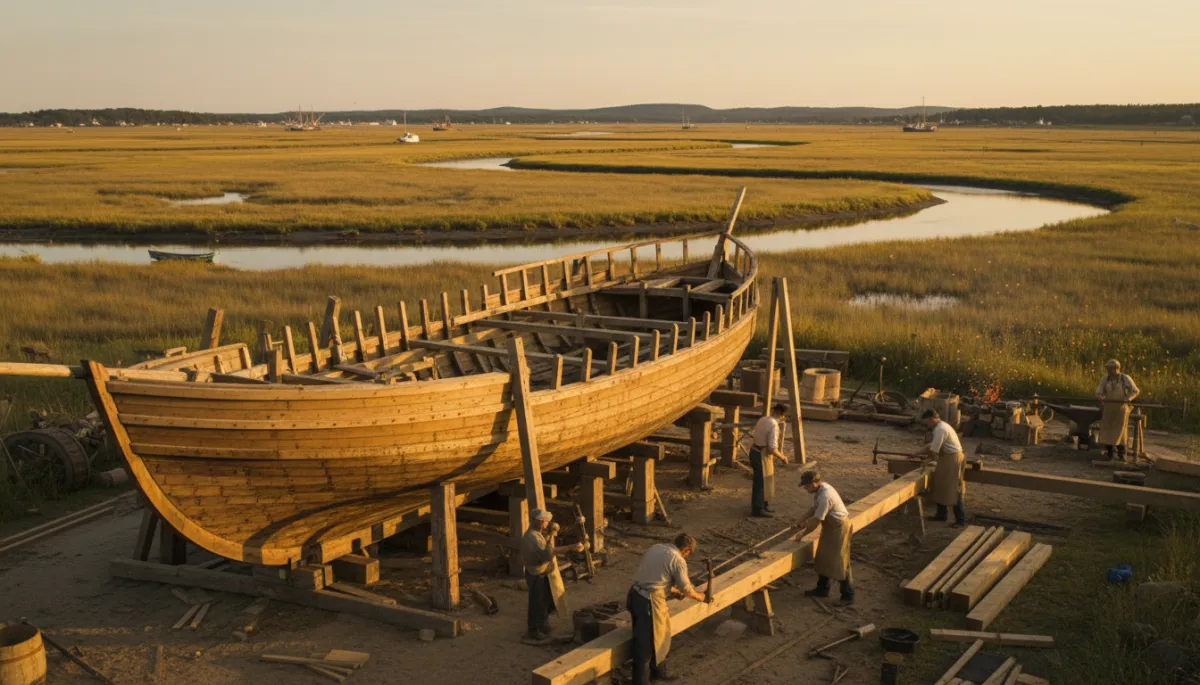
Essex shipyards supplied wooden schooners that powered New England’s fisheries.
Seasons Along the North Shore: A Living Historical Landscape
Winter Storms, Summer Light, and Autumn Streets
North Shore Massachusetts history is not frozen in time; it moves with the seasons. In January, nor’easters drive waves against the seawalls of Lynn, Swampscott, and Gloucester, echoing storms that wrecked wooden schooners two centuries ago. In June, roses climb over picket fences in Marblehead and Rockport, and the same harbors that once launched privateers now host kayaks and lobster boats side by side. By October, maples flare red above Ipswich’s First Period houses and along Essex’s marsh roads, turning everyday commutes into drives through a living museum of coastal New England history.
For residents and visitors, these towns are not simply backdrops. They are places where street names recall long-gone families, where church bells still mark the hours, and where the smell of salt and tar lingers near working docks. Whether you are tracing Salem witch trials history, exploring North Shore historical sites, or simply watching the sunset over a harbor, you are moving through layers of time that stretch from Indigenous homelands to colonial farms, from schooner decks to summer porches.
Questions & Answers About North Shore Massachusetts History
1. Why is North Shore Massachusetts history so closely tied to the sea?
From the 1600s onward, the coastline from Salem to Rockport offered deep harbors, access to the Grand Banks, and sheltered rivers ideal for shipbuilding. Fishing, shipping, and trade shaped settlement patterns, local economies, and even politics. Gloucester fishing history, Marblehead’s fleets, and Essex’s shipyards all grew from this geography. The sea provided food, income, and connection to global markets—but also danger, as storms and shipwrecks were common. Many town memorials, from Gloucester’s fisherman statue to plaques in Marblehead’s Old Burial Hill, testify to lives lost at sea and the central role of maritime work in coastal New England history.
2. What makes Salem’s witch trials different from other episodes in colonial America?
While accusations of witchcraft occurred elsewhere in New England, the 1692 Salem witch trials were unusually intense and well documented. Over a few months, formal court proceedings led to 20 executions and several deaths in prison. Surviving court records, sermons, and petitions allow historians to study the social, religious, and political tensions behind the crisis. The trials’ scale and the later public repentance—such as the 1697 day of fasting and the 1711 reversal of some convictions—set Salem apart. Today, museums and memorials, including the Salem Witch Museum, help visitors understand how fear and factionalism can spiral into tragedy.
3. Why is Marblehead associated with the American Revolution and the early Navy?
Marblehead entered the Revolutionary era as a major fishing port with a population of experienced sailors. When war loomed, many of these men joined John Glover’s regiment, which became famous for ferrying troops, including Washington’s army, during key campaigns. Early naval vessels and privateers outfitted in Marblehead and nearby ports carried the fight to British shipping. Because of this concentration of maritime skill and early naval activity, Marblehead American Revolution stories often emphasize its role as a “birthplace of the American Navy,” even as other towns also contributed ships and crews. Walking through Marblehead’s historic district offers a direct link to this chapter of North Shore colonial history.
4. What is First Period architecture, and where can I see it on the North Shore?
First Period architecture refers to the earliest English-style buildings in New England, roughly 1625–1725. These timber-frame houses typically feature steep roofs, central chimneys, exposed beams, and asymmetrical facades. Ipswich is one of the best places in the United States to see these homes in context; streets like High Street and County Road are lined with 17th- and early 18th-century houses, many documented in National Historic Register entries. Salem, Marblehead, and other North Shore towns also preserve important First Period examples, making the region a remarkable outdoor classroom for anyone interested in early Massachusetts architecture.
5. How did the North Shore change during the Gilded Age?
In the late 1800s, industrial wealth in Boston and beyond transformed parts of the North Shore into a summer resort region. Rail connections made it easier for affluent families to spend entire seasons in places like Beverly Farms, Prides Crossing, Manchester-by-the-Sea, and Magnolia. They built large Shingle Style and Colonial Revival estates along the coast, bringing new social rituals—yachting, lawn parties, concerts—while relying on local labor for domestic service, gardening, and maintenance. This North Shore Gilded Age layered a seasonal, elite culture atop older fishing and farming communities, a contrast still visible in the mix of modest cottages, grand houses, and public beaches along roads such as Route 127 today.
6. Where can I learn more or plan visits to historic North Shore sites?
Many local historical societies, museums, and state historic sites share in-depth resources on North Shore historical sites. In addition to Salem’s museums and Ipswich’s house tours, visitors can explore Gloucester’s working waterfront, Rockport’s galleries, and Essex’s shipbuilding exhibits. For broader context on towns, neighborhoods, and local landmarks, regional guides such as Boston North Shore heritage overviews often include historical notes alongside practical information. Together, these sources help travelers and residents appreciate how everyday streets and shorelines fit into centuries of North Shore Massachusetts history.
Final Thoughts from the North Shore
From Salem’s 17th-century coves to Gloucester’s fishing fleets, from Marblehead’s Revolutionary wharves to Rockport’s artists’ studios, the North Shore is more than a scenic drive along the Atlantic. It is a tightly woven tapestry of colonial experiment, maritime risk, seasonal escape, and ongoing reinvention. Ipswich’s First Period houses and Essex’s wooden schooners remind us that history here is built in wood and stone, shaped by tides and storms, and carried forward by people who still work, walk, and watch the weather along these shores.
For history enthusiasts, heritage travelers, and those who simply love coastal New England, each town offers its own chapter in a larger story. Stand on a Salem wharf at dusk, trace the curve of a schooner’s hull in Essex, or follow a crooked lane in Marblehead, and you are stepping into scenes that stretch back four centuries. The past is never far away along Massachusetts’ North Shore; it lives in the light on the water, the angle of a roofline, and the stories locals still tell when the fog rolls in and the harbor bells ring.


