New Blog Thinking your 2015 updates still count as new? Here's what North Shore MA buyers actually see — and how to price, present, and sell your home with confidence in 2026.Post
The "New-But-Old" Trap: Why Your 2015 Upgrades Are Costing You Money in 2026

"We Just Updated That"
It comes up in almost every pre-listing conversation.
A homeowner walks through their home, points to the kitchen, and says, "We just redid all of this."
Then comes the pause. A quick mental calculation. And then: "Actually… that was 2015."
In everyday life, ten or eleven years might not feel like a long time. But in real estate, it matters. A lot.
That is not a criticism. It is simply how buyer expectations work. What felt fresh and modern when you installed it does not always read the same way to someone touring homes online in 2026.
If you are thinking about selling your home on the North Shore of Boston, this is one of the most important things to understand before you price, photograph, or list.
Why 2015 Feels Different in 2026
Think back to what was popular in design around 2015.
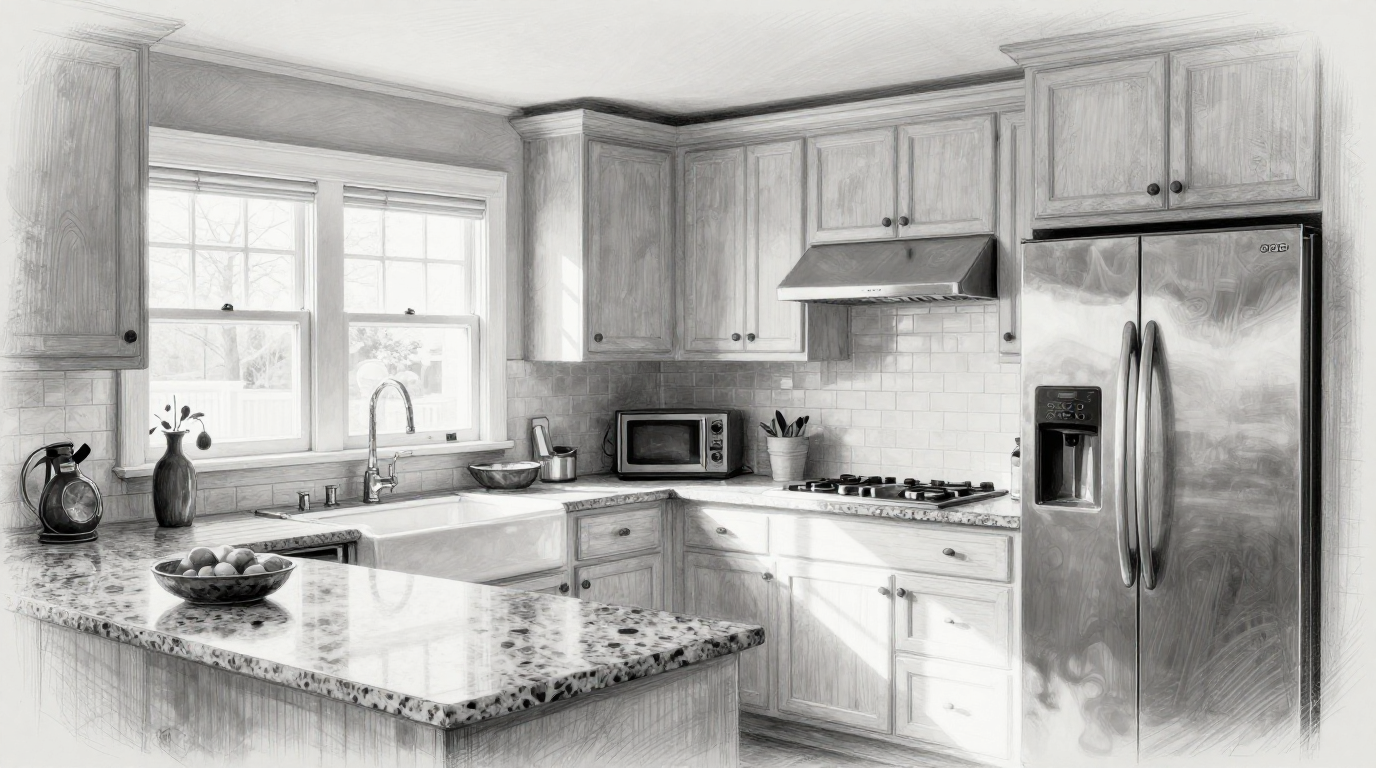
Gray was everywhere. Dark granite counters were the standard. Open shelving was just starting to appear. Subway tile was going up in nearly every kitchen. Dark espresso cabinets were still common. Barn doors were brand new. Shiplap was having a moment.
Many of those choices looked sharp and current at the time. They may still look fine today. But buyers walking through homes in 2026 have spent years scrolling through listings, watching renovation content, and touring newer construction. Their frame of reference has shifted.
That does not mean your home is behind. It means the conversation around what buyers want in 2026 has evolved, and knowing the difference can save you significant time and money.
Finishes, colors, flooring styles, cabinet profiles, lighting fixtures, and appliance finishes all have a style cycle. When a home feels behind that cycle, buyers notice — even if they cannot always explain exactly why.
The New-But-Old Trap
Here is where it gets tricky.
When you updated your home in 2015, you made real decisions. You spent real money. You probably did your homework on materials and style. That investment was meaningful, and it was the right move at the time.
But here is how the situation looks from a buyer's side:
They are not thinking about what you paid. They are looking at the condition and style in front of them right now. And they are comparing your home to every other listing in their price range.
If your home has 2015 home upgrades throughout, but it is priced as though those upgrades are current, buyers start to do the math. They see a style they recognize as slightly older. They think about appliance age, roof age, and system age. And they start asking themselves: What will this cost me over the next five years?
When pricing does not reflect the current condition and age of updates, listings can sit. And when a listing sits, buyers start wondering what is wrong with it — even when nothing is wrong at all.
That is the trap. The seller remembers the cost and effort. The buyer sees today's market.
Common 2015 Updates That May Feel Dated Now

Not every 2015 update will raise a flag. But some finishes and choices from that era stand out more quickly than others.
Style Details Buyers Notice
Gray-heavy interiors. Cool gray paint, gray floors, and gray cabinetry together can feel flat and heavy to today's buyer. Warmer tones have largely replaced the all-gray palette.
Dark granite countertops. Busy black or brown granite with heavy veining was extremely popular. Today's buyers tend to gravitate toward cleaner, lighter surfaces.
Busy backsplash tile. Intricate mosaic or heavily patterned tile can compete with other finishes rather than complement them.
Heavy, raised-panel cabinets. Full-overlay, shaker-style cabinetry in lighter tones has become the standard. Older, heavier cabinet profiles can make a kitchen feel smaller.
Dark hardwood flooring. Very dark stained floors were a big trend. Lighter, more natural wood tones now dominate the market.
Carpet in main living areas. Buyers with pets, kids, or allergy concerns tend to flag carpet immediately — especially in living rooms or dining rooms.
Builder-grade lighting. Flush-mount fixtures with dated tones, or basic recessed lighting without updated trim, tend to age a space quickly.
Beige and almond bathrooms. Tile, tubs, and fixtures in warm beige or off-white tones read as older to buyers who have been looking at lighter, cleaner palettes.
System and Mechanical Age
This is where selling an older home requires honest preparation.
A 2015 roof is now approximately eleven years old. Depending on the material, many asphalt shingle roofs carry a 20 to 25-year lifespan. Buyers and their inspectors will look at age — and lenders sometimes factor it in as well.
The same applies to:
Heating and cooling systems
Water heaters (average useful life: 8 to 12 years)
Electrical panels
Plumbing updates
Early open-concept layouts that may have removed walls without fully addressing structural flow, storage, or function
A buyer is not just buying what they see. They are buying what they will be responsible for in the years ahead.
What Buyers Notice First

Buyers form impressions quickly. Most decisions about whether to schedule a showing happen within seconds of seeing photos online.
Here is what tends to drive that decision:
Photos. This is the first moment. If the lighting looks dark, the kitchen looks heavy, or the spaces look cluttered, the listing may get scrolled past — even if the home is wonderful in person.
Kitchen style and condition. The kitchen carries more weight than almost any other room. Buyers look at cabinet style, countertop condition, appliance age, and lighting all at once.
Bathroom condition. Fresh versus dated registers immediately. Grout condition, fixture age, and general cleanliness all matter.
Flooring throughout. Worn carpet, scratched hardwood, or older vinyl tile is noticed quickly and often adds up to a mental estimate of what replacement will cost.
Paint colors. Strong, outdated colors can make rooms feel smaller or harder to visualize as the buyer's own space.
Odors. This one cannot be photographed, but it matters the moment someone walks in.
Major system age. When buyers receive a disclosure sheet or inspection report that lists a 2013 furnace, a 2012 water heater, and an older roof, they start calculating.
The North Shore Picture

North Shore of Boston homes have something that newer construction often cannot match: character, history, and location.
Whether it is a Colonial in Ipswich, a Cape in Beverly, a Victorian in Salem, a shingle-style home in Manchester-by-the-Sea, or a historic property in Newburyport or Essex — buyers come to this market looking for something with a sense of place.
That is a genuine advantage.
But charm and condition are two different things. A buyer may fall in love with a 1920s farmhouse in Gloucester or a classic center-entrance Colonial in Newbury — and still negotiate hard on credits because the roof is aging, the oil system is older, or the kitchen has not been touched since 2010.
[Internal Link Suggestion: Link to your North Shore community pages for Ipswich, Beverly, Salem, Newburyport, Essex, Manchester-by-the-Sea, Gloucester, Rockport, and Newbury here.]
In Essex County, MA homes span an enormous range of age, style, and condition. Buyers here tend to be well-researched. Many have been looking for months. They know the difference between a home that has been genuinely maintained and one that has simply not had any problems yet.
The good news: a well-cared-for home with older updates and honest pricing almost always finds its buyer. The challenge comes when expectations and pricing are not aligned with what the current market reflects.
What Not To Do Before Listing
Before diving into what helps, it is worth spending a moment on what often does not.
Do not renovate everything. A full kitchen gut-renovation before selling is rarely the right move unless the pricing math clearly supports it. Major renovations seldom return their full cost at resale, particularly when done quickly before listing.
Do not assume upgrades will return dollar-for-dollar. Improvements add value, but buyers compare your home to others in real time. A $40,000 kitchen update does not automatically add $40,000 to your sale price.
Do not price based on what you spent years ago. Pricing a home correctly in 2026 means looking at what comparable homes have sold for recently — not what you invested in updates over the years.
Do not ignore small visual issues. A scuffed baseboard, a loose cabinet door, or a worn light switch plate may seem minor. But buyers notice them, and they add up to a general impression of how the home has been maintained.
Do not over-improve for the neighborhood. Major upgrades can push a home above what the surrounding market will support. There is a ceiling on value in any given area, and a good pricing strategy accounts for it.
[Internal Link Suggestion: Link to your AI pricing strategy page or seller guide here.]
Smart Fixes Before Listing

The most effective pre-listing work tends to be affordable, visual, and high-impact.
These are the kinds of home improvements before listing that make a real difference without a major budget:
Fresh neutral paint— One of the highest-return moves you can make. A warm, current neutral throughout the main living areas photographs well and appeals broadly.
Updated lighting— Swapping out dated flush-mount fixtures for simple, current styles is relatively inexpensive and changes how a room feels immediately.
Clean grout— Professionally cleaned tile and grout can make a bathroom look years newer without any renovation.
Simple hardware swaps— Cabinet pulls and door hardware are small details that buyers notice. Updated hardware refreshes a kitchen or bathroom quickly.
Professional cleaning— A deep clean, including inside appliances and behind fixtures, signals to buyers that the home has been cared for.
Decluttering— Less furniture and fewer personal items make spaces feel larger in photos and in person.
Window washing— Clean windows let in more light and make every room feel cleaner.
Minor landscaping— First impressions start outside. Trimmed shrubs, edged beds, and a clean entrance go a long way.
Replacing worn carpet— Even a basic neutral carpet replacement in a bedroom or family room is often worth the investment.
Servicing systems— Having the furnace, HVAC, and water heater serviced before listing — and having the paperwork to show it — tells buyers the home has been looked after.
Touching up trim and doors— Fresh white trim reads clean and current in listing photos.
Bigger Items To Review
Before listing, these larger items deserve a careful look — not necessarily to replace, but to understand and disclose clearly.
A buyer will ask about them. Their inspector will flag them. And knowing the current status ahead of time puts you in a better position.
Roof age and condition
Heating system age and type(oil, gas, heat pump)
Central air or cooling system, if applicable
Water heater age
Electrical panel— older Federal Pacific or fuse box panels can become a buyer concern
Plumbing— particularly in older North Shore homes with galvanized or older copper lines
Septic system, if applicable — Title V inspections are required in Massachusetts before most sales
Windows— particularly if original, single-pane, or showing seal failures
Decks, railings, and exterior structure— inspectors look closely at these
Basement moisture history— any signs of water intrusion should be disclosed and addressed
[External Link Suggestion: Link to Mass.gov consumer resources on seller disclosure or the Massachusetts Title V septic inspection process.]
[External Link Suggestion: Link to your town's building department or assessor page for permit history, particularly in Ipswich, Beverly, Salem, or other Essex County towns where older homes may have unpermitted work.]
Pricing Reality
Here is the honest truth about pricing a home correctly in today's market.
Buyers do not pay for history. They pay for value as they see it today.
A home with older updates can absolutely sell well — and sell quickly — if it is priced to reflect its current condition, styled well, and marketed to the right buyer.
But when a home is priced as though every 2015 update is still current, buyers notice the disconnect. Showings slow down. Offers do not come in at the expected number. Price reductions happen.
Every week a home sits on the market, it loses a little of its momentum. Buyers start to assume there must be a reason it has not sold. That perception can be hard to reverse.
The goal of understanding your home updates before selling is not to worry you. It is to make sure your pricing strategy, your presentation, and your expectations are all working together from day one.
[Internal Link Suggestion: Link to your home value page here.]
Questions To Ask Before You List
Use this as a simple starting point when you walk through your home with fresh eyes.
What year were the major updates done?
Do the kitchen and bathrooms still photograph well compared to current listings?
Would a buyer seeing this home for the first time view it as updated or as needing work?
Are any major systems approaching the end of their useful life?
What are the three or four smallest changes that would make the biggest visual difference?
Is my expected asking price based on today's comparable sales, or on what I spent years ago?
Is there anything a buyer would likely ask for as a repair credit or price reduction?
Honest answers to those questions will shape everything that follows.
Q&A
Are 2015 renovations considered old in 2026?
Not necessarily — but ten to eleven years is long enough that both style and function deserve a second look. Some 2015 updates hold up well. Others have dated more quickly due to design trends. The bigger concern is often the age of major systems rather than finishes alone. A well-maintained home with older-style updates can still sell well when priced and presented correctly.
Should I update my kitchen before selling?
Not automatically. A full kitchen renovation before selling rarely returns its full cost at resale. Instead, focus on what can be done affordably: cleaning, hardware swaps, updated lighting, and decluttering. If the kitchen has significant functional issues or is substantially dated, a conversation with a local agent about the pricing math first is the right first step.
Do buyers care more about style or condition?
Both matter, but condition tends to carry more weight. A kitchen that is slightly behind in style but is clean, functional, and well-maintained will fare better than a stylish kitchen with visible wear or deferred maintenance. Buyers are increasingly aware of future costs, and a home that shows well-maintained systems and clean condition gives them confidence.
What home improvements are worth doing before listing?
The highest-return pre-listing improvements tend to be: fresh neutral paint, updated lighting fixtures, professionally cleaned tile and grout, decluttering, and deep cleaning. These are relatively low-cost and high-impact. Larger investments should only be made after a clear conversation about whether the market will support them in your price range and neighborhood.
Can older updates hurt my sale price?
They can affect your competitive position, particularly if the home is priced the same as homes with more recent updates. The solution is not always to renovate — it is to price and present strategically. A home with a 2015 kitchen and a 2013 furnace may still sell beautifully, as long as both the price and the marketing reflect the current reality.
Should I replace appliances before selling?
Generally, no — unless the appliances are visibly failing or significantly dated. Buyers tend to prioritize system age (furnace, roof, water heater) over appliance brand. If appliances are older but functional, clean, and in good working order, disclosing their age honestly is usually more effective than a last-minute replacement.
How do I know what my home needs before going on the market?
A pre-listing walk-through with a knowledgeable local agent is the most efficient way to get this answer. An experienced agent working in North Shore MA real estate will walk through your home the way a buyer would — noting what photographs well, what raises questions, and what can be addressed affordably before listing. That conversation costs nothing and can save significant time and money.
[Internal Link Suggestion: Link to your downsizing page or seller guide for homeowners who are navigating this process for the first time in many years.]
[External Link Suggestion: Link to the National Association of REALTORS® consumer resources on preparing a home for sale.]
Final Thoughts

If you have owned your home for fifteen or twenty years and made meaningful updates along the way, that is something to be proud of. The work you put into your home matters.
What this comes down to is not whether your home is good. It almost certainly is.
It comes down to understanding how today's buyers will see it — not through your memory of what it looked like when the updates were new, but through the eyes of someone comparing it to everything else currently on the market.
A home with older updates does not need to be completely redone before selling. It needs to be understood clearly, presented honestly, priced correctly, and marketed to the right buyer.
That is a solvable problem. And it starts with a simple, honest conversation.
Ready To Take a Fresh Look?
If you are thinking about selling your home on the North Shore and are not sure whether it still feels current to today's buyers, a walk-through can help you figure out exactly what to fix, what to leave alone, and how to price with confidence.
There is no pressure and no obligation. Just a practical conversation so you can make the best decision for you and your family.


