The Forgotten Grand Hotels of Boston's North Shore: When the Coast Rivaled Newport
Forgotten Grand Hotels of Boston's North Shore | Gilded Age Coastal Resorts

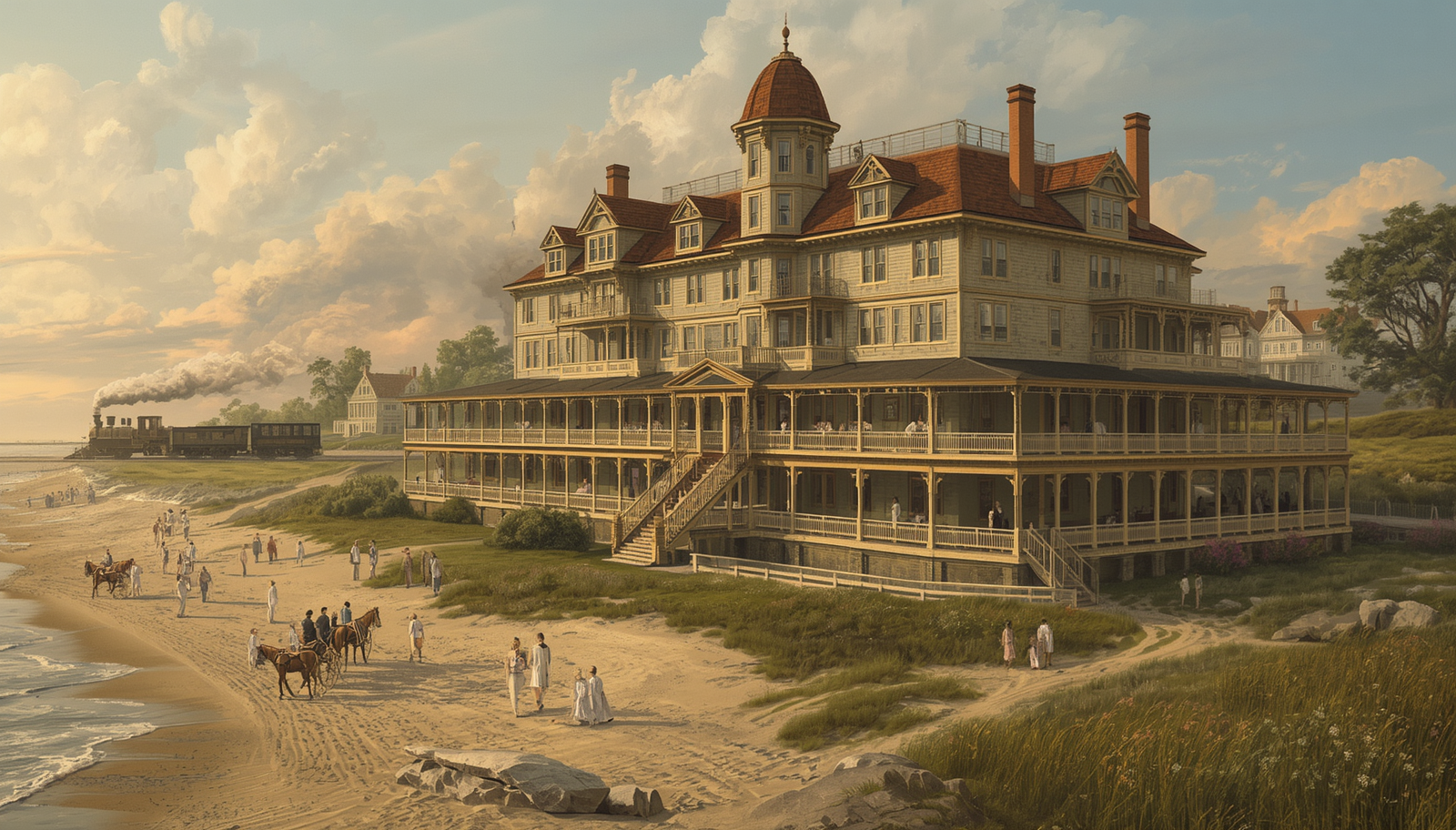
Imagine stepping off a train in 1895. The air is thick with the scent of salt spray and the rhythmic chuffing of a steam engine. As the iron horse pulls away from the station at Manchester or Beverly Farms, a horse-drawn carriage waits patiently on the gravel path. Ahead, emerging from the coastal mist like a wooden cathedral of leisure, stands a massive oceanfront hotel. Its wraparound porches stretch for hundreds of feet, its towering gables reflect the afternoon sun, and guests in crisp white linen and boater hats arrive with trunks that suggest a stay of months, not days.
For a few golden decades during the Gilded Age, Boston’s North Shore was not just a collection of fishing villages; it rivaled Newport, Rhode Island, and Bar Harbor, Maine, as one of America’s most fashionable and exclusive seaside destinations. These grand hotels were the beating hearts of the "Gold Coast," social stages where industrial titans rubbed elbows with European royalty. Today, most have vanished, leaving behind only scattered stone foundations and a legacy that continues to define the character of our coastal communities.
The Iron Horse and the Rise of North Shore Tourism
The transformation of the North Shore from a rugged maritime frontier into a playground for the wealthy began with a single technological marvel: the railroad. Before the mid-19th century, traveling from Boston to Cape Ann was a grueling day-long affair by stagecoach. The arrival of the Eastern Railroad changed everything. By the 1840s and 1850s, the coast became accessible to the urban elite of Boston, New York, and Philadelphia, who sought refuge from the sweltering city heat.

As documented in the Library of Congress Historic Collections, the railroad didn't just bring people; it brought a new philosophy of summer. No longer was the ocean merely a source of livelihood for fishermen; it was a backdrop for restorative "sea-bathing" and social posturing. This transition is a key part of our North Shore relocation guide, as it established the prestige that still draws people to the region today.
Magnolia: The "Newport" of the North Shore
If there was one epic center of this hotel era, it was Magnolia. Once a quiet outpost of Gloucester, it blossomed into a world-class resort town late in the 19th century. The crown jewel was the Oceanside Hotel, often referred to alongside the nearby Magnolia Hotel. At its peak, the Oceanside was a sprawling, 400-room marvel that dominated the landscape with its intricate gables and towers.

Life in Magnolia was a choreographed dance of leisure. Mornings were spent on the cliffs overlooking Kettle Cove, while afternoons were reserved for promenades through "The Street," a collection of high-end boutiques from Boston and New York that opened only for the summer season. The Essex National Heritage Area notes that the town's dramatic rocky shoreline made it the perfect canvas for these massive timber resorts. Even today, the Gloucester community guide reflects the unique, sophisticated atmosphere that Magnolia’s hotel era left behind.
The Pavilion and Gloucester’s Seaside Debut
While Magnolia focused on exclusivity, Gloucester’s downtown shoreline offered a different kind of grandeur. The Pavilion Hotel, built in 1849 on Pavilion Beach, was the city’s first true summer resort. It was a bold architectural statement, positioned between the gritty industry of the fishing harbor and the scenic beauty of Western Avenue.

According to the Cape Ann Museum, the Pavilion helped inaugurate a resort era that brought writers, artists, and transcendentalists to the city. Guests could watch the fishing fleet return while enjoying the refined amenities of a luxury hotel. This duality of "working waterfront" and "resort destination" is a theme explored deeply in our Essex community guide, where the history of shipbuilding and tourism often intertwined.
Nahant and the Hygeia: A Health-Seeker’s Paradise
Further south, Nahant was home to some of the earliest and largest grand hotels. In the mid-1800s, the Nahant Hotel was considered one of the largest in America. Closely associated with the "health resort" movement, hotels like the Hygeia Hotel (named after the Greek goddess of health) marketed the curative powers of the North Shore’s salty air and mineral-rich waters.
The Massachusetts Historical Commission archives describe these early Nahant resorts as places of strict social etiquette, where the Boston Brahmins could retreat from the "common" crowds. This era of exclusivity helped set the tone for nearby towns, as seen in our Salem community guide and Beverly community guide, where summer residents eventually traded hotel rooms for massive private estates.
The Architecture of Leisure: Ballrooms and Verandas
The architecture of these hotels was as much about the "view" as the building itself. They were predominantly built in the Shingle Style or with classic Victorian clapboards, featuring endless wraparound verandas. These porches served as the "living rooms" of the community, where guests would sit for hours in wicker rockers, sheltered from the sun but open to the breeze.
Inside, the hotels were masterpieces of Gilded Age craftsmanship. The ballrooms featured high, coffered ceilings and polished hardwood floors designed to withstand the nightly dances.

As noted by Historic New England, the social season was a grueling schedule of morning card games, afternoon carriage drives, and evening balls. For those curious about the towns that hosted these events, our Manchester-by-the-Sea community guide offers a glimpse into the lifestyle that dominated these coastal reaches.
From Boarding Houses to Summer Colonies
Not every visitor stayed in a 400-room palace. In places like Rockport and Ipswich, the "resort era" took on a more intimate form. Rockport, in particular, was famous for its summer boarding houses, which catered to the growing colony of artists and musicians. You can read more about this artistic legacy in our Rockport community guide.
Similarly, the Ipswich community guide highlights how the town’s massive estates, like Crane Beach’s Great House, eventually superseded the hotel model. As wealthy families realized they could build their own "cottages" (which were actually 40-room mansions), the demand for grand hotels began to wane. This transition is well-documented by the Beverly Historical Society and the Manchester Historical Museum.
The Vanishing Act: Fire and the Motor Car
Why did these magnificent structures disappear? The answer is a mix of tragedy and technology. Most of these grand hotels were built entirely of wood and illuminated by gaslight or early electrical systems, making them massive tinderboxes. The Pavilion burned in 1914; the Oceanside burned in 1958.
The second blow was the automobile. As cars became common, vacationers no longer wanted to spend three months in one spot. They wanted to travel, explore, and stay in smaller motor inns. The era of the "three-month summer stay" vanished, and with it, the economic model that supported 400-room wooden giants. Today, researchers often turn to Digital Commonwealth Massachusetts or the Boston Public Library Historical Collections to find the only surviving images of these lost landmarks.
What Remains Today: Echoes of the Gilded Age
While the physical buildings are largely gone, their footprints remain. In Magnolia, you can still walk the streets and find the stone gateposts and foundations of the Oceanside. The Newburyport community guide and the Essex Historical Society and Shipbuilding Museum also offer insights into how the regional economy shifted from hotels to preservation and high-end residential living.

If you are looking for things to do across the North Shore, a "history hunt" for these sites is a rewarding way to spend a weekend. You can even use the National Park Service Historic Preservation resources to map out the surviving sites of the Massachusetts Office of Travel and Tourism.
Q&A: Understanding the North Shore’s Grand Hotel Era
What were the grand hotels of the North Shore?
They were massive wooden luxury resorts built between the mid-1800s and early 1900s, such as the Oceanside in Magnolia, the Pavilion in Gloucester, and the Nahant Hotel.
Why did wealthy families vacation here instead of staying in Boston?
To escape the heat and pollution of the city. The North Shore offered "therapeutic" sea air, a sophisticated social scene, and world-class scenery accessible by train.
What happened to the Magnolia Hotel and the Oceanside?
Most succumbed to fires. The Oceanside, for example, was destroyed by a massive fire in 1958, which effectively ended the grand hotel era in that village.
Did any of these grand hotels survive to the present day?
While most of the "wooden giants" are gone, a few smaller historic inns remain. Most of the original grand hotels were either destroyed by fire or demolished as travel habits changed.
How did the railroad influence North Shore tourism?
The railroad made the coast accessible. Before the Eastern Railroad, the North Shore was too remote for a casual summer vacation; after the railroad, it became a daily commute for the wealthy.
Which towns were the most popular destinations for these hotels?
Nahant was the earliest, followed by Swampscott, Beverly Farms, Magnolia (Gloucester), and eventually the boarding houses of Rockport and the estates of Manchester-by-the-Sea.
Why did the grand hotel era eventually end?
A combination of factors: catastrophic fires, the invention of the automobile (which encouraged shorter, multi-stop trips), and the rise of private summer estates or "cottages."
Final Thoughts
The grand hotels of the North Shore were more than just buildings; they were the architects of the region’s identity. They turned sleepy fishing outposts into sophisticated cultural hubs and proved that our rocky coastline was one of the most beautiful places in the world. While we can no longer sit on the veranda of the Oceanside or dance in the ballroom of the Pavilion, their legacy lives on in the preservation of our open spaces, the architecture of our historic districts, and the enduring allure of a summer afternoon by the Atlantic. Understanding this history helps us appreciate why the North Shore remains one of the most coveted places to call home in New England.


