Gloucester, MA: A Complete Guide to the City by the Sea

Gloucester is not a town you discover. It is a city that gets its hooks into you.
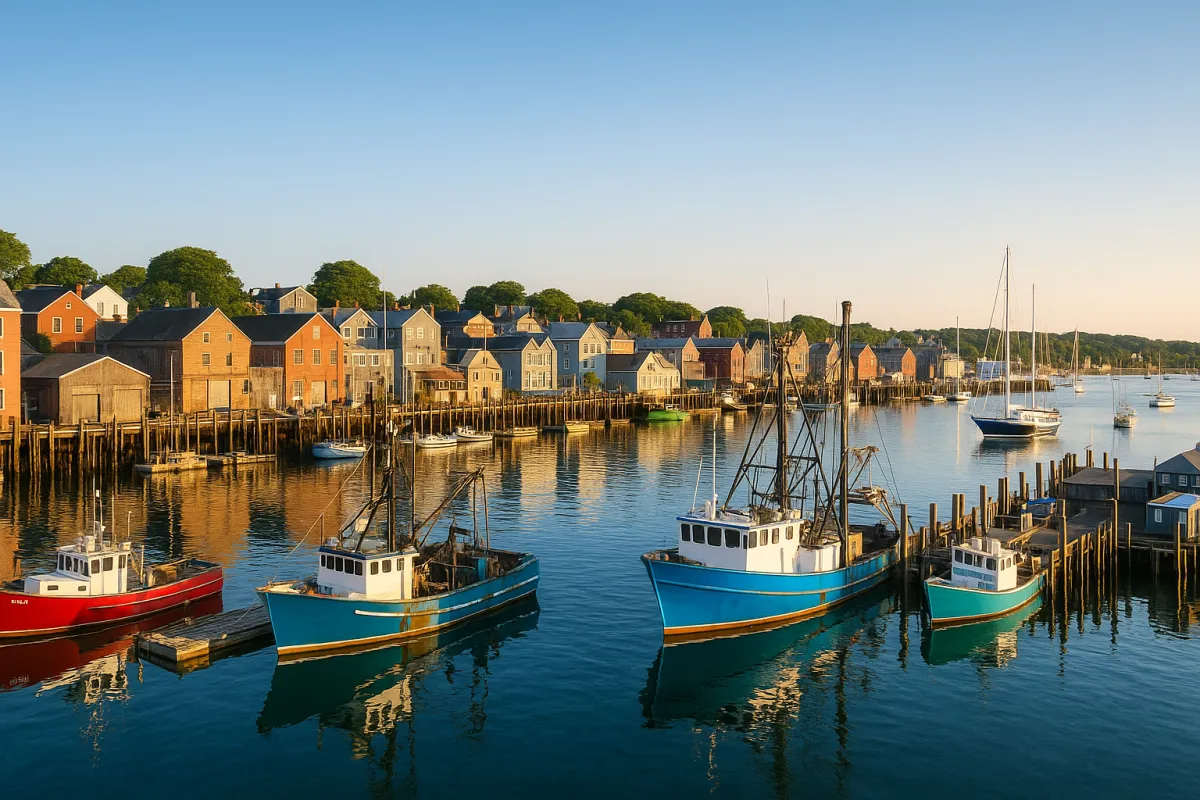
It has been that way for four centuries. Gloucester is the oldest fishing port in the United States and one of the most storied maritime communities in North America. Today it is a working city of roughly 30,000 people — shaped by the ocean in every way. Its architecture. Its food. Its culture. The quiet pride of the people who live there.
If you are wondering what it is actually like to live in Gloucester, Massachusetts, this guide gives you the honest picture.
What Makes Gloucester Different

Gloucester sits at the eastern tip of Cape Ann, a rocky peninsula that extends into the Atlantic Ocean about 30 miles north of Boston. It is a real working city — not a curated coastal village, not a weekend getaway that shuts down after Labor Day.
The harbor is still active. Fishing vessels still come and go. The bars, restaurants, and waterfront streets have a lived-in quality that is hard to manufacture and impossible to fake.
If you live on the North Shore of Boston, that is worth paying attention to. Gloucester is one of the few coastal communities where the working waterfront and the residential community exist side by side and still feel genuinely connected. That is rare.
The Neighborhoods of Gloucester
Gloucester covers a large area and feels different depending on where you are.
Downtown and the Harbor
The downtown runs along Rogers Street and Main Street, close to the inner harbor. This is where you find restaurants, coffee shops, local bars, galleries, and the daily rhythm of city life. The famous Man at the Wheel memorial stands at the edge of Stacy Boulevard, looking out over the water.
East Gloucester and Rocky Neck

East Gloucester is quieter and more residential. Rocky Neck, located here, is one of the oldest working art colonies in the United States. It draws painters, sculptors, and creative people who want to be close to the water without being in the middle of everything.
Annisquam
Annisquam sits on the northern edge of Gloucester along the Annisquam River. It has a small-village feel within a larger city — serene, well-kept, and quietly sought after by people who know it.
West Gloucester
West Gloucester is more rural and spread out. Conservation land, larger lots, and a calmer pace. Buyers who want the Gloucester address with more space tend to look here first.
Getting to Boston from Gloucester
The MBTA commuter rail runs from Gloucester to North Station in Boston. The ride takes approximately 60 to 75 minutes depending on the train. Gloucester is on the Newburyport/Rockport Line with multiple daily departures in both directions.
By car, the drive runs roughly 40 to 55 minutes in normal conditions — longer during peak commute hours on Route 128.
Gloucester is not a city for people who need a short commute. For people who are willing to trade a longer ride for a stronger sense of place, the trade often makes sense.
Beaches in Gloucester

Gloucester has two of the most celebrated public beaches on the entire North Shore.
Good Harbor Beach is a long, wide barrier beach backed by dunes and a tidal salt marsh. It is popular in summer — fills early on warm days, limited parking — and known for its fine sand and clear water.
Wingaersheek Beach sits on the Annisquam River estuary. The water is calmer, the tidal flats are wide at low tide, and the setting is different in character from Good Harbor. Both beaches charge seasonal parking fees. Both are worth the effort.
Beyond these two, Gloucester has coves, rocky points, and waterfront access spots that locals know well and visitors rarely find.
Food, Art, and Local Life

The restaurant scene in Gloucester ranges from classic New England seafood shacks to updated casual dining. The Gloucester Stage Company runs a professional theater season in an intimate harbor-side space. The Cape Ann Museum holds a remarkable regional art collection, including work by Fitz Henry Lane, one of the most important painters of the American coastal landscape.
The city also has farmers markets, independent shops, live music venues, and a community calendar that stays full through the off-season.
Housing in Gloucester
Gloucester has more housing variety than most North Shore towns. Victorian and Colonial-era homes in the downtown and East Gloucester areas. More modern construction in West Gloucester. Condos and multi-family buildings throughout the city.
Price ranges vary significantly. Entry-level condos and smaller single-family homes sit at more accessible price points than in many surrounding coastal towns. Waterfront and ocean-view properties command meaningful premiums. Well-priced homes across all categories move quickly in the current market.
Q&A — Living in Gloucester, MA
What is Gloucester, MA known for?
Gloucester is known as America's oldest fishing port, its working harbor, Good Harbor and Wingaersheek beaches, the Rocky Neck Art Colony, the Gloucester Stage Company, and the Cape Ann Museum. It is also the setting of The Perfect Storm.
How far is Gloucester from Boston?
Gloucester is approximately 32 miles from Boston. The MBTA commuter rail takes 60 to 75 minutes. By car it is typically 40 to 55 minutes depending on traffic.
What are home prices like in Gloucester MA?
Prices range from accessible condos and smaller single-family homes to significant oceanfront and harbor-view properties. Gloucester generally offers more price diversity than some of its neighboring Cape Ann towns.
Is Gloucester a good place to live?
Gloucester suits people who value authentic coastal character, beach access, a real arts and food scene, and a working city that feels lived-in. The commute to Boston is long. For the right person, that trade is easy to make.
What neighborhoods are in Gloucester MA?
Gloucester's main areas include Downtown and the Harbor, East Gloucester, Rocky Neck, Annisquam, and West Gloucester. Each has a distinct feel, price range, and community character.
Are there beaches in Gloucester MA?
Yes. Good Harbor Beach and Wingaersheek Beach are two of the most popular on the North Shore. The city also has numerous smaller coves, rocky shores, and waterfront access points.
Final Thoughts
Gloucester rewards people who take the time to understand it. It has more depth than a weekend visit reveals — more neighborhoods, more culture, more history, and more daily rhythm than most coastal communities can offer.
It is not the easiest commute. It is not the most polished address. But for people who want a real place — a city that the Atlantic has been shaping for 400 years — Gloucester is worth the longer look.


