Gloucester: America's Oldest Seaport & Its Legacy
North Shore History, Gloucester, Maritime Heritage
Why Gloucester Became America’s Oldest Seaport — And Why It Still Matters Today
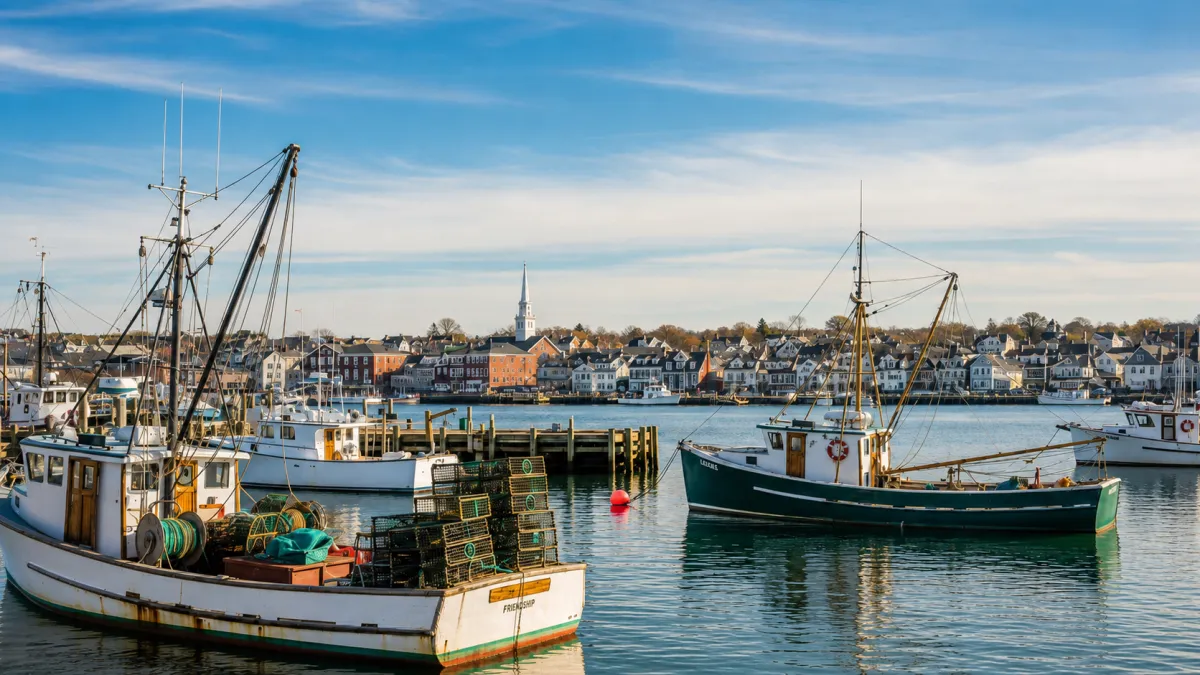
On a cold, fog-thickened morning in the early 1700s, Gloucester Harbor was already awake long before the sun considered rising. Lanterns swung from wooden posts along the wharves, their light swallowed and blurred by the mist. Men moved like shadows across the slick planks, shoulders bent under coils of tarred rope. The air smelled of salt, smoke, and fish — the permanent perfume of a town that had staked its future on the sea. Somewhere up on the hill, church bells tolled a slow, solemn rhythm, echoing across the water as crews pushed dories from shore and readied their schooners for another dangerous voyage onto the North Atlantic. Wives and children watched from the frost-crusted shore, knowing some of those men would never return, but also knowing that without these trips, Gloucester itself could not survive.
The First Anchor: Why Gloucester Became America’s Oldest Seaport
Long before postcards and summer traffic, Gloucester was a bold experiment. In 1623, just three years after the Pilgrims landed at Plymouth, English colonists established a fishing station on Cape Ann. This makes Gloucester one of the earliest permanent European settlements in what would become Massachusetts, and widely recognized as America’s oldest continuously operating seaport. The draw wasn’t farmland or timber; it was fish — specifically, the vast cod stocks of the Grand Banks and Gulf of Maine that European markets were hungry to buy.
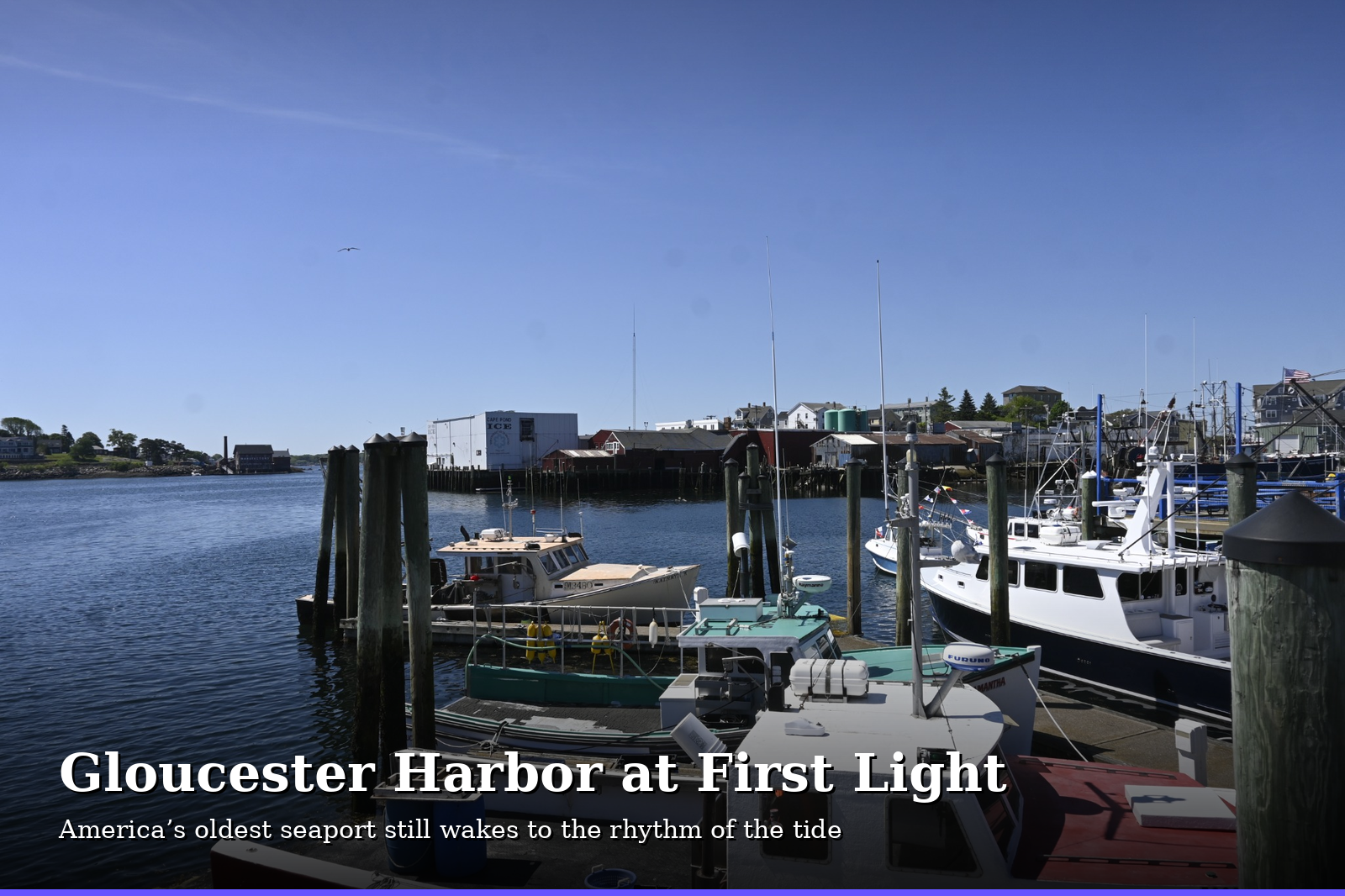
Gloucester Harbor itself sealed the deal. Deep, sheltered, and naturally protected from the worst of the Atlantic’s fury, it offered something rare on this rugged, rock-strewn coast: a safe, working harbor close to world-class fishing grounds. From these early days, Gloucester wasn’t simply a town with a harbor; it was a harbor that grew a town around it. The harbor dictated the economy, the street patterns, the politics, even the rhythm of daily life. As other settlements rose and fell, Gloucester kept launching boats, landing fish, and building a maritime culture that would help feed and finance a growing New England.
From Cod to Empire: Gloucester Harbor and the “White Gold” Industry
To understand why Gloucester mattered — and still matters — you have to start with cod. In the 17th and 18th centuries, cod wasn’t just a commodity; it was the engine of Atlantic trade. Salted and dried on coastal flakes, cod from Gloucester and other New England ports became known as “white gold.” It fed enslaved people in the Caribbean, workers in Europe, and armies at war. Cod profits helped build Boston’s wharves, fund ships, and underwrite the rise of merchant families that shaped New England politics and culture.
Gloucester’s fishermen were at the center of this story. They ventured farther offshore, stayed longer at sea, and refined techniques for longline and later trawl fishing. Their catch flowed through the harbor into an expanding web of merchants, chandlers, coopers, and shipbuilders. According to research preserved through the Cape Ann Museum, Gloucester was landing tens of thousands of quintals of dried cod by the 1700s, a staggering volume for a small, wind-beaten community on the edge of the continent. The harbor became a living factory, its output measured not in smoke or steel, but in tons of fish shipped to the world.
Schooners, Shipyards, and the Rise of a Legendary Fishing Fleet
By the early 19th century, Gloucester was not just a fishing town; it was the home port of one of the most famous fishing fleets on earth. The key innovation was the Gloucester schooner — fast, agile, and perfectly suited for the dangerous, distant waters of the North Atlantic. These two-masted vessels, designed and often built along the North Shore, could carry large crews and dories, yet still slice through heavy seas and race home with perishable catch. The Schooner Adventure, now lovingly preserved and sailing from Gloucester, is a living example of this golden age of sail, a floating classroom in what made the fleet so formidable.
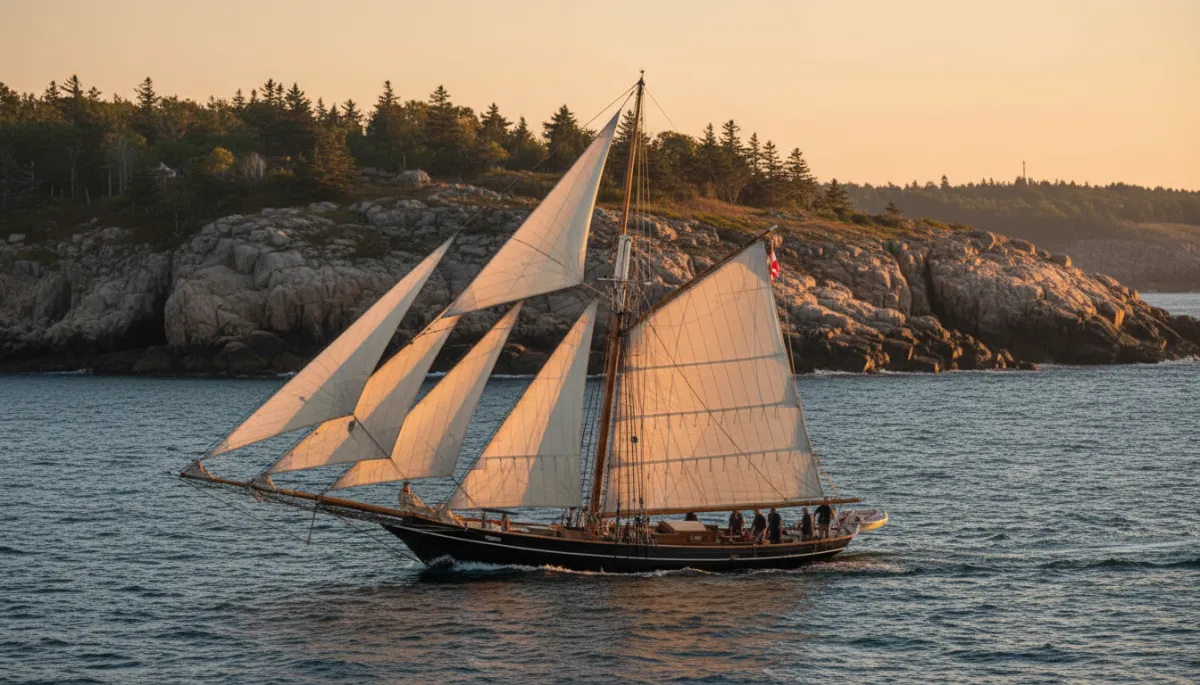
Gloucester’s schooners turned a small Cape Ann harbor into a global fishing powerhouse.
These vessels made it possible for Gloucester to compete on a grand scale. Crews fanned out to the Grand Banks, Georges Bank, and beyond, filling holds with cod, haddock, and halibut. The harbor’s shipyards hammered and sawed almost without pause, building and repairing the fleet. Maritime trade grew alongside fishing: Gloucester vessels carried salt, lumber, and other goods, and its merchants invested in ventures that reached from Nova Scotia to the Caribbean. The National Park Service and Maritime Gloucester both highlight how this combination of fishing and trade helped knit Gloucester into the broader story of American maritime expansion.
A Harbor of Many Tongues: Immigration and Fishing Families
Walk Gloucester’s working waterfront today and you still hear echoes of the languages that built it. In the 19th and early 20th centuries, waves of Portuguese, Italian, and Irish fishermen arrived on Cape Ann, drawn by the promise of steady work and a community that understood the sea’s demands. They brought with them new skills, new religious traditions, and new ways of organizing family life around the unpredictable schedule of the fleet. Many of Gloucester’s most storied fishing families trace their roots to the Azores, Sicily, and County Kerry, their surnames etched into boat transoms and cemetery stones alike.
These communities transformed Gloucester from a Yankee outpost into a cosmopolitan port where feast days, church processions, and union halls became as much a part of the landscape as nets drying on the pier. The City of Gloucester, documented through the City of Gloucester and resources like the Gloucester 400+ commemoration, has leaned into this layered heritage, recognizing that its strength has always come from families willing to risk everything on the water and then rebuild, again and again, on land.
Storms, Sacrifice, and the Fishermen’s Memorial
No honest history of Gloucester can avoid the shadows cast by its storms. For centuries, the price of feeding New England and supplying global markets has been paid in lives. The North Atlantic is unforgiving: sudden gales, rogue waves, and winter nor’easters have claimed vessels by the hundreds and men by the thousands. The legendary “Perfect Storm” of 1991 — immortalized in Sebastian Junger’s book and the film that followed — was only the latest in a long line of maritime disasters. That storm, meticulously documented by NOAA, took the Gloucester-based Andrea Gail and her crew, but also renewed public awareness of what fishermen face every time they cross the breakwater.
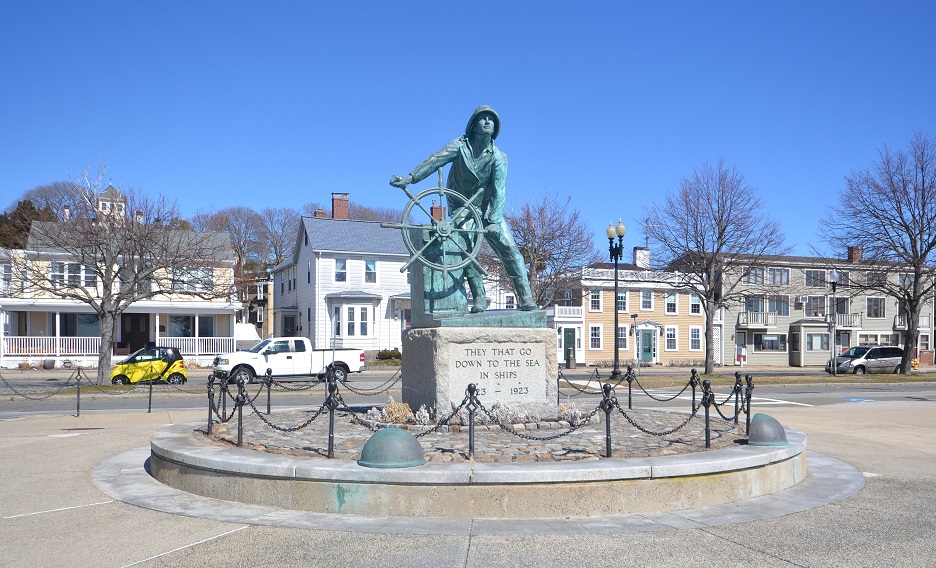
The Fishermen’s Memorial lists thousands lost at sea, turning statistics into names and stories.
Along the Boulevard, facing the harbor, stands one of New England’s most moving monuments: the Gloucester Fishermen’s Memorial. The bronze figure, hands on the wheel, eyes fixed on the horizon, is surrounded by plaques bearing the names of more than 5,000 Gloucester fishermen lost since the 1700s. It’s not a romantic statue; it’s a reckoning. The Massachusetts Historical Commission and the Essex National Heritage Area both highlight the memorial as a key site in understanding how deeply the sea has shaped this community’s identity, grief, and resilience.
Maritime Gloucester and Keeping the Working Waterfront Alive
Today, you don’t have to be a historian to feel Gloucester’s maritime past under your feet. You can see it, smell it, and step aboard it at Maritime Gloucester, a waterfront museum and education center that occupies historic piers right in the heart of the harbor. Here, preserved vessels, interactive exhibits, and hands-on programs bring four centuries of seafaring to life for schoolchildren, locals, and visitors from around the world. The Library of Congress and Smithsonian maritime resources provide national context, but Maritime Gloucester lets you stand where generations of fishermen once stood, looking out toward the same unpredictable horizon.
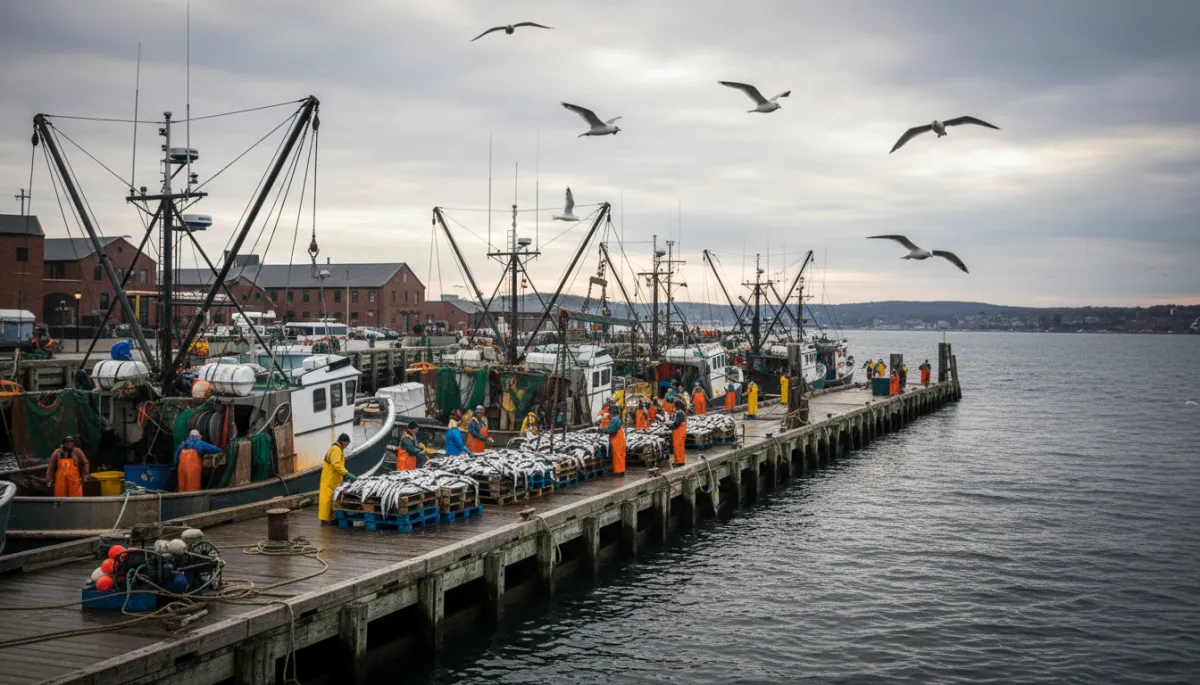
Despite change, Gloucester’s waterfront still hums with the daily work of the sea.
Crucially, Gloucester remains a working waterfront, not a preserved stage set. Modern draggers, lobster boats, and day boats still tie up alongside historic wharves. Regulations have tightened, fish stocks have shifted, and the fleet is smaller than in its heyday, but the essential bargain — risk the sea to feed the region — is unchanged. The Massachusetts Office of Travel and Tourism, through Visit Massachusetts, now promotes Gloucester as both a heritage destination and a living port, where visitors can watch fish being unloaded, tour a schooner, and then eat the day’s catch within sight of the boats that landed it.
Gloucester’s Economic Wake: Feeding and Funding New England
For much of American history, Gloucester’s impact has been larger than its population might suggest. The cod and groundfish landed here fed mill workers in Lawrence and Lowell, dockworkers in Boston, and families across inland New England. Tax revenues from the fish trade helped build roads, schools, and churches. Shipbuilding and chandlery businesses on Cape Ann supplied not only local vessels but also ships for other ports. As the Cape Ann Museum and Gloucester 400+ interpretive projects make clear, Gloucester’s maritime economy helped underwrite the region’s industrial revolution and urban growth.
Today, the economic picture is more diverse. Tourism, arts, marine research, and a growing food scene all share the stage with commercial fishing. Yet the harbor remains Gloucester’s beating heart. Data from NOAA and regional studies show that fishing and seafood processing still support thousands of direct and indirect jobs on the North Shore. The port has adapted, shifting toward value-added seafood products, smaller-scale operations, and partnerships with scientists to rebuild and sustain fish stocks. In doing so, Gloucester offers a model for coastal communities worldwide wrestling with how to honor working traditions while protecting the ocean that sustains them.
Gloucester in the North Shore Tapestry: Why It Still Matters Today
Gloucester doesn’t stand alone on Cape Ann; it’s part of a coastal constellation. Just over the line, the artists’ colony and beaches of Rockport offer a quieter, gallery-lined counterpoint to Gloucester’s industrial harbor — explore more in the Rockport community guide. To the west, the marshes and shellfish flats of Essex, celebrated in the Essex community guide, supplied timber and small craft that once fed Gloucester’s shipyards. The witch-trial history and international port of Salem, profiled in the Salem community guide, built on trade networks that cod helped finance. And the classic coastal villages of Manchester-by-the-Sea and Beverly, detailed in the Manchester-by-the-Sea community guide and Beverly community guide, reflect how seafaring wealth translated into grand homes, commuter rail lines, and modern neighborhoods.
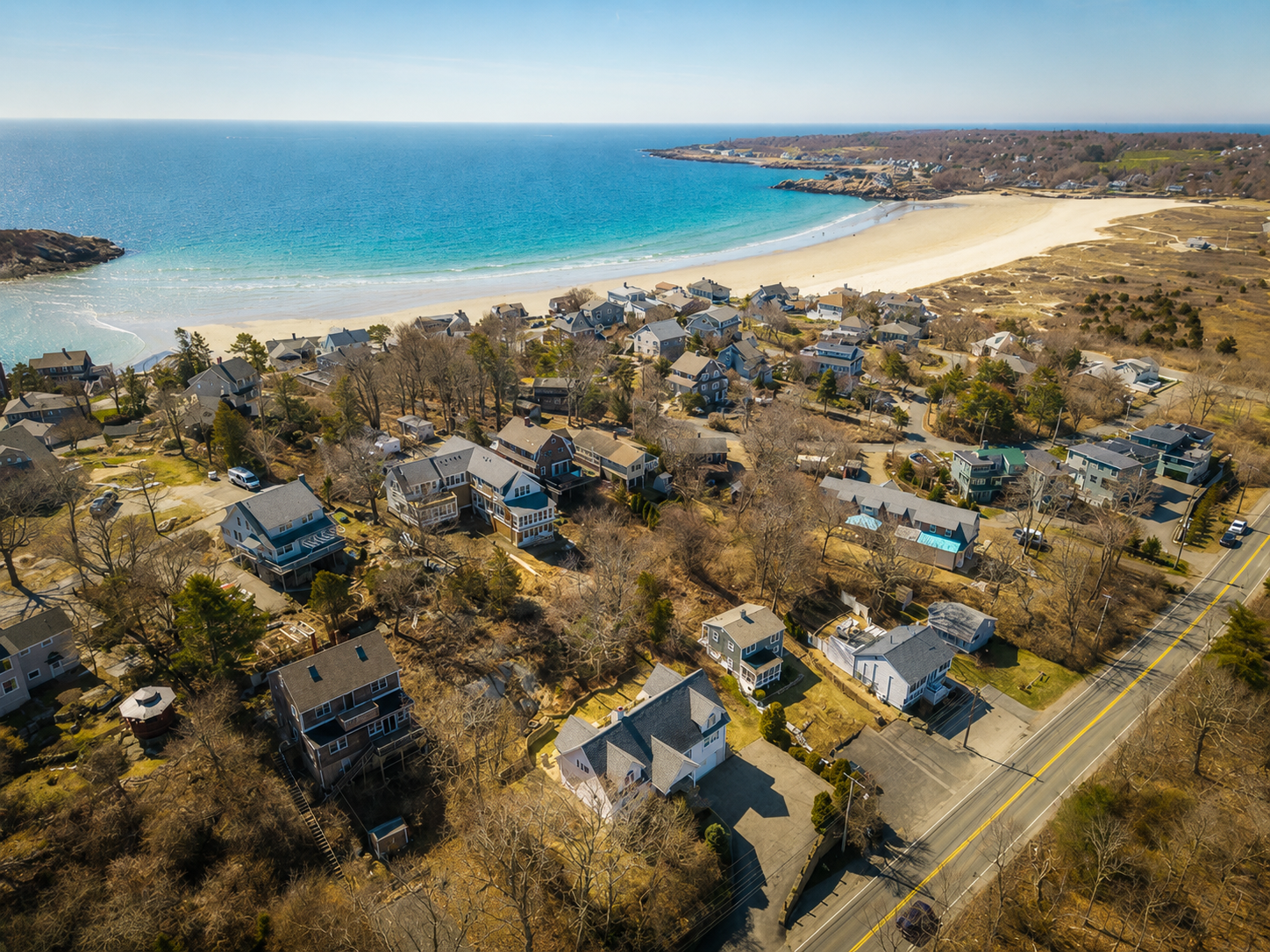
If you’re considering a move to this coastline, Gloucester’s story is essential context. The North Shore relocation guide and hyper-local resources like the Gloucester community guide and Ipswich community guide show how deeply the maritime past still shapes neighborhoods, schools, and local culture. Real estate patterns, documented in North Shore market reports, often follow the old logic of the coast: proximity to the harbor, views of the water, and access to working or recreational docks all trace back to centuries when the sea was not a backdrop, but a lifeline. For visitors planning a weekend or a season, curated resources like Things to do across the North Shore make it easy to weave Gloucester’s museums, harbor walks, and schooner sails into a broader coastal itinerary.
Walking the Waterfront: Experiencing History in Present Tense
One of Gloucester’s quiet miracles is how accessible its history remains. You can stand on the very ledges where the earliest European settlers first tried to farm this rocky soil before turning decisively to the sea. You can wander the narrow downtown streets — learn more in North Shore Coastal Life’s Gloucester community guide — where 19th-century chandlers and fish dealers once haggled over prices, and now galleries, coffee shops, and seafood restaurants share space with marine supply stores. You can step into the Cape Ann Museum and move from Fitz Henry Lane’s luminous harbor paintings to ship models, logbooks, and artifacts that bridge art and labor, beauty and danger.
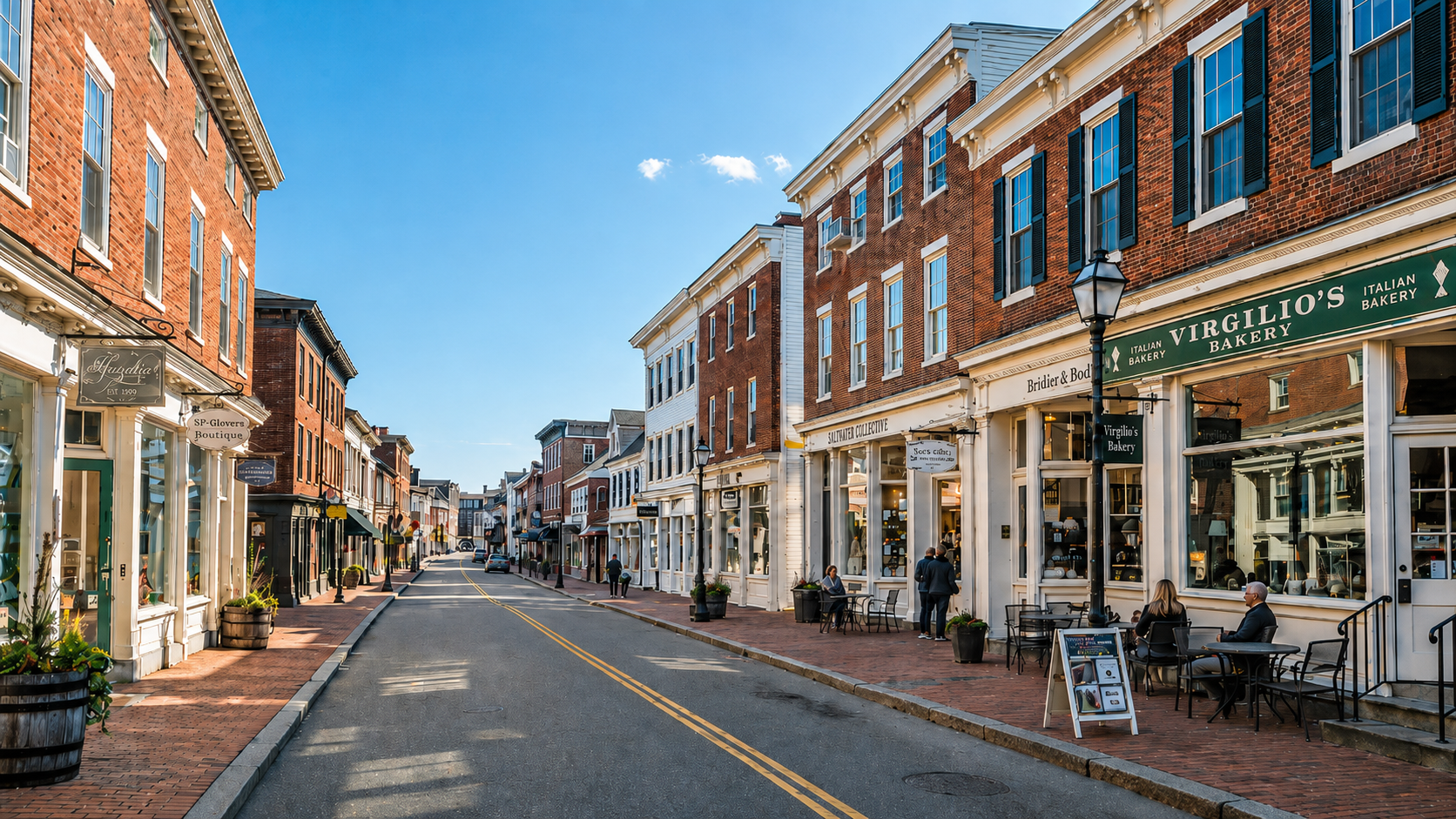
Downtown Gloucester layers fishing heritage, immigrant stories, and a thriving arts scene.
For a deeper dive into the region’s maritime story, the Essex National Heritage Area offers trails and thematic itineraries that connect Gloucester with neighboring towns. The National Park Service and Smithsonian maritime resources place Gloucester within a global context of seafaring, migration, and trade. Yet it’s often the small, sensory details — the clank of rigging against a mast, the smell of bait on a cold morning, the way fog wraps the harbor in a gray curtain — that make the past feel closest. Gloucester invites you not just to read about history, but to inhabit it for an afternoon, a season, or a lifetime.
Gloucester Maritime History: Frequently Asked Questions
When was Gloucester founded, and why is it called America’s oldest seaport?
Gloucester’s fishing station was founded in 1623, making it one of New England’s earliest European settlements. Unlike some early ports that faded or shifted focus, Gloucester has operated continuously as a working seaport for four centuries, which is why it’s often referred to as America’s oldest seaport.
What made Gloucester Harbor so important historically?
Gloucester Harbor is deep, well-protected, and close to rich fishing grounds. This combination allowed large fleets to operate efficiently and safely, turning the harbor into a hub for cod fishing, shipbuilding, and maritime trade that supported New England’s growth.
How did Portuguese, Italian, and Irish immigrants shape Gloucester’s fishing industry?
Immigrants from the Azores, mainland Portugal, southern Italy, and Ireland brought deep seafaring traditions, strong family networks, and a willingness to take on dangerous offshore work. They filled crews, bought boats, organized mutual aid societies, and helped sustain the fleet through booms, busts, and wars, leaving a lasting imprint on Gloucester’s culture and neighborhoods.
What is the significance of the Fishermen’s Memorial?
The Fishermen’s Memorial honors more than 5,000 Gloucester fishermen lost at sea since the 18th century. It serves as a powerful reminder that the city’s prosperity was built on extraordinary risk and sacrifice, turning abstract casualty numbers into individual names, families, and stories.
How did the “Perfect Storm” affect Gloucester?
The 1991 “Perfect Storm” claimed the Gloucester-based Andrea Gail and her crew, deeply impacting the community. The event, documented by NOAA and made widely known by Sebastian Junger’s book, highlighted the inherent dangers of offshore fishing and brought renewed national attention to Gloucester’s maritime culture and resilience.
Is Gloucester still a working fishing port today?
Yes. While the fleet is smaller and more regulated than in the past, Gloucester remains an active commercial fishing port. Modern boats land groundfish, lobster, and other species, and seafood processing, marine services, and harbor-related businesses continue to anchor the local economy.
Where can I learn more about Gloucester’s maritime history when I visit?
Start with Maritime Gloucester on the working waterfront and the Cape Ann Museum downtown. Both offer exhibits, archives, and programs that explore four centuries of seafaring, from Indigenous use of the coast to modern fisheries science and schooner preservation.
How does Gloucester’s maritime history connect to the broader North Shore?
Gloucester’s cod and fishing profits helped fuel trade in Salem, shipbuilding in Essex, and coastal development in Manchester-by-the-Sea, Beverly, and beyond. Regional guides like the North Shore relocation guide and North Shore market reports show how this maritime legacy still shapes local economies, housing, and community identities today.
Final Thoughts: A Harbor That Still Shapes the Nation’s Story
Stand at the end of Gloucester’s breakwater on a gray day and you can feel layers of time pressing in around you. Somewhere beyond the horizon, schooners once vanished into fog, dories fanned out across the Banks, and families on shore counted the days until sails reappeared. Those days are gone, but their imprint remains in the curve of the harbor, the silhouettes of church steeples, the bronze gaze of the Fisherman at the Wheel, and the stubborn, daily work of boats still heading out at dawn. Gloucester became America’s oldest seaport because it married a remarkable harbor to human grit and global demand. It still matters today because it reminds us that coastal beauty and coastal labor have always been intertwined, and that the food on our plates and the stories in our textbooks often begin in places like this — where risk, resilience, and saltwater meet.


