Gloucester: America's Oldest Seaport's Legacy
History, Maritime Heritage, Gloucester MA
Why Gloucester Became America’s Oldest Seaport – And Why It Still Matters Today
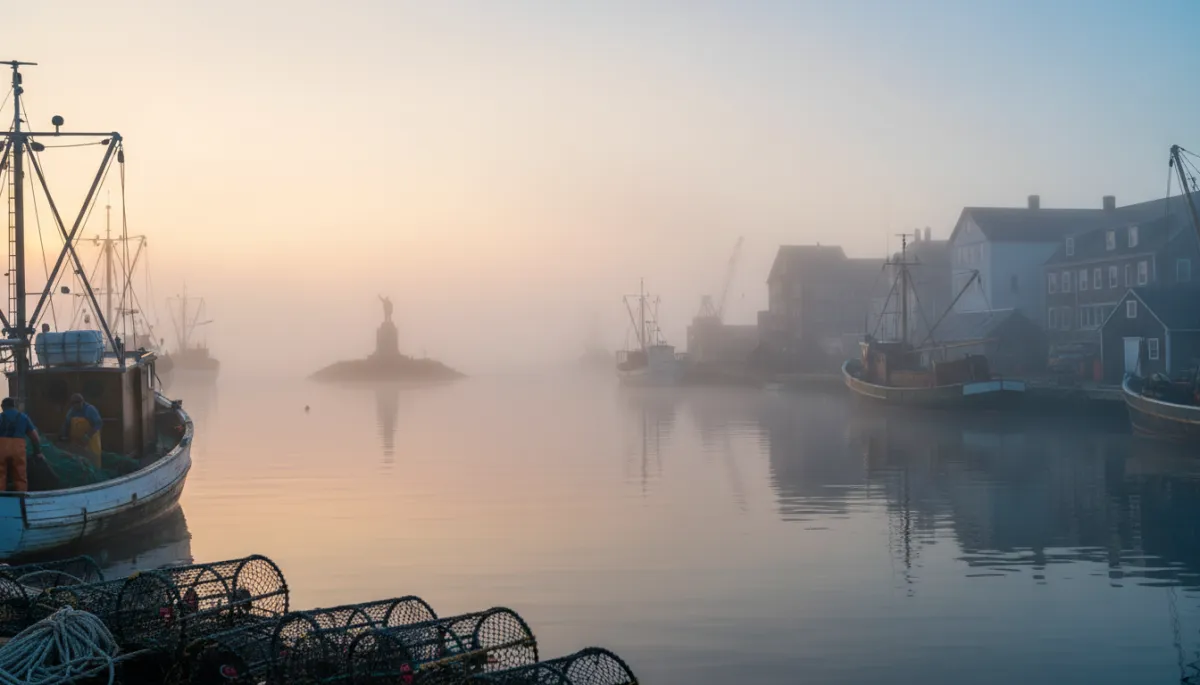
On a fog-softened morning in Gloucester Harbor, the workday begins long before the sun decides what kind of day it will be. Diesel engines cough to life along the working waterfront, deck lights throw pale halos on wet planks, and the sharp clank of rigging carries across the water. A gull cries, unseen in the gray. Somewhere out beyond Ten Pound Island, a foghorn sounds its low, reassuring note. The boats—steel trawlers and wooden lobster boats, a few sleek draggers with their gear stacked high—nose away from the docks one by one, following channels that men and women here have traced for more than four centuries.
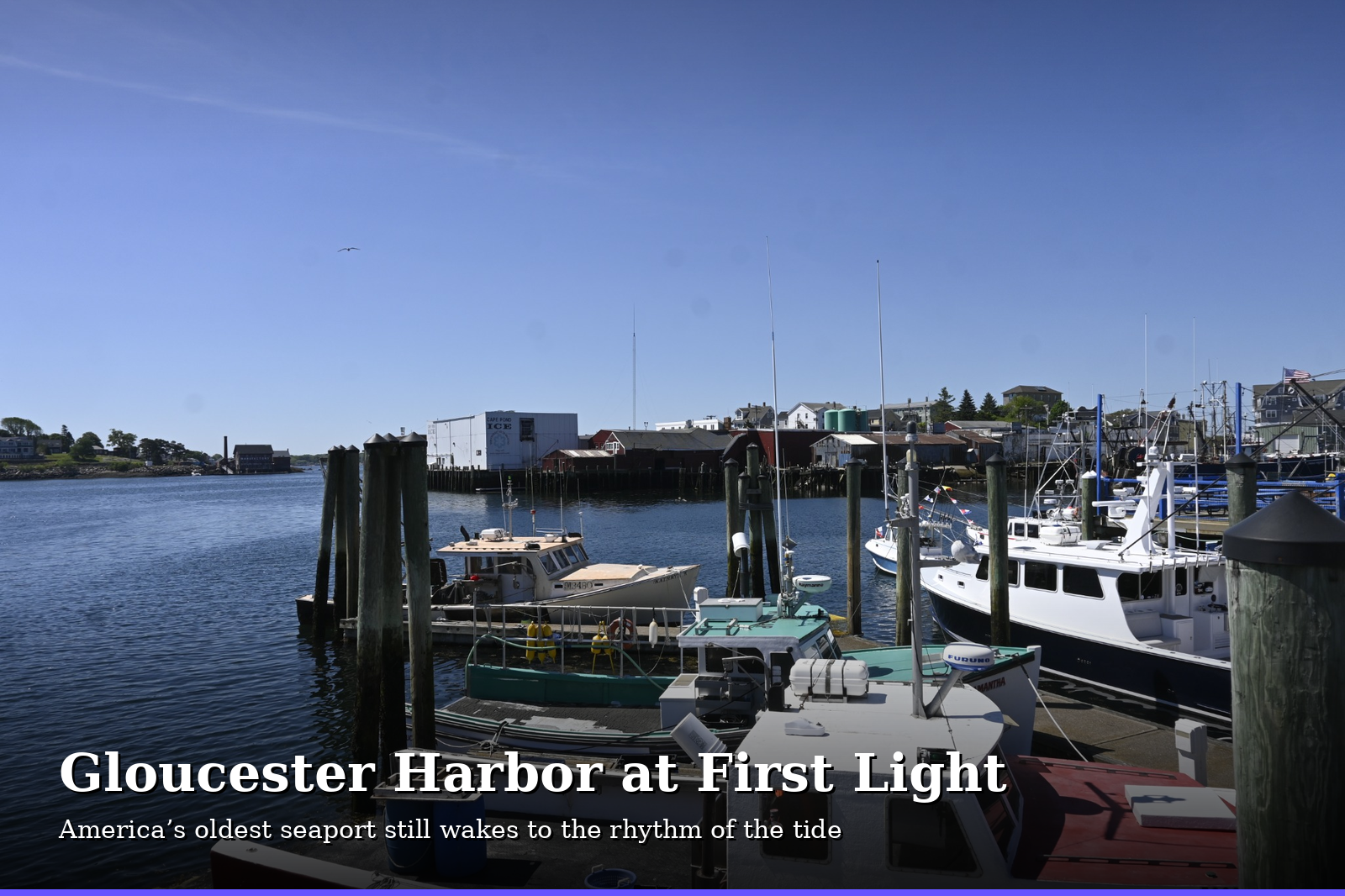
To understand why Gloucester is often called America’s oldest seaport—and why that still matters—you have to begin in this harbor, in the damp salt air, listening to the sounds of work. The story of Gloucester is not just dates and names. It is the story of tides and granite ledges, of cod and schooners, of Portuguese and Italian families, of storms survived and lives lost. It is also the story of how one small, rocky town helped feed an emerging continent and shape New England’s maritime identity.
A Rocky Beginning: Gloucester’s Earliest Settlement
Long before the first English shallop nosed into this harbor, the waters off Cape Ann were well known to the Indigenous peoples of the region. The Pawtucket and other Algonquian-speaking communities fished these waters seasonally, taking advantage of the teeming life along the rocky coast. When European fishermen—Basque, Portuguese, French, and English—began crossing the Atlantic in the 1500s to chase cod on the Grand Banks, they too found Cape Ann’s coastline a useful landmark and sheltering place on their way to and from distant grounds.
Gloucester’s formal European story begins in 1623, just three years after the Pilgrims landed in Plymouth. Backed by the Dorchester Company, English colonists established a fishing station at what is now Stage Fort Park. They built drying racks and simple shelters, not so much a “town” as a practical base for the real business at hand: catching and curing fish to send back across the Atlantic. This early settlement, sometimes overshadowed by Plymouth and Salem, is why Gloucester can lay a credible claim to being America’s oldest continuously operating seaport.
If you stand today on the grassy rise at Stage Fort Park and look out over the harbor, it takes little imagination to picture those first rough fish stages and shallops pulled up on the shore. The wind still comes in strong from the east; the same granite outcrops still shoulder the waves. The setting has changed, but the logic behind it has not.
Why This Harbor? Geography, Shelter, and the Promise of Cod
Gloucester’s harbor looks almost purpose-built for a seaport. Carved into the hard granite of Cape Ann, it offers a deep, well-protected basin with a relatively narrow entrance. Ten Pound Island and the surrounding ledges act as natural breakwaters, softening the blow of Atlantic storms. The tidal range is manageable, the holding ground good, and multiple coves once provided space for fish stages, wharves, and boatyards. For early mariners, these features meant safety: a place to ride out gales, repair vessels, and process catches close to rich fishing grounds.
Just offshore, the continental shelf drops away into waters that were once unimaginably full of cod. Seventeenth-century accounts describe the fish as so thick they could be “taken with baskets.” Whether or not that was literally true, the sentiment captures the reality: this was one of the richest marine ecosystems on earth. The combination of a safe harbor and nearby abundance made Gloucester an ideal base. Where other early outposts faltered, Gloucester’s harbor and its fish gave the town a reason to endure and grow.
The Birth of a Fishing Industry – and the Reign of Cod
From those first rough seasons at Stage Fort, a pattern emerged that would define Gloucester for centuries. Men went to sea in small open boats—first shallops, then later dories and schooners—to fish cod with handlines. The fish were split, salted, and dried on wooden flakes along the shore, then packed in barrels and shipped to markets in Europe, the Caribbean, and beyond. In an era before refrigeration, salt cod became a staple food: durable, protein-rich, and easily transported. Gloucester’s fortunes rose with this trade.
Cod was more than just a commodity; it was an economic engine. Revenues from the cod trade fueled shipbuilding, general commerce, and even colonial politics. New England’s triangular trade routes often began with barrels of salt cod leaving ports like Gloucester for the sugar islands of the Caribbean, returning with molasses, rum, and other goods. In this web of exchange, Gloucester was both a working harbor and an international player, its wharves tying a small coastal town to the wider Atlantic world.
📌 Key Takeaway: Cod fishing didn’t just build Gloucester; it helped feed the Atlantic world and underwrite New England’s early economic power.
From Wharves to a Working Waterfront: Growth, Grit, and Community
As the cod trade expanded, Gloucester’s shoreline transformed. What began as a handful of rough fish stages grew into a dense working waterfront: wharves bristling with masts, cooperages pounding out barrels, chandlers stocking rope and sailcloth, blacksmiths hammering fittings and anchors. By the 18th and 19th centuries, the harborfront was a tangle of piers and warehouses, each tied to a particular vessel owner, fish dealer, or shipbuilder. The town’s narrow streets climbed steeply up from the water, crowded with houses whose occupants lived to the rhythm of the tides and the market.
This growth was not purely economic; it was deeply human. Families built their lives around the waterfront. Children learned early to read weather signs and vessel names. Church bells marked not just Sundays but the return—or overdue absence—of fleets. The harbor became a communal stage where fortunes were made, risks taken, and grief sometimes shared. Even now, a walk along Harbor Loop or Rogers Street reveals echoes of that world: the low-slung fish houses, the smell of bait, the patina of salt on old pilings.
Newcomers from the Sea: Immigration and Maritime Communities
As Gloucester’s fishing industry grew, it needed hands—strong backs, steady nerves, and people willing to stake their lives on the sea. Those people came from across the Atlantic. By the late 19th and early 20th centuries, Gloucester had become a magnet for immigrants, particularly from Portugal’s Azores and Italy’s southern coastal regions. They brought with them not only labor, but language, faith, foodways, and seafaring traditions honed over generations on other oceans.
Portuguese families settled in neighborhoods near the waterfront, their lives anchored by churches like Our Lady of Good Voyage, with its statue of the Virgin Mary holding a model ship. Italian families, many from Sicily and the Amalfi Coast, added their own layers of tradition and skill. On certain feast days, processions wound through the streets, saints carried aloft as boats in the harbor flew strings of flags in celebration. At kitchen tables, stories of storms in the Azores mingled with tales of Georges Bank and the Grand Banks, weaving a shared maritime culture rooted in both Old World and New England seas.
“We followed the fish,” one elderly fisherman of Portuguese descent once said, “and the fish led us here.”
— Recalled in local oral histories
These communities did more than crew boats. They built businesses, ran fish companies, opened bakeries and shops, and helped define Gloucester’s cultural landscape. Their surnames still appear on boat transoms and storefronts, tangible proof that immigration is not a footnote to the story of America’s oldest seaport—it is the story.
The Age of the Schooner and the Gloucester Fishing Fleet
If there is a single image that captures Gloucester at its zenith, it is the Gloucester fishing schooner: long, lean, and fast, with raked masts and clouds of canvas driving her toward distant banks. In the 19th century, these vessels became the workhorses of the North Atlantic fisheries. Designed for speed and carrying capacity, they allowed Gloucester crews to reach far-flung grounds, stay longer, and bring back bigger catches. Names like Elsie, Gertrude L. Thebaud, and Columbia became legends in their own right, celebrated in races and in the fierce, often dangerous competition for fish.
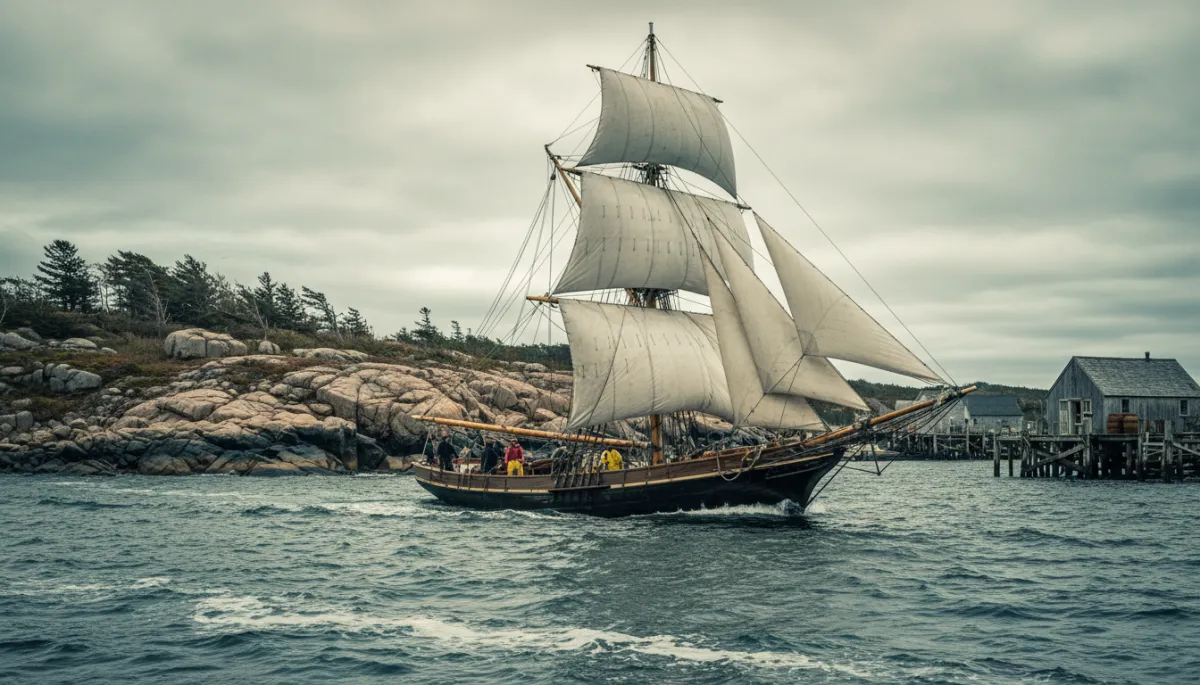
Gloucester’s schooner fleet turned a small harbor into a North Atlantic powerhouse.
At its height in the late 1800s, Gloucester boasted one of the largest fishing fleets in the world. Hundreds of schooners called this harbor home, their masts forming a forest of spars against the sky. The Cape Ann Museum preserves paintings, models, and artifacts from this era, capturing a time when Gloucester’s name was synonymous with maritime prowess. The schooners were not just tools; they were symbols of a town’s daring, skill, and willingness to push into risky waters in search of livelihood and pride.
Storms, Loss, and the High Cost of a Living Sea
Yet the same seas that enriched Gloucester also demanded a terrible price. Storms on Georges Bank or the Grand Banks could rise with frightening speed, turning a routine trip into a desperate struggle. Winter nor’easters, equinoctial gales, and the sudden violence of summer squalls claimed vessels and lives with grim regularity. Families in Gloucester learned to read the sky, the wind, and the radio; they also learned to live with the gnawing uncertainty that comes when a boat is overdue and the weather is turning bad.
The names of lost vessels—Andrea Gail among them, immortalized in “The Perfect Storm”—are woven into local memory. So too are the smaller, less-publicized tragedies: the dory that never returned, the dragger that vanished in a snowstorm, the man swept overboard in a sudden sea. According to historical records and research summarized by institutions such as NOAA, thousands of Gloucester fishermen have been lost since the 17th century. Each loss reshaped families, neighborhoods, and the collective psyche of a town that knows the sea not as a postcard view but as a powerful, unpredictable neighbor.
⚠️ Warning: The romance of the sea often hides its danger. Gloucester’s history insists we remember both.
Landmarks of Memory: The Fisherman’s Memorial and Maritime Gloucester
Walk along Stacy Boulevard on a gray afternoon and you’ll eventually come to a bronze figure, bent slightly forward, hands gripping a ship’s wheel. The Gloucester Fisherman’s Memorial—often called “The Man at the Wheel”—was dedicated in 1925 to commemorate 300 years of Gloucester’s fishing history and the thousands lost at sea. The statue faces the harbor, not the town, as if still searching the horizon. Its base is inscribed with the simple, devastating words: “They that go down to the sea in ships.”
The memorial is more than a tourist stop; it is a place of quiet reckoning. Locals leave flowers there after storms, or on the anniversaries of particular sinkings. Schoolchildren learn its story early, understanding that the statue stands not for one man but for many. Just across the inner harbor, Maritime Gloucester extends this work of memory and education. Housed in historic buildings along Harbor Loop, it combines a working dock, small aquarium, and interpretive exhibits to tell the story of Gloucester’s maritime industries, ecology, and communities, from Indigenous fishing through modern-day science and sustainability efforts.
Shaping New England: Gloucester’s Economic and Maritime Influence
Gloucester’s significance extends far beyond its town lines. For centuries, its fishing fleet helped feed New England and much of the Atlantic world. The wealth generated by cod and other groundfish supported shipyards, banking, and trade networks throughout the region. Historians and institutions such as the Smithsonian note that New England’s maritime identity—its self-image as a region of hardy seafarers, independent and industrious—owes much to ports like Gloucester, where that identity was lived daily, not just celebrated in story and song.
Gloucester also played a role in the evolution of maritime technology and fisheries science. Local shipbuilders refined schooner designs that influenced vessels across the Atlantic. Later, as industrial trawlers and modern gear were introduced, Gloucester’s fleet became a testing ground for new methods—sometimes with unintended ecological consequences. Today, researchers from organizations like NOAA Fisheries and regional universities work with Gloucester fishermen to study fish stocks, climate impacts, and sustainable practices, continuing a long tradition of innovation born from necessity and proximity to the sea.
Gloucester Today: A Modern Working Waterfront
The Gloucester of today is both changed and familiar. The forest of schooner masts has given way to steel-hulled draggers, lobster boats, and a mix of small commercial vessels. Regulations, depleted stocks, and global markets have reshaped the industry; many of the great fish processing plants that once lined the harborfront have closed or reinvented themselves. Yet the harbor remains unmistakably a place of work. Forklifts beep on the docks, bait trucks come and go, and crews in oilskins still load gear in the half-light before dawn. This is not a museum piece; it is a living port adapting, sometimes painfully, to a new era.
Alongside commercial fishing, new maritime industries have taken root. Whale watch boats and charter vessels depart from the same harbor, offering visitors a chance to experience the marine environment that has sustained Gloucester for centuries. Marine research, boat repair, and small-scale aquaculture add further layers. The city has worked to balance tourism with authenticity, ensuring that visitors encounter not just pretty views but the real, ongoing labor of a working waterfront. Local guides and community organizations highlight this blend in their Gloucester Working Waterfront Guide and Cape Ann Maritime History Trail, inviting people to see beyond the postcard.
Gloucester in Context: Rockport, Essex, and Salem
Gloucester does not stand alone on Cape Ann. Just up the coast, Rockport offers a different face of the sea: a smaller harbor, more oriented toward art, tourism, and lobstering than large-scale groundfishing. Its iconic red fishing shack, Motif No. 1, has been painted and photographed countless times, a symbol of New England’s coastal charm. Yet even there, the legacy of Gloucester’s working fleets is felt; many Rockport families once crewed Gloucester boats, and the same weather systems roll over both harbors. A stroll using a Rockport Coastal Walks Guide reveals how the two towns share geology and views, but have carved distinct identities from the same granite shore.
To the west, Essex built its reputation on the craft that carried Gloucester’s ambitions: wooden shipbuilding. For generations, Essex yards turned out schooners and other vessels that ended up fishing from Gloucester and beyond. The Essex Maritime Heritage Guide traces this story along the Essex River, where mudflats and marshes once echoed with the sound of adzes and mallets. Without Essex’s shipwrights, Gloucester’s schooner era would have looked very different; the two towns formed a kind of maritime partnership, one building the hulls, the other sending them to sea.
South of Cape Ann, Salem offers yet another variation on the New England port. Famous for its 1692 witch trials, Salem was also a major commercial and privateering hub, its merchants sending vessels to the Far East, the Caribbean, and beyond. Where Gloucester specialized in fish, Salem diversified into global trade. Visiting both with a Salem and Gloucester Day Trip Itinerary makes clear how each harbor town played a distinct role in shaping the region: Salem the merchant, Essex the builder, Rockport the artist, and Gloucester the tireless fisherman.
Local Observations: Everyday Life in an Old Seaport
Spend a few days in Gloucester and you begin to notice the small details that tie present to past. In the early morning, coffee shops along Main Street fill with a mix of fishermen, tradespeople, and office workers swapping weather reports and harbor news. On certain evenings, you can see families gathered on the Boulevard, watching for a particular boat to round the breakwater, their eyes trained on the waterline the way others watch highway traffic. The smell of bait mingles with the scent of fried clams drifting from shore-side shacks, reminding you that food here is never far from its source.
In neighborhoods like Portuguese Hill or the Italian-influenced West End, shrines and statues peek from front yards, and conversations on stoops slip easily between English and older tongues. Community events—blessing of the fleet ceremonies, St. Peter’s Fiesta, and local maritime festivals promoted in the Gloucester Festivals Calendar—carry echoes of traditions brought across oceans and adapted to this particular harbor. Even the graffiti on certain dockside walls sometimes takes the form of boat names and dates, a kind of informal ledger of who has passed through and when.
💡 Pro Tip: For a feel of everyday harbor life, follow the route in our Self-Guided Gloucester Harbor Walk just after sunrise, when the waterfront is busiest.
Why Gloucester Still Matters Today
In an era when many working ports have given way entirely to condominiums and cruise terminals, Gloucester’s continued life as a true seaport is significant. It stands as a living archive of how coastal communities can adapt without erasing their roots. The challenges are real: volatile fish stocks, climate change, regulatory pressures, and the economic pull of real estate development all bear down on this small city. Yet Gloucester’s response—diversifying its maritime economy, investing in marine science partnerships, and actively preserving its heritage through institutions like Cape Ann Museum and Maritime Gloucester—offers lessons for coastal towns worldwide.
Gloucester also matters because it makes the abstract tangible. Discussions about sustainable fisheries, working waterfront preservation, and coastal resilience can feel distant until you stand on a dock watching a crew unload their catch, or walk through a neighborhood where three generations have gone to sea. Organizations such as National Fisherman, the New England Historical Society, and Massachusetts Division of Marine Fisheries often use Gloucester as a case study precisely because its story is both particular and widely relevant. Here, the questions facing coastal communities—how to balance ecology and economy, tradition and change—are not theoretical. They play out every day on the tide.
For visitors, that relevance can be explored through thoughtful experiences: a Gloucester Harbor History Cruise, a stop at the Cape Ann Artists Trail to see how painters have interpreted the working port, or a walk following our Fishermen’s Memorial Reflection Route that links places of labor, loss, and remembrance. Each offers a way to connect personal curiosity with a much larger story of how humans and oceans shape one another.
Final Thoughts: An Enduring Maritime Legacy
As the fog lifts from Gloucester Harbor and the boats become small silhouettes on the horizon, it is easy to see only the present: the hum of engines, the arc of gulls, the steady work of a modern port. But layered beneath that present are centuries of tide-worn stories—of Indigenous fishers and English settlers, of schooner captains and dorymen, of Portuguese and Italian families who crossed oceans to make a life here, of storms weathered and loved ones lost. Gloucester became America’s oldest seaport not by accident, but because geography, courage, and cod combined to anchor people to this rocky shore and send them repeatedly into risky seas.
Today, the town’s significance lies not just in what it once was, but in what it continues to be: a working harbor that remembers, a community that still looks to the water for both livelihood and identity. In an age when many maritime traditions risk fading into nostalgia, Gloucester insists that the story of the sea is not finished. It is being written every morning in the half-light, as boats ease past the breakwater and disappear into the open Atlantic—following routes first traced centuries ago, carrying with them the weight and wonder of an enduring maritime legacy.


