Best North Shore Sunset Spots Beyond Beaches
Travel, North Shore Massachusetts, Sunsets
The Best Places to Watch a North Shore Sunset Beyond the Beaches
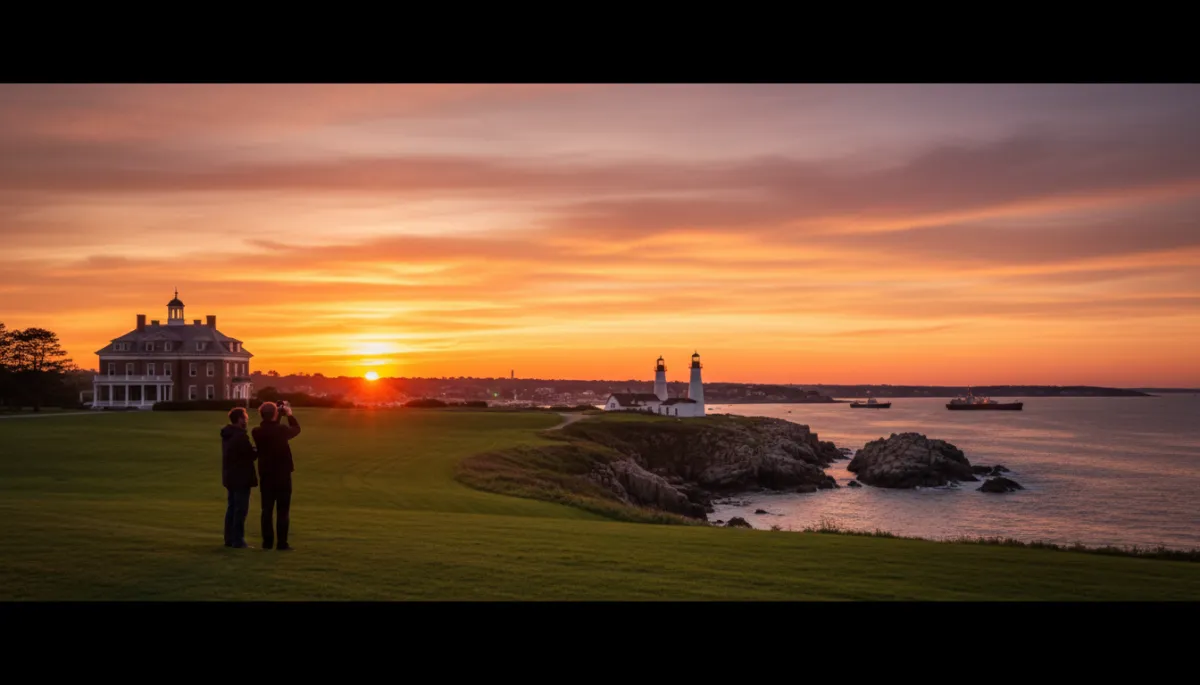
On late summer evenings at Castle Hill in Ipswich, the last golden light spills down the Grand Allée like warm honey, pouring over the clipped hedges and wide lawn as if it’s in no hurry to leave. Out past the marble statues, the Crane Beach dunes glow a soft rose, and the sky over Plum Island Sound shifts from apricot to lavender. A couple lingers on one of the stone benches, quietly talking; somewhere behind you, someone closes a car door and the sound echoes faintly across the hill, then disappears into the stillness. It’s not a beach scene—no towels, no coolers, no gulls screaming over French fries—just that long, slow exhale the North Shore does so well when the day is almost over.
Why Look Beyond the Beach for a North Shore Sunset?
Locals eventually learn a secret that doesn’t make it into many glossy guides: some of the best North Shore sunsets aren’t on the sand at all. They’re on the granite ledges above the tide line, on old carriage roads under hemlock trees, at harborside parks where the smell of bait and diesel mixes with fried clams, and from overlooks tucked behind neighborhoods you’d otherwise drive past without a second thought.
Watching the sun go down from these spots feels quieter, more lived-in. You’re as likely to share the view with a dog walker or someone still in work boots as with a tripod-toting photographer. The light hits rooftops, boats, and tree lines instead of just waves, and you see how the coast actually works and breathes after the beach crowds have gone home. The places below—stretching from Ipswich and Gloucester to Rockport, Beverly, Salem, and Newbury—are where many locals go when they want a real North Shore evening, not a postcard.
Castle Hill on the Crane Estate, Ipswich: Sunset Over Marsh and History
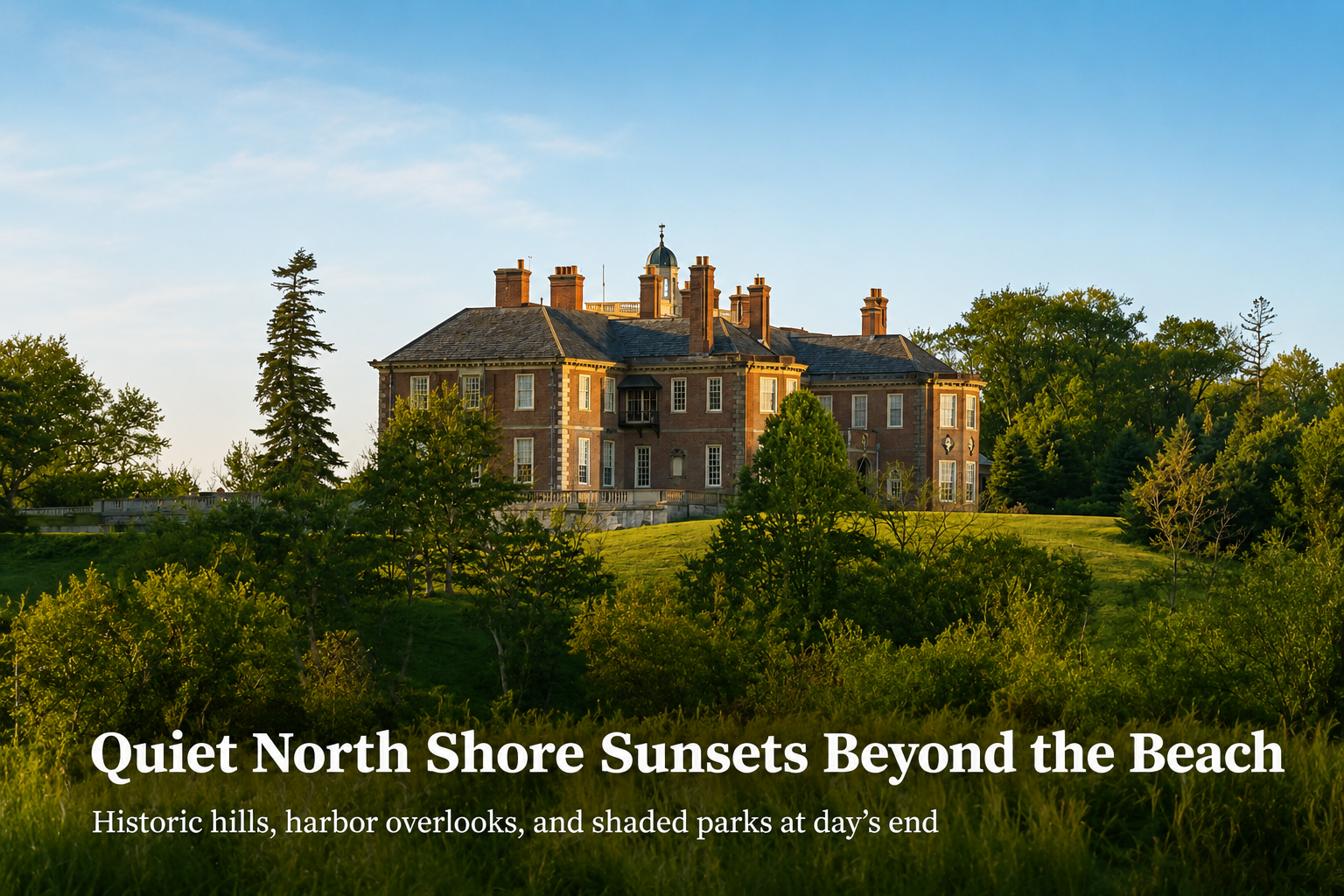
Castle Hill sits at the end of Argilla Road in Ipswich, a long rise of land owned and cared for by The Trustees of Reservations. If you’ve ever driven out toward Crane Beach, you’ve passed the entrance without realizing that, just beyond the trees, the hill offers one of the most layered sunset views on the North Shore: manicured lawn, wild dunes, tidal marsh, barrier beach, and then finally the open sky over the Atlantic and Plum Island Sound. It’s a full cross-section of the coast in one slow turn of your head.
In late August, the light hits the Grand Allée from the side, turning every blade of grass into its own tiny sunbeam. On winter afternoons, when the estate is quieter and the wind cuts straight through your jacket, the sky can suddenly flare orange behind the skeletal trees and snow-dusted statuary. One January, I remember standing near the casino terrace with a thermos of tea, watching the marsh ice catch the last pink light while the rest of the hill was already in shadow. It felt like the season’s last warm thought before the early dark took over again.
Local insight: The best sunsets here tend to be in late summer and early fall, when the humidity softens the colors and the sun sets roughly over the dunes and Plum Island. In winter, the sun drops more to the southwest, painting the marshes and back side of the hill.
For photographers, Castle Hill is a playground of lines and layers. The long perspective of the Grand Allée leads your eye straight toward the horizon, while side paths up to the Great House offer elevated angles over the salt marsh and Castle Neck River. Cloudy evenings can be better than clear ones; broken clouds catch and reflect color long after the sun itself has disappeared behind the dunes. Check the sunset time for nearby Boston and arrive at least 45 minutes early—parking can fill on peak days, and the best color often happens in the 15–20 minutes after the official sunset time, especially when there’s high cloud cover, as NOAA’s notes on sunlight scattering quietly confirm.
Parking is in the main lot by the Great House or at the lower lot if you’re combining your visit with a walk toward Crane Beach. Trustees properties require either a parking fee or membership, so it’s worth checking their current visitor information before you go. Once you’re up on the hill, though, the mood is remarkably unhurried. People wander, sit on the grass, or lean on the stone balustrades, talking in low voices as if the place itself has asked for a little quiet while the light does its work.
Stage Fort Park, Gloucester: Harborside Glow and Working Boats
Down in Gloucester, Stage Fort Park sits on a rocky headland where the first settlers landed in 1623. Today, it’s more likely you’ll find a dog chasing a tennis ball or kids climbing on the big glacial boulders than anyone reenacting history, but the view into Gloucester Harbor at sunset is the kind that stays with you. From the grassy slope above Half Moon Beach, the harbor opens like a tilted bowl: fishing boats at their moorings, the cut of the breakwater, the silhouettes of cranes and fish houses along the working waterfront on Harbor Loop and Rogers Street. When the sky goes pink, the masts and rigging draw it down into the water like ink into paper.
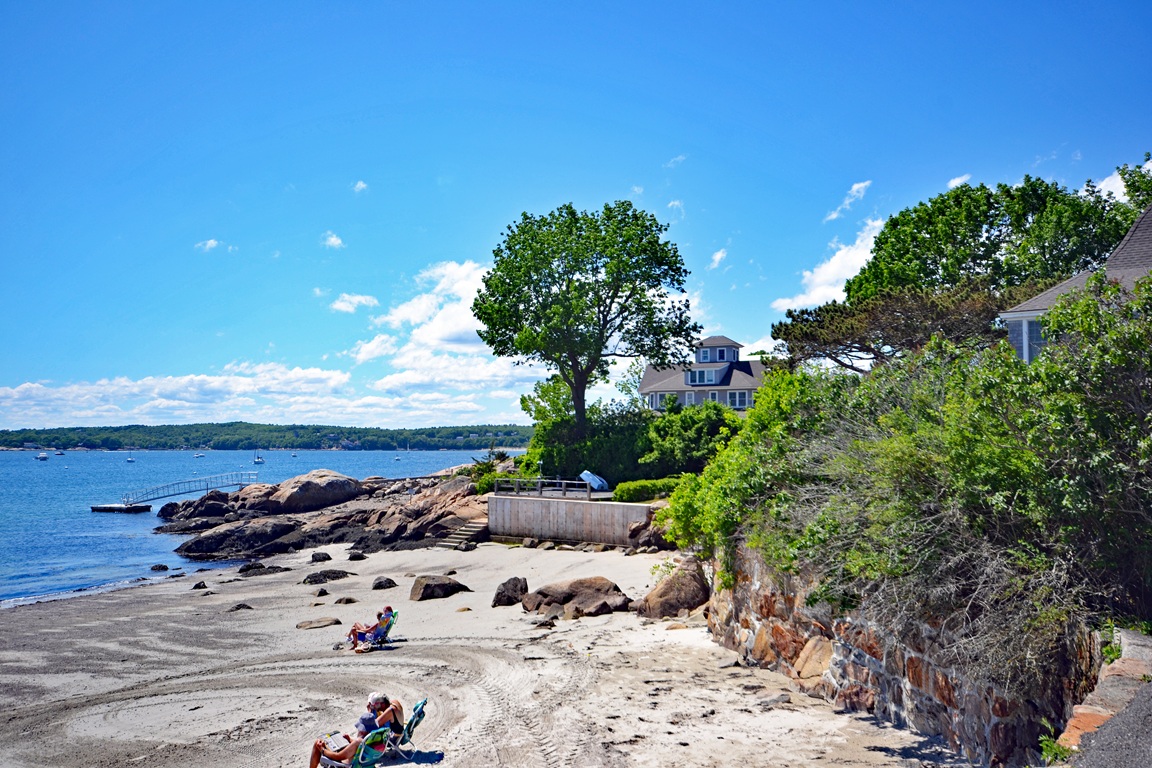
Niles Beach
There’s a particular kind of evening here in early fall when the air smells faintly of woodsmoke from nearby neighborhoods and of the harbor itself—salt, diesel, fish, and something metallic you only really notice when the wind dies down. I remember one September, sitting on a bench near the cannons, watching a dragger ease back in under a sky the color of ripe peaches. The crew moved slowly on deck, coiling lines and talking; a gull hovered behind the stern, just in case. It wasn’t dramatic, but it felt deeply, stubbornly alive in a way a pure “scenic” view never quite does.
Local insight: The best sunsets at Stage Fort often follow unsettled weather. After a day of showers, broken clouds catch the last light and turn the whole harbor into a patchwork of gold and charcoal. Keep an eye on the National Weather Service Boston forecast—a clearing front around dusk is a good sign.
For photography, Stage Fort gives you both wide panoramas and intimate harbor details. The rocky outcrops near Tablet Rock offer foreground texture against the sky, while the curve of the harbor leads the eye toward the inner wharves and the distant outline of Ten Pound Island. Sunset here is especially good in late spring and early autumn, when the sun drops roughly behind the western side of the harbor and the reflections stretch across the mooring field. The City of Gloucester’s Stage Fort Park page has current parking and seasonal information; there’s a large lot just off Hough Avenue, and in the shoulder seasons it’s usually easy to find a spot around an hour before sunset.
Halibut Point State Park, Rockport: Granite, Surf, and Big Sky
If you want a sunset that feels almost otherworldly, Halibut Point State Park in Rockport is where granite, ocean, and sky meet with very little in between. Managed by the Massachusetts Department of Conservation and Recreation, the park occupies a former granite quarry that plunges deep and still on one side, while the other side falls away in ledges and shelves to the open Atlantic. On windy evenings, you can taste salt on the air before you even see the water; waves slam against the rocks below in a steady, physical rhythm that you feel through your boots.
Sunset here is less about gentle color and more about scale. The horizon feels huge, especially in winter when the low sun tracks a long arc across the southwest. In summer, the sun sets farther north and you get a side-lit effect: the quarry walls turn a deep, warm orange while the open ocean to the east darkens to steel blue. One March evening, standing near the old watchtower, I watched a band of cloud sit just above the horizon while the sky above it went from gold to blood-orange. A fishing boat was a tiny dark mark against the light, heading home toward Rockport Harbor. The wind was so strong I had to lean into it, but I stayed until my fingers went numb, just to see the last sliver of light slide behind that cloud bank.
Best seasons and timing: Late fall through early spring can be spectacular here, especially on clear, dry days when the air is crisp. Check the DCR parking hours—the lot off Gott Avenue has a gate, and in some seasons the park closes before full dark, so aim for an hour before sunset to give yourself time to walk the loop around the quarry and out to the coastal ledges.
Photographers love Halibut Point for its strong lines and textures: the sheer quarry face, the still mirror of water inside, the fractured ledges running down to the surf. Long exposures smooth the incoming waves into mist around the rocks, while shorter shutter speeds catch the spray throwing itself into the air. Because it’s so exposed, weather matters; a glance at the NOAA buoy data for nearby waters will tell you if the swell is up and the surf likely to be dramatic. On calmer evenings, the sound of the ocean becomes a steady low roar, like distant traffic, and the quarry itself reflects the sky in perfect, shifting color.
Lynch Park, Beverly: Gardens, Bay Views, and Neighborhood Evenings
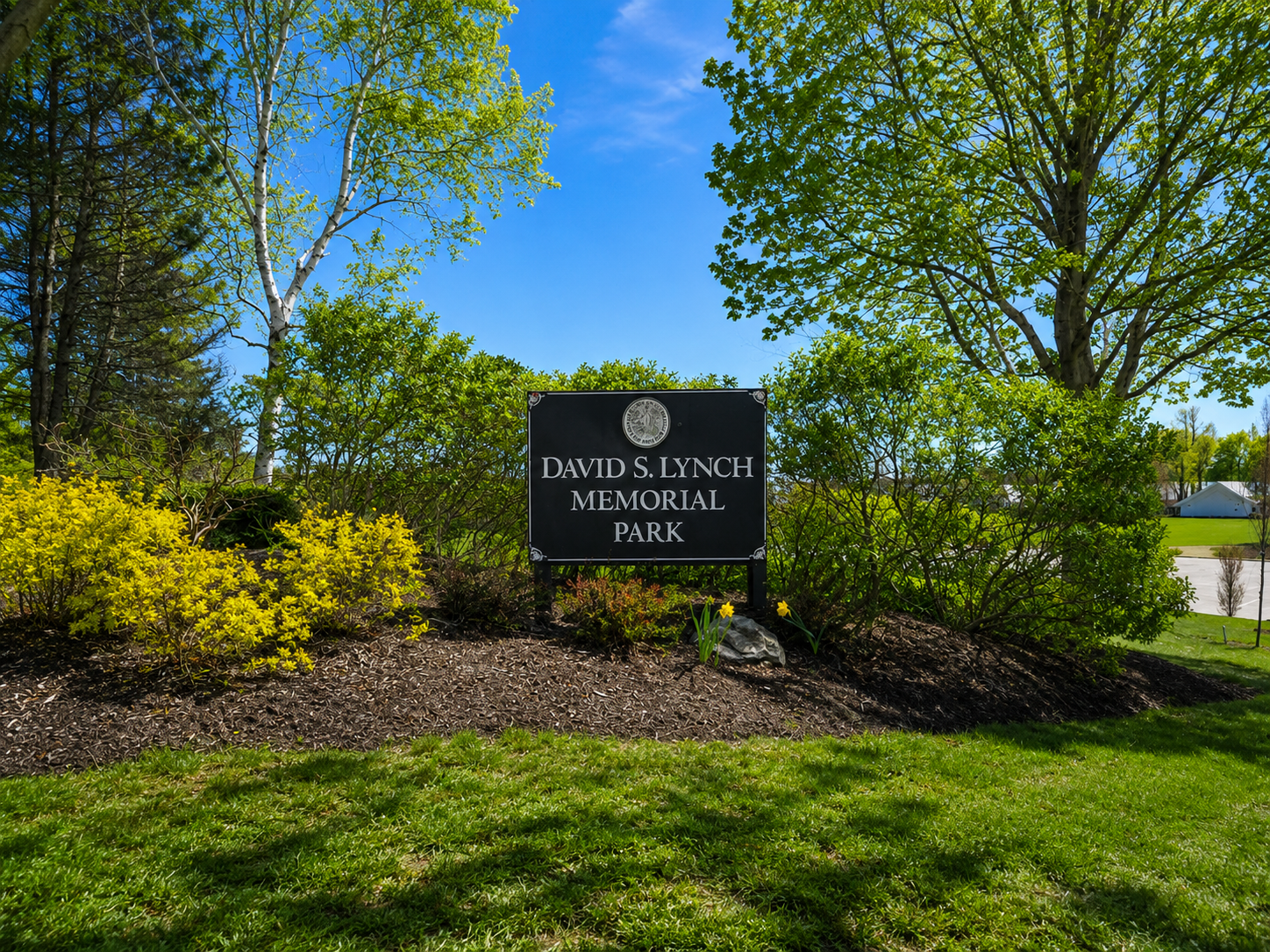
Lynch Park in Beverly sits at the end of Ober Street, tucked behind quiet residential streets where kids ride bikes until the streetlights blink on. The park itself is a mix of open lawn, a rose garden, and two small beaches, but the best sunset vantage points are up on the grassy bluff and near the stone pavilion overlooking Beverly Harbor and Salem Sound. On summer evenings, the air smells of cut grass, roses, and the faint sweetness of whatever’s coming off the grills in the picnic area. Voices carry easily; you hear snatches of conversation in two or three languages as people wander toward the water to see how the day is ending.
What makes Lynch special at sunset is the way the light plays off the inner harbor and the islands. To the west, the sun drops behind Beverly and the mainland, turning house windows into tiny flares of light. To the east, Baker’s Island Light and the low shapes of the islands sit in profile against the fading sky. In late June, the sunset can be soft and hazy, the sky more peach than orange; in October, the color sharpens, and the maples lining the entrance road seem to echo the sky with their own red and gold leaves. The City of Beverly’s Lynch Park page has practical details on parking, which is resident-focused in peak summer but more relaxed in the shoulder seasons and evenings.
Local insight: In mid-summer, the best color at Lynch often happens slightly after the sun dips behind the houses inland. Stay for the “second sunset” when high clouds over Salem Sound catch the light from below the horizon and the entire eastern sky blushes, even though the sun itself is long gone.
For casual photographers, Lynch is forgiving. You can frame shots through the rose garden arches, use the pavilion columns as foreground, or simply step down toward the seawall and let the curve of the shoreline guide the composition. On calm evenings, reflections on the water are almost painterly; on breezier nights, the chop breaks up the color into a mosaic of tiny moving pieces. Checking the NOAA tide predictions for nearby Salem or Beverly is helpful if you’re planning to explore the lower rocks at low water, though for most people the higher, grassy areas offer all the view they need.
Salem Willows, Salem: Arcades, Tree Tunnels, and Harbor Light
Salem Willows is one of those places that feels like it’s been in the same mood for a hundred years: a little bit carnival, a little bit neighborhood park, a little bit seaside retreat. At the far end of Salem Neck, the park looks out over Salem Harbor and Beverly, with a string of old willow trees leaning over the walkways. In summer, the arcades hum with pinball machines and laughter; the air is thick with the smell of popcorn, chop suey sandwiches, and salt. But if you walk just a little farther out along the paths, past the bandstand and the picnic tables, you find pockets of quiet where you can watch the harbor settle down for the night.
Sunset at Salem Willows is a sideways kind of show. The sun itself drops behind the houses and trees of Salem, but the real color unfolds over the harbor and the islands to the east and north. The willow branches frame patches of sky and water; boats at their moorings swing slowly on their lines as the tide turns. On muggy August evenings, the sky can turn a hazy purple, the kind that makes the harbor lights look softer than they really are. In April and November, the air is cooler, clearer, and the colors are sharper—a clean band of orange near the horizon, fading up into pale blue. The City of Salem’s parks listing has a brief overview, but much of what matters here doesn’t fit on a map: the sound of someone practicing trumpet under the trees, the way the willow leaves whisper when the wind shifts off the water, the low murmur of families finishing their last bites of fried dough before heading home.
Parking and timing: There are several lots along the loop road through the Willows. On high summer weekends, it can be crowded until just before sunset; in spring and fall, you can usually pull in an hour before and have your pick of spots. The park’s western edge catches the last direct light, while the eastern edge glows in the reflected color over the harbor.
Photographically, Salem Willows is about mood and framing rather than big, open vistas. Use the willow trunks as silhouettes against the water, or shoot through the branches to create a natural vignette around the harbor. On some evenings, low clouds over Beverly and Marblehead catch the last light in bands, creating layered horizons of color and shadow. It’s the kind of place where you might tuck your camera away for a while and just sit on a bench, listening to the faint clang of halyards against masts and watching the sky dim one notch at a time.
Ravenswood Park, Gloucester: Wooded Twilight and Distant Glow
Not every sunset spot needs a direct line to the horizon. Ravenswood Park, another Trustees of Reservations property off Western Avenue in Gloucester, offers something quieter: the way the day’s last light filters through hemlock and pine, and the way the sky glows above the canopy long after the forest floor has gone dim. The trail network winds over glacial eskers and past vernal pools, and while you won’t see the sun drop into the ocean here, you will feel the shift from day to evening in a way that’s just as vivid.
On summer evenings, the air under the trees holds onto the day’s warmth. You walk along the Old Salem Road trail and catch glimpses of sky through the branches: bright at first, then softening to that pale, almost electric blue that happens just after the sun slips below the horizon. In October, the leaf litter underfoot smells sweet and a little sharp; the low sun slants through the trunks and turns every spiderweb into a strand of copper wire. I’ve walked out to the Ledge Hill Trail around sunset and stood on the rocky outcrop, looking through the trees toward the faint, distant glow over Gloucester Harbor and the Annisquam. You don’t see the sun itself, just a band of color above the dark line of trees, but you hear the evening birds settling and, faintly, the sound of traffic dropping off on Route 127 as people finish their commute.
Practical note: Ravenswood is best for those comfortable walking out before dusk and back as the light fades. Check the Trustees’ seasonal hours, and bring a small headlamp or flashlight if you plan to linger; the trails are well-marked but can feel very dark under the canopy after sunset, especially on overcast days.
For photography, Ravenswood at sunset is about details: the way light grazes across the bark of an old pine, the reflection of the sky in a still pool, the silhouette of a stone wall against the last brightness in the west. It’s particularly beautiful in late fall and winter when the leaves are down and more sky is visible through the branches. Parking is in a small lot off Western Avenue; even on busy days, the interior of the park absorbs people easily, and by the time the sun is going down, you often feel like you have the woods mostly to yourself.
Plum Island Overlook, Newbury: Marsh, River, and Broad Horizons
On the northern edge of the North Shore, the Plum Island Overlook in Newbury offers a very different kind of sunset—wide, horizontal, and deeply tied to the tidal rhythms of the Merrimack River and its surrounding marshes. Just off the Plum Island Turnpike, before you cross the bridge onto the island itself, a small parking area and viewing platform look out over a vast expanse of salt marsh, creeks, and the river’s final bends toward the Atlantic. It’s part of the broader Parker River National Wildlife Refuge landscape, even if it sits slightly apart from the main refuge gate farther down the road.
At low tide, the marsh channels cut deep, dark lines through the golden grasses; at high tide, especially around the full moon, water gleams in every direction. In late summer, the air can be thick with the sweet, earthy smell of marsh mud and the faint hum of insects. Geese and egrets move in loose formations across the sky, sometimes passing directly through the sun’s path as it sinks toward the western tree line beyond the river. One September evening, I watched a line of cormorants flying low, just skimming the water’s surface, while the sky behind them went from pale lemon to a deep, glowing orange. The only other sounds were the occasional car passing behind me on the causeway and the soft clicking of someone else’s camera a few yards away.
Best times and seasons: Late summer and early fall are prime here, especially on evenings with scattered clouds. Because the view faces west over the marsh and river, the sun’s path is in front of you for much of the year. Checking the tide and river conditions can help you decide whether you’ll be looking at broad mudflats or flooded marsh at sunset—both are beautiful, just different.
Photographers tend to line up along the railing of the overlook deck, tripods set low to catch the grasses in the foreground. Long lenses pick out birds against the sky; wide lenses take in the full sweep of marsh, river, and distant tree line. The small lot fills quickly on especially good evenings, but people come and go—many stop for ten minutes on their way to or from Plum Island proper, taking in the view before heading back toward Newburyport. It’s one of those places where you can feel the river finishing its long workday, easing out to sea in the last light.
Threading the North Shore Together: Seasons, Light, and Local Rhythm
Seen together, these sunset spots sketch a map of how the North Shore actually lives with the sea. Castle Hill and Ravenswood speak to old estates and preserved woods, where organizations like The Trustees keep pieces of landscape intact for anyone willing to walk a little. Stage Fort Park and Salem Willows sit right up against the daily business of coastal towns—boats coming and going, kids playing, arcades humming. Halibut Point and Plum Island Overlook open out into big sky and working water, where the way light scatters over the horizon matters as much to a photographer as to someone heading home in a small boat watching the color shift ahead of them. Lynch Park offers that in-between space: gardens and neighborhood lawns meeting the broad, sheltered sweep of Salem Sound.
The seasons change the character of each place as surely as the tide. In July, a sunset at Stage Fort might mean kids still in wet swimsuits running up from Half Moon Beach, the air soft and the harbor full of moored boats. In January at Halibut Point, it’s you, the wind, and the long, low slide of the sun toward a steel-blue horizon. October at Castle Hill brings that clear, bright light that makes every contour of the marsh stand out; May at Ravenswood means peepers calling from the vernal pools as the last color drains from the sky above the trees. Checking practical details—park hours, parking fees, and weather through sources like Massachusetts outdoor recreation pages, DCR, and NOAA—helps, but a lot of the magic comes from simply showing up and seeing what the day has decided to do.
Final Thoughts
The North Shore’s quieter sunset spots ask a little more of you than a simple walk onto the sand. They might ask you to follow an old carriage road up a hill, to park behind a neighborhood and wander toward the water, to stand on granite ledge while the wind tugs at your sleeves, or to linger on a wooden overlook while the marsh trades its bright greens for muted browns and golds. In return, they offer a view of the coast that feels lived-in rather than staged: boats coming home, harbor lights flickering on one by one, trees darkening into silhouettes, and the slow, steady work of tide and sky continuing whether anyone is there to photograph it or not.
Watching the day end from Castle Hill’s long lawn, from the grass above Half Moon Beach, from the quarry rim at Halibut Point, from the rose-scented bluff at Lynch Park, from the willow-shaded paths in Salem, from the hemlock trails at Ravenswood, or from the Plum Island Overlook’s simple wooden deck, you begin to recognize the small, repeating gestures that make this stretch of coast feel like one place. The exact colors change, the wind shifts, the tide rises and falls, but there is always that moment when the light thins, the sounds soften, and the North Shore seems to pause and look out over its own shoulder before turning toward night. Those are the moments these spots quietly hold, just beyond the beaches, waiting for anyone who takes the time to notice.


