
AI Insights: Essex County Real Estate 2026
AI Certified Agent™ Insights, Essex County MA Housing Trends
What AI Market Analysis Is Telling Us About Essex County Real Estate in 2026
How artificial intelligence is quietly reshaping pricing, timing, and expectations for buyers and sellers along Boston’s North Shore.
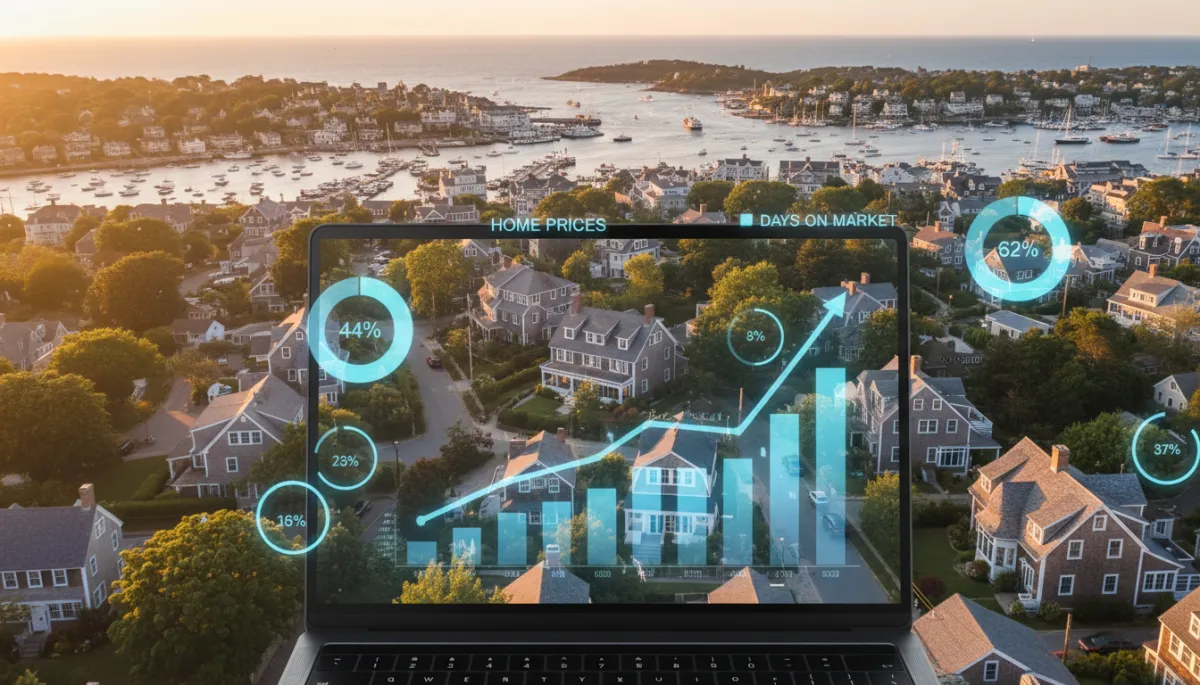
AI Reads the North Shore Market
Real-time data for smarter 2026 housing decisions
Hook: When the Algorithm Disagrees With the Open House Chatter
On a breezy Saturday in Beverly, neighbors at an open house insist that “prices can only go up from here.” Yet on a nearby kitchen counter, a laptop running AI real estate North Shore MA analytics is telling a more nuanced story: modest appreciation in some pockets, slight cooling in others, and a subtle shift toward longer days on market in specific price bands across Essex County MA housing trends. In 2026, the gap between casual conversation and data-driven insight has rarely been wider—and artificial intelligence is right in the middle of that conversation.
💡 Pro Tip: For a deeper dive into how AI reads shifting neighborhood demand, explore resources like Zillow Research and the Redfin Data Center, which publish ongoing analytics on pricing, days on market, and buyer behavior.
The 2026 Snapshot: What the Numbers Say About Essex County MA
Across Essex County, Massachusetts, 2026 looks less like a boom and more like a recalibration. Zillow places the average home value around $722,000, with homes often going under agreement in roughly nine days. Redfin and Realtor.com, however, suggest a slight year-over-year dip in median sale prices—down roughly 1–2%—and longer marketing times edging into the 21–28 day range. AI market analysis tools ingest these mixed signals, comparing them against years of local data, mortgage-rate movements, and seasonal patterns that are specific to the Boston North Shore coastline.
Instead of one simple headline, AI sees a patchwork: stable to slightly rising prices in well-located coastal towns like Manchester-by-the-Sea MA real estate and Gloucester MA housing market, more pressure on over‑ambitious list prices in inland communities, and a clear trend toward buyers taking a bit more time to evaluate options. This is where an AI Certified Agent Essex County can interpret what the algorithms are flagging for real households, not just spreadsheets.
How AI Market Analysis Actually Works in 2026
Behind the scenes, today’s AI home pricing tools Massachusetts are far more advanced than the early “guess-your-home-value” widgets. They draw from automated valuation models with error rates now hovering under 3% in many markets, cross‑checking:
Recent sales across Essex County, weighted by similarity in style, condition, and micro‑location
Days on market patterns by town, price tier, and season—winter in Gloucester looks very different from May in Beverly or Salem
Buyer search behavior, including where online demand is surging or easing for specific neighborhoods and school districts
Predictive real estate analytics North Shore platforms then generate short‑term forecasts: How likely is a three‑bedroom colonial in Beverly to sell above list price in the next 30 days? How does that probability change if the list price drops $15,000 or if the seller waits until after Labor Day? These tools do not replace human judgment, but they give Essex County residents a sharper lens on what the market is signaling right now.
📌 Key Takeaway: Much of this modeling is powered by techniques like gradient boosting and neural networks. If you’re curious about the technical side, check out McKinsey’s QuantumBlack insights or Google’s Machine Learning Crash Course for accessible explanations of how modern predictive systems learn from housing data.

Local AI dashboards translate county-wide statistics into town-by-town pricing signals.
Vignette 1: Timing a Beverly MA Sale With AI Signals
Consider Maria, who owns a classic Cape a few blocks from the water in the Beverly MA real estate market. She planned to list in late July, assuming summer traffic would bring the strongest offers. An AI market analysis for North Shore home sellers, however, flagged an emerging pattern: in her price range—around $850,000—homes that hit the market in May and early June were selling in under two weeks, often at or slightly above list. Properties listed later in summer saw more price reductions and longer marketing times as buyers shifted focus to fall school planning or travel.
The AI suggested a “sweet spot” in late May, based on three years of Beverly and Salem MA market data, mortgage‑rate moves, and buyer search volume trends. Maria adjusted her timeline, completed exterior touch‑ups earlier, and entered the market while that demand window was still open. Her final sale price aligned almost exactly with the AI’s predicted range, reinforcing how artificial intelligence helps home buyers in Massachusetts and sellers alike by grounding decisions in patterns that individual homeowners rarely see on their own.
Vignette 2: An Ipswich Buyer Uses Predictive Search Tools
On the other side of the table, James and Priya were renting in Somerville and dreaming of more space near the coast. Their target: Ipswich MA home prices 2026 in the $700,000 range, ideally within biking distance of the river. Instead of manually refreshing listings, they used data-driven home buying Boston North Shore tools powered by AI. These platforms watched not just new listings, but also subtle shifts in list‑to‑sale ratios and buyer competition in Ipswich, Rowley, and Newburyport.
When the system noticed a brief dip in buyer activity—fewer showings and slightly longer days on market for similar properties—it flagged a “favorable conditions” alert. Within that two‑week window, James and Priya toured a home near downtown Ipswich and submitted a strong, but not excessive, offer based on AI home pricing tools Massachusetts had calibrated against recent sales. They secured the property without a bidding war, a result that would have been harder to achieve without those predictive signals.
Town-Level Signals: Gloucester, Manchester-by-the-Sea, and Salem
In 2026, AI real estate North Shore MA platforms often treat each town as its own micro‑market. Gloucester MA housing market data, for example, shows a steady stream of buyers drawn to ocean views and working waterfront charm, but with slightly more sensitivity to price jumps above key thresholds. Manchester-by-the-Sea MA real estate, by contrast, tends to hold value even when mortgage rates tick higher, thanks to limited inventory and strong second‑home demand. Salem MA market data reveals another pattern: smaller condos near downtown and the commuter rail continue to attract younger buyers, while larger single‑family homes see more negotiated pricing as affordability ceilings are tested.
AI doesn’t just average these trends; it distinguishes them. For a seller in Gloucester considering a price reduction, the model may recommend a modest adjustment and improved presentation rather than a steep cut, based on how similar homes have performed. For a buyer evaluating Manchester-by-the-Sea, predictive real estate analytics North Shore tools may indicate that waiting six months is unlikely to produce a major discount, shifting the conversation from “if” to “how” to structure an offer that fits long‑term plans.
Where to Learn More About Local AI Insights
For homeowners who like to read deeper into AI Certified Agent™ perspectives, the AI Insights section of essexcountyhomesforsale.com explores additional town‑by‑town examples, while the Buyer & Seller Tips and First-Time Buyers categories explain how these tools intersect with everyday decisions about pricing, contingency strategies, and timelines.
💡 Pro Tip: To see how AI is influencing real estate beyond Essex County, you can also explore the National Association of Realtors research library and Zillow’s AI & machine learning articles for national-level trends and case studies.
Q&A: AI and Essex County Real Estate in 2026
1. Can AI predict real estate prices on the North Shore?
AI cannot see the future with certainty, but it can estimate probability ranges with increasing accuracy. In Essex County, AI models analyze thousands of recent sales, including list‑to‑sale ratios, days on market, and seasonal shifts. They then generate near‑term forecasts for likely sale prices and timeframes. For example, they might estimate a 70% chance that a Salem condo listed at $525,000 will sell within 21 days, assuming condition and marketing are in line with comparable properties. These are informed projections, not guarantees, but they are far more grounded than gut feeling alone.
2. How accurate is AI for home valuations in Essex County MA?
Studies suggest that modern automated valuation models often land within a few percentage points of final sale price when properties are typical for their neighborhood and well‑documented in public records. In Essex County, where housing stock ranges from antique colonials to new waterfront construction, AI performs best when fed detailed, accurate information about updates, condition, and amenities. The more unique the property, the more an on‑the‑ground assessment matters alongside the algorithm’s estimate.
📌 Key Takeaway: If you want to experiment with valuation tools yourself, compare estimates from several sources such as Zillow’s Zestimate, Redfin Estimate, and Realtor.com’s home value tool to see how different AI models view the same property.
3. What is an AI Certified Agent in real estate?
An AI Certified Agent in real estate is a professional who has formal training in using artificial intelligence tools for pricing, trend analysis, and transaction planning. Rather than treating AI as a novelty, an AI Certified Agent Essex County integrates these systems into daily practice: reviewing dashboards that track Essex County MA housing trends, comparing multiple data sources, and translating complex outputs into plain‑spoken guidance. The certification signals familiarity with both the technology and its limitations, especially in nuanced coastal markets.
4. How artificial intelligence helps home buyers in Massachusetts today
For buyers, AI tools streamline several steps: they monitor new listings that match detailed criteria, estimate fair value based on recent sales, and flag when a property appears under‑ or over‑priced. Some platforms simulate different offer scenarios—price, closing date, contingencies—and estimate the likelihood of acceptance based on recent patterns. In data-driven home buying Boston North Shore, this means less guesswork and more focus on homes that truly fit both budget and lifestyle, from Beverly and Salem to Ipswich and Gloucester.
💡 Pro Tip: To understand how AI is being built into consumer tools, explore guides from companies like Opendoor on automated valuations or Rent.com’s overview of AI in real estate, which explain how algorithms inform everyday housing decisions.
5. Should I trust AI when buying a house on the North Shore?
AI is best treated as a highly informed advisor rather than the final decision‑maker. It excels at spotting patterns in pricing, demand, and timing that individual buyers rarely have time to analyze. However, AI cannot walk through a Manchester-by-the-Sea property and sense coastal wear on windows, or understand how a particular street feels on a foggy November evening. The strongest decisions combine AI‑generated insights with on‑site evaluation, professional inspection, and personal priorities about schools, commute, and community.
6. How AI is changing real estate 2026 compared with a few years ago
A few years ago, AI in real estate mostly meant automated home values on national websites. In 2026, AI market analysis in Essex County real estate includes forecasting buyer activity by town, identifying micro‑markets where price reductions are likely, and even suggesting optimal listing dates based on weather, school calendars, and mortgage‑rate expectations. National research from firms like McKinsey and Zillow points to AI moving from background support to a central role in how pricing and timing decisions are modeled across the country, including here on the North Shore.
7. Where does AI fit into long-term planning for Essex County homeowners?
Long‑term, AI can help homeowners scenario‑plan: What happens to expected value if they add a bedroom, finish a basement, or hold the property as a rental for five years? By combining local rent data, projected appreciation curves, and maintenance cost estimates, AI tools sketch potential outcomes under different strategies. For North Shore owners who think in decades rather than months, this provides a structured way to compare “sell now,” “renovate,” or “rent and revisit later,” grounded in real numbers rather than pure speculation.
📌 Key Takeaway: If you’re interested in long‑range modeling, reports like the Urban Institute’s housing finance research and Brookings Institution housing studies offer useful context on how data and AI are shaping long-term housing trends.
Final Thought: Reading the Tide Lines of a Data-Rich Coast
Standing on the harbor in Gloucester or walking Cabot Street in Beverly, the 2026 market does not announce itself with headlines. It shows up in small details: a few more price reductions in certain ranges, slightly longer days on market in others, steady strength in walkable coastal neighborhoods, and ongoing demand for homes near commuter rail stations. AI real estate North Shore MA tools pull those details together, transforming scattered data points into a coherent picture for both buyers and sellers.
For Essex County residents, the question is less “can AI predict real estate prices perfectly?” and more “how can these insights inform thoughtful decisions about timing, pricing, and long‑term plans?” Used thoughtfully, AI becomes another way of reading the tide lines of a complex, evolving coastal market—one more instrument in a well‑tuned North Shore toolkit, alongside local knowledge, careful research, and clear personal priorities.


