
AI Certified Agent™: North Shore Real Estate 2026
AI Certified Agent™ Insights · Author: Kathleen Militello
AI Certified Agent™ Insights, AI Certified Agent North Shore MA, AI real estate 2026, Essex County homes, smart home buying technology
What It Really Means to Work With an AI Certified Agent™ on Boston’s North Shore in 2026
In 2026, buying or selling a home on the North Shore of Boston no longer feels like guesswork. It feels more like flying with instruments instead of just looking out the window. This is the quiet, practical power behind working with an AI Certified Agent™—especially in coastal communities where every street, school district, and sea breeze can shift a home’s value by tens of thousands of dollars.
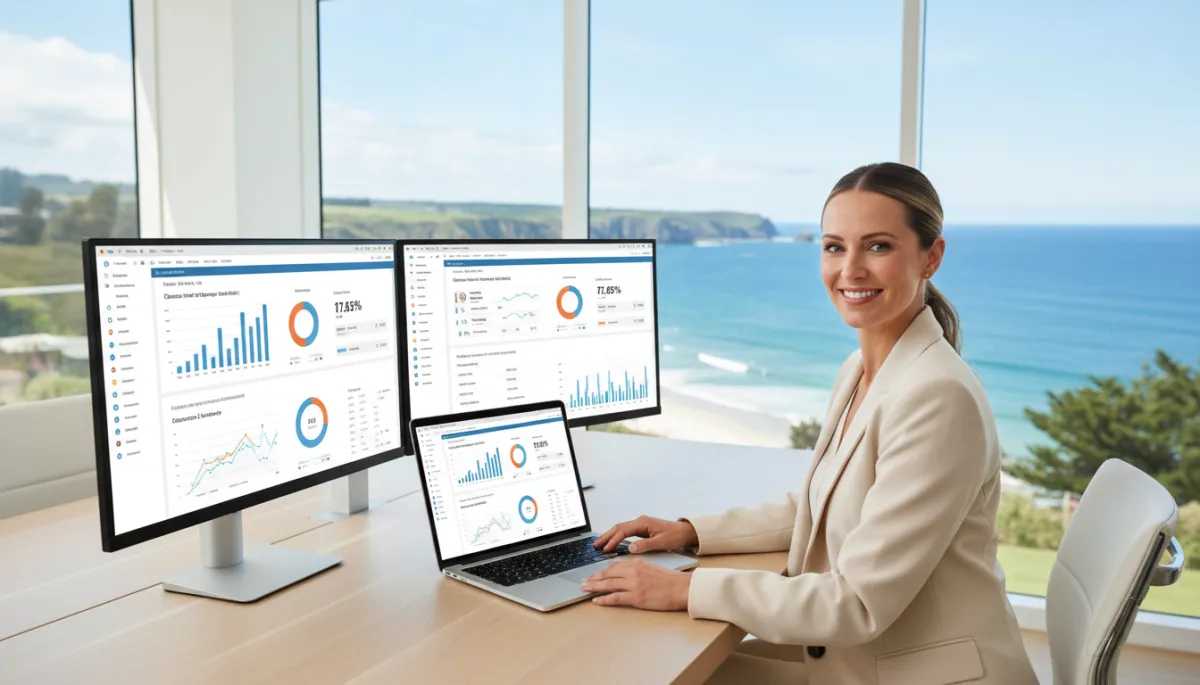
A Tuesday Night in Beverly: What an AI Certified Agent™ Actually Does
Picture a gray March evening in Beverly. The kids are finishing homework at the kitchen island, and the Red Sox spring training game hums quietly in the background. You and your spouse sit with your agent at the dining table, laptop open, coffee cooling beside a stack of listing sheets you printed “just in case.”
Five years ago, this conversation would have revolved around “gut feel,” a handful of comparable sales, and a rough sense of where the market might be heading. Tonight, your AI Certified Agent™ is walking you through a live pricing model that updates as you talk—adjusting for school ratings, walkability, flood risk, renovation quality, and even how quickly similar homes went under agreement in the last 30 days instead of last year. If you live on the North Shore of Boston, that is worth noting.
What “AI Certified Agent™” Really Means in 2026
“AI Certified Agent™” is not a buzzword or a new gadget. It’s a signal that your agent has been trained and vetted to use advanced analytics tools responsibly, understands how those tools work, and can translate complex data into clear, human decisions. In practice, that certification usually covers three areas:
- AI-driven pricing models: Tools that analyze thousands of data points to estimate value, not just a handful of comps pulled from the MLS.
- Predictive market analytics: Systems that forecast demand, days on market, and likely price movements in specific North Shore neighborhoods and price bands.
- Smart marketing automation: Technology that decides when, where, and to whom your listing should be shown to get the right eyes on it quickly.
None of this replaces local experience. Instead, it amplifies it. A seasoned agent who knows the difference between Danvers and Manchester-by-the-Sea waterfronts now has the benefit of real-time, data-backed insight layered on top of years of walking those streets.

Interactive pricing dashboards now combine comps, trends, and risk factors in one view.
How AI Pricing Tools Really Work for North Shore Homes
Traditional pricing starts with recent comparable sales. AI pricing models start there—and then keep going. They ingest data from public records, MLS history, renovation permits, school performance, commute times, insurance and flood maps, even patterns in price reductions across Essex County homes over the past several years. According to industry analyses from firms like McKinsey and Forbes, these models can significantly narrow the gap between list price and final sale price when used correctly.
On the North Shore, that matters because micro-markets shift quickly. A renovated colonial in Hamilton with a home office and fiber internet will behave differently from a similar-sized property near the commuter rail in Salem. AI pricing models surface those differences, often showing:
- A recommended list price range based on current demand, not last season’s market.
- Sensitivity analysis—how pricing $10,000 higher or lower is likely to affect showings and offers.
- Risk indicators, such as overpricing odds or likelihood of needing a price reduction after two weeks.
A Marblehead Example: The $25,000 Question
In late 2025, a couple in Marblehead debated whether to list their updated Cape at $925,000 or “test the waters” at $950,000. Their AI Certified Agent™ ran a pricing scenario for similar homes within a one-mile radius, factoring in seasonal demand, buyer search activity, and how quickly homes in that price band had gone under contract in the last 60 days.
The model showed a clear pattern: homes priced within 1% of the recommended AI value were going under agreement in 9 days on average, with multiple offers. Overpriced listings sat for 28 days and sold for less after reductions. The couple chose $929,000. They accepted a strong, clean offer on day eight—above asking—with minimal contingencies. That decision wasn’t luck; it was data plus experience, applied to one specific Cape on one specific street.
Predictive Buyer Behavior: Knowing Who Will Care About Your Home
Predictive analytics in real estate goes beyond “who clicked on the listing.” AI systems now map patterns in how buyers search, save, and tour homes across platforms. They look at price ranges, school preferences, commute patterns, and even which features—finished basements, EV chargers, in-law suites—tend to trigger showings and offers in different North Shore towns.
For example, in 2026 many buyers relocating from Cambridge and Somerville are searching for Essex County homes with home offices, strong broadband, and access to commuter rail. AI systems flag those buyers as high-probability matches for listings in Salem, Beverly, and Swampscott that meet those criteria. Your AI Certified Agent™ sees this in a dashboard, not as abstract numbers, but as specific segments of real people likely to schedule a showing this week, not “someday.”

High-quality photos combined with AI targeting place listings in front of the right buyers faster.
Why AI-Marketed Listings Tend to Sell Faster
Marketing used to mean putting a sign in the yard, uploading photos, and hoping the right buyer found the listing. In 2026, AI marketing platforms treat each listing like a small data-driven campaign. They automatically test different headlines, photos, and descriptions; they track which combinations generate the most clicks, inquiries, and showings; and they shift the budget toward what works in real time.
On the North Shore, this might mean emphasizing walk-to-beach access in one ad set and highlighting commuter rail proximity in another, then watching which message resonates more with active buyers this week. Industry research has shown that AI-optimized campaigns can significantly improve engagement and shorten days on market when compared with static, one-size-fits-all marketing approaches.
A Danvers Colonial and a 10-Day Difference
Consider a four-bedroom colonial in Danvers that hit the market in early spring. The AI platform behind the listing noticed that engagement spiked when the photos led with the updated kitchen and backyard rather than the front exterior. It automatically shifted the primary image on major portals and adjusted the ad copy to call out “fenced yard and open-concept kitchen for everyday living.”
Showings increased over the next five days, and the home went under agreement on day 11. A nearly identical colonial a few streets over—marketed without this level of AI optimization—sat for three extra weeks and required a price reduction to attract offers. Same town, same style of home, same season; the difference lay in how precisely each property was matched to the right pool of buyers.

Data visualizations turn complex market forces into practical, side-by-side choices for sellers.
Real Data-Driven Decisions on the North Shore
The value of AI isn’t in abstract dashboards; it’s in the everyday decisions you make when buying or selling. Here are a few ways North Shore clients are already using smart home buying technology and AI real estate 2026 tools to their advantage:
- Timing a sale in Peabody: A family considering a move used predictive analytics to compare listing in late May versus after Labor Day. The model showed stronger buyer activity and slightly higher sell-through rates in early summer for their price band. They moved up their timeline and captured that demand.
- Choosing between two Ipswich homes: Buyers torn between two similar properties asked their AI Certified Agent™ to run risk and appreciation scenarios over five years. Factoring in flood maps, insurance trends, and local development plans, one home showed a more stable long-term outlook. That data point tipped the scales.
- Deciding whether to finish a basement in Lynnfield: Before listing, a seller considered a $40,000 basement project. AI tools analyzed recent Lynnfield sales and found that, for their style of home and price range, fully finished basements were returning only about half that investment at sale. They chose a lighter refresh instead and priced accordingly.
In each case, the technology didn’t dictate the decision; it clarified the tradeoffs. That clarity is often what people want most when they’re making one of the largest financial moves of their lives.

Neighborhood-level analytics now forecast demand and pricing block by block along the coast.
Local Expertise, Upgraded by AI
Working with an AI Certified Agent North Shore MA does not mean handing your future to an algorithm. It means working with a professional who can explain why the model is suggesting a certain price, what assumptions are baked into a forecast, and when it makes sense to lean on instinct instead of statistics. It also means having someone who understands how national trends—from interest rates to remote work—are playing out in specific North Shore pockets, from Gloucester to Nahant.
Professionals like Kathleen Militello and other data-forward agents in the region are spending as much time interpreting information as they are collecting it. They are reading the same Forbes and McKinsey reports on AI in real estate that industry leaders are, then asking a simple question: “What does this mean for a three-bedroom in Essex County homes inventory right now?”
What This Means for Your Next Move
If you are thinking about buying or selling on the North Shore in 2026, working with an AI Certified Agent™ is less about chasing the latest tech and more about demanding better information. It means:
- Seeing not just what similar homes sold for, but how quickly—and why.
- Understanding which improvements are likely to pay off in your specific town, not just “on average.”
- Reaching the right buyers sooner, instead of hoping the right person stumbles across your listing.
The North Shore market has always rewarded good timing, thoughtful preparation, and local knowledge. In 2026, those same fundamentals still matter. The difference is that AI gives you a clearer dashboard as you navigate them—more instruments, fewer blind spots, and a better sense of what might be waiting just around the next bend in the coastline.
Frequently Asked Questions About AI Certified Agents™
Buying or selling with an AI Certified Agent™ often sparks smart questions. That’s a good thing. The more you understand how the technology works, the more confident you’ll feel when it’s time to make a decision that actually moves your life forward.
How is AI pricing different from a traditional CMA?
A traditional CMA leans on a small set of comparable sales and your agent’s judgment. An AI pricing model still uses those comps, but it doesn’t stop there. It pulls in thousands of additional data points—micro-location, renovation history, school performance, flood and insurance risk, buyer search behavior, even patterns in price reductions across the North Shore over time.
Instead of a single “best guess” price, you’ll often see a range, a confidence score, and a sensitivity analysis that shows what’s likely to happen if you list higher or lower. Your AI Certified Agent™ then interprets that output in the context of your goals—whether you care more about speed, top dollar, or a very specific move-out date.
What makes an AI Certified Agent™ different from any other agent using apps and websites?
Most agents today use some technology. An AI Certified Agent™ is trained to think with it, not just click around in it. Certification typically includes hands-on work with AI pricing engines, predictive analytics dashboards, and marketing automation tools—plus education on bias, data quality, and how to communicate probabilistic forecasts in plain English.
In practice, that means you’re not just getting screenshots or generic reports. You’re getting an advisor who can say, “Here’s what the model is seeing, here’s what it’s missing, and here’s how I’d act on it for your specific property in this specific North Shore neighborhood.” That layer of interpretation is where the real value lives.
Does AI replace human judgment in a real estate transaction?
No—and you wouldn’t want it to. AI is exceptionally good at pattern recognition and number crunching. It is not good at understanding why your elderly parent needs a first-floor bedroom, or why you’d rather have a smaller yard if it means walking to the beach.
With an AI Certified Agent™, the division of labor is clear: the software handles the heavy math; the human handles meaning, context, and strategy. Your agent weighs the model’s recommendations against things the algorithm can’t see—like the feel of a block at dusk, the emotional pull of a view, or the story behind a neighbor’s quick sale. The goal isn’t to surrender to a spreadsheet; it’s to make more grounded choices faster, with fewer blind spots.
How is my data used, and is it actually private?
Data privacy is no longer a footnote—it’s a front-page issue. Reputable AI real estate platforms rely primarily on aggregated, de-identified data from public records, MLS feeds, and large-scale buyer behavior patterns. Your personal financial details, private messages, or sensitive documents are not supposed to be fed into a model that then gets shared with the world.
An AI Certified Agent™ should be able to tell you, in plain language, which systems they use, what data those systems collect, and how that data is stored. If you’re ever unsure, ask directly: “Is this information staying between us, or is it training a tool?” A good agent will welcome that question and answer it without hedging.
How does AI help in a competitive market like the North Shore?
In a tight market, small advantages compound. AI helps you see around corners—which price points are heating up, which micro-neighborhoods are attracting out-of-town buyers, which features are quietly commanding premiums this quarter, not last year.
For sellers, that might mean adjusting your list price by a few thousand dollars to land in a less crowded search band, or timing your launch for the week when buyer activity historically spikes in your town. For buyers, it might mean spotting a promising listing that’s been overlooked because of poor photos, or moving quickly on a home that the models suggest is underpriced relative to its peers. On the North Shore, where multiple offers and fast-moving inventory are common, that kind of insight can be the difference between almost getting the house and actually getting the keys.
Final Thoughts
A decade ago, the best you could hope for in a real estate conversation was a stack of printouts, a yellow highlighter, and an agent’s gut feeling about “where the market is headed.” Today, on Boston’s North Shore, you can sit at your kitchen table and see the same kinds of analytics that institutional investors use—translated into clear, side-by-side choices for a single Cape, colonial, or condo that actually matters to you. That’s what an AI Certified Agent™ brings to the table: not flash, but focus.
If you’re thinking about your next move—trading up, downsizing, or finally getting closer to the water—you don’t have to choose between local wisdom and modern tools. You can have both. You can work with someone who knows which streets flood in a nor’easter and which train will actually get you into North Station on time, and who can also show you, in numbers, how timing, pricing, and preparation will likely play out for your specific home in today’s market.
The coastline isn’t getting any less beautiful, and the decisions around it aren’t getting any simpler. But your choices can feel clearer. When you work with an AI Certified Agent™ on the North Shore, you’re not just hiring someone to open doors and write offers. You’re choosing a co-pilot with better instruments—someone who can help you read the sky, not just guess at the weather. And in a market like this one, that difference can shape not only the deal you make, but the life you build after the closing table.
To explore listings and search North Shore properties with these tools in mind, consider how AI can support your next step.
When you’re ready to connect with an AI Certified Agent who understands the nuances of North Shore real estate, make sure they can show you exactly how data is informing their guidance.
Serious buyers and sellers watching Essex County homes in 2026 are increasingly leaning on platforms that surface micro-trends block by block.
Whether you’re just browsing or preparing to list, you can search North Shore properties and see how your home stacks up against the current market.
For a deeper look at inventory, pricing, and neighborhood trends, start with a visit to EssexCountyHomesForSale.com and bring your questions to an AI Certified Agent™ you trust.


