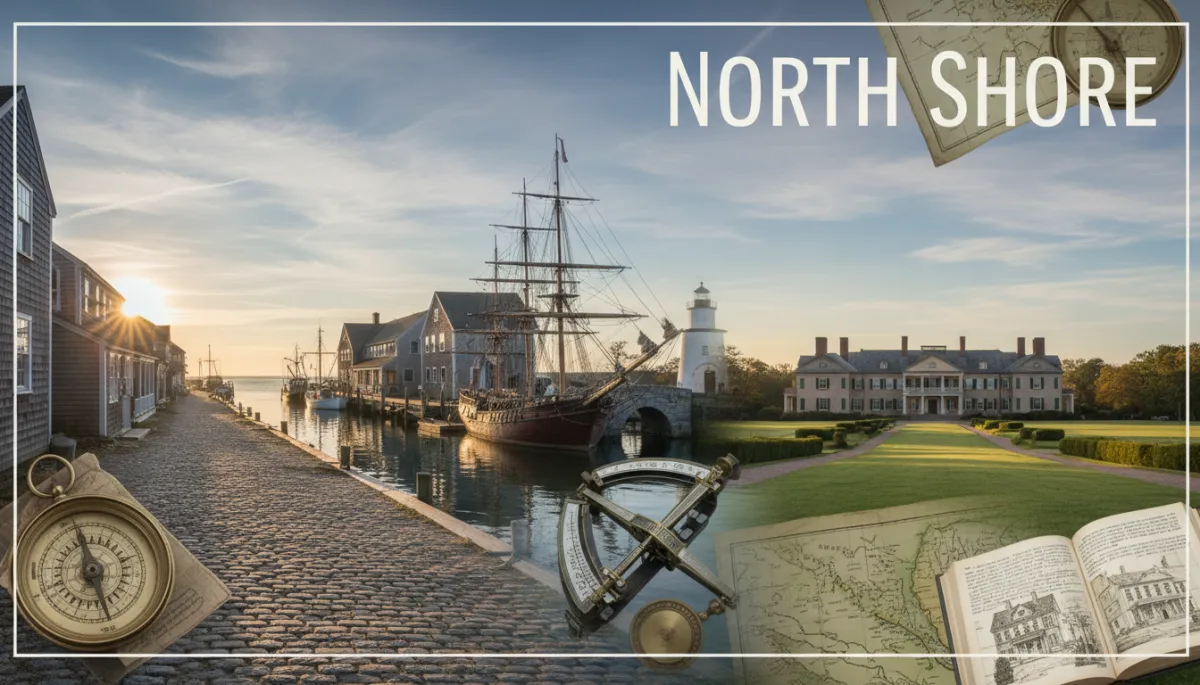
Explore 7 Historic North Shore Escapes
North Shore, Travel, History, New England, Coastal Escapes
7 North Shore Places That Feel Like You’ve Stepped Back in Time
Dawn comes slowly to the North Shore. Out on the Grand Allée at Castle Hill, the grass still holds the night’s dew and the only sound is the steady hush of the Atlantic below. Marble urns glow pale in the first light, and the great house sits on its hill like a patient chaperone, watching over a landscape that has changed remarkably little in a hundred years. A few miles south, on Rockport’s Bearskin Neck, the fishing shacks are still shuttered, lobster buoys clack softly in the breeze, and the scent of salt and bait mingles with wood smoke from a cottage stove. In these moments, the modern world feels very far away.
1. Castle Hill on the Crane Estate, Ipswich
Perched high above Ipswich Bay, Castle Hill on the Crane Estate feels like a fragment of the Gilded Age pressed into New England granite. Industrialist Richard T. Crane Jr. built his 59-room summer “cottage” here in the 1920s, replacing an earlier Italian Renaissance–style mansion with the current Stuart-style house. The estate’s story is one of taste, wealth, and a surprising amount of restraint; Crane and his wife, Florence, shaped a landscape that was grand, yes, but also deeply attuned to the natural drama of the coast.
Today, visitors wander the house and landscape tours offered by The Trustees of Reservations, stepping through paneled libraries, music rooms, and guest suites that once hosted Boston’s most influential families. Outside, the famous Grand Allée—modeled on European formal gardens—drops nearly half a mile toward the sea between double rows of clipped trees. On foggy mornings, the lawn becomes a green river disappearing into mist; on clear afternoons, the horizon is a razor of bright Atlantic blue. It’s one of the most photogenic perspectives on the North Shore, especially in late day when the house glows honey-gold behind you and the ocean seems to catch fire ahead.
Castle Hill’s timelessness lies in its intactness. The estate still sits within a larger protected landscape that includes Crane Beach and the salt marshes of the Crane Wildlife Refuge. From the rooftop terrace, the view is much as the Cranes would have known it: barrier beach, winding creeks, distant farm fields. The best time to visit is shoulder season—May and early June, or September into October—when the crowds thin, the light softens, and you can stand alone on the Allée and hear only wind in the trees and the distant crash of waves. For photographers, twilight concerts on the lawn and winter snowfalls offer especially evocative opportunities, when the estate feels like a sepia photograph come to life.
2. Bearskin Neck, Rockport
At the end of Rockport’s harbor, Bearskin Neck juts into the sea like a granite finger, lined with weathered shingled shops and old fishing sheds. In the early morning, before the first fudge shop opens and the day-trippers arrive, the Neck feels very much as it did a century ago, when fishermen mended nets on the wharf and dories bobbed in the harbor. According to local lore, the name “Bearskin Neck” dates back to the 1700s, when a bear was killed here and its hide stretched out to dry on the rocks—a suitably rugged origin story for this salt-sprayed peninsula.
The most famous building on the Neck is Motif No. 1, the red fishing shack that has been called the most painted building in America. Originally built in the 19th century, it became a favorite subject for generations of artists drawn to Rockport’s working harbor and clear North Atlantic light. The original structure was destroyed in the Blizzard of 1978, but the town rebuilt it exactly as it had been—a testament to how deeply the community values continuity with its past. Stand on the stone breakwater just before sunset and you can see why painters still set up their easels here: the shack, the boats, the reflections, all held in a kind of quiet, timeless balance.
Today, Bearskin Neck is a mix of art galleries, ice cream counters, and souvenir shops, but if you look past the T-shirts you’ll notice the granite blocks of the old wharves, the worn thresholds of former fish houses, and the way the lanes twist to match the contours of the rock. The best time to visit is early on a weekday in June or September, when the air is cool, the harbor is busy but not crowded, and the Neck still feels like a working outpost at the edge of the sea. For photographers, low tide reveals tide pools along the outer rocks, and winter storms throw dramatic surf against the harbor mouth, recalling the days when this was a hard, weather-beaten place to make a living.
3. Essex Shipbuilding Museum, Essex
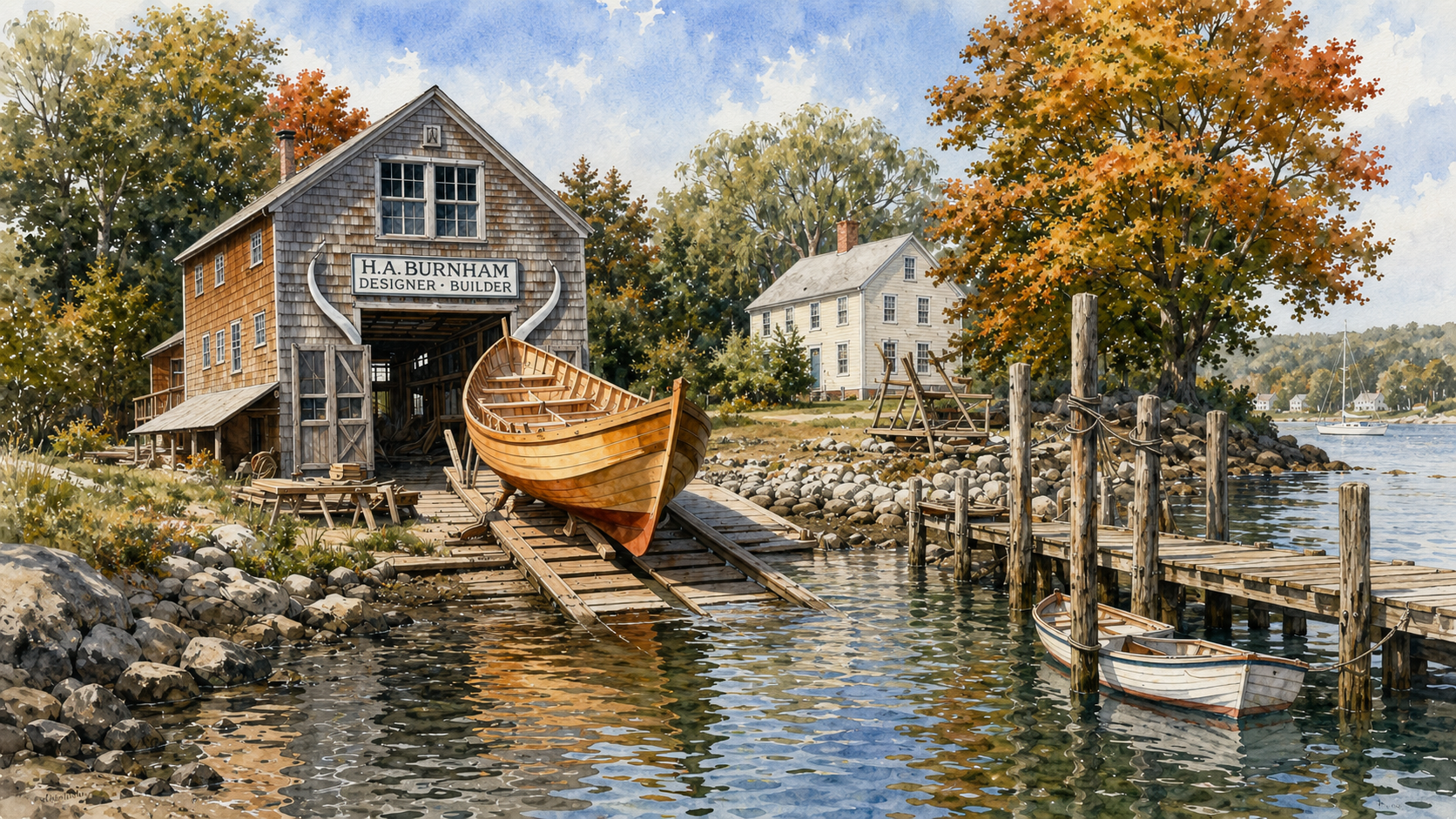
On a quiet bend of the Essex River, the Essex Shipbuilding Museum preserves the story of a town that once launched more wooden fishing schooners than anywhere else in the world. From the 17th through the early 20th centuries, Essex yards turned out some 4,000 vessels, built on the mudflats just steps from farmers’ fields. The line between pasture and shipyard was thin; many builders were farmers who shifted to ship construction seasonally, drawing on the region’s abundant white oak and pine. The museum’s campus, with its barn-like buildings and riverside ways, still carries the smell of fresh-cut timber and river mud on a hot day.
Inside, exhibits trace the evolution of the Essex schooner, from early shallops to the sleek, fast fishing vessels that worked the Grand Banks. You can stand beneath the sweeping ribs of a partially framed hull and imagine the yard alive with hammer blows and shouted orders. Guided tours often highlight the story of the schooner Wanderer and other notable Essex-built ships, connecting this quiet riverbank to the broader maritime history of New England. The museum also maintains working boats and offers demonstrations in traditional skills like steam-bending planks and caulking seams with oakum, giving visitors a tactile sense of how these vessels came to life.
The Essex Shipbuilding Museum is also a gateway to exploring the wider town, which still feels like an old boatbuilding village scattered along the marsh. After a visit, many people head to nearby clam shacks or follow the river by kayak into the Essex Bay estuary. The best time to visit is a warm afternoon in late spring or early fall, when the tide is high and the river gleams just beyond the museum’s ways. For photographers, the combination of weathered sheds, stacked timbers, and broad salt marshes—especially at golden hour—offers a sense of New England that could belong to 1880 as easily as to today. To deepen the experience, pair your visit with a stop at the Maritime Gloucester waterfront center, which tells the next chapter of these ships’ lives at sea.
4. Salem Maritime National Historic Site, Salem
Long before Salem became synonymous with witch trials, it was one of the young nation’s busiest seaports. At the Salem Maritime National Historic Site, managed by the National Park Service, you can still walk the same wharves where captains once oversaw cargos from China, India, and the West Indies. Derby Wharf, stretching nearly half a mile into Salem Harbor, was a marvel of its day—a man-made finger of land lined with warehouses, ropewalks, and counting houses. Today, grass grows between the bricks and the air smells more of seaweed than spice, but the outline of that bustling port remains remarkably legible.
The site includes historic homes and structures such as the Custom House, where a young Nathaniel Hawthorne once worked and drew inspiration for The Scarlet Letter. Nearby, the Narbonne House, built in 1675, offers a rare glimpse into everyday colonial life, its timber frame and small-paned windows whispering of centuries of family stories. Down on the water, the tall ship Friendship of Salem, a reconstruction of an 18th-century East Indiaman, looms over the wharf, its rigging etching dark lines against the sky. Step aboard on a summer tour and the creak of the gangway and smell of tarred line complete the time travel effect.
While Salem is best known today for its October crowds, the maritime site rewards a slower, off-season visit. Come on a clear winter afternoon, when the harbor is steel-gray and the wind cuts across Derby Wharf, and it’s easy to imagine the perilous voyages that began and ended here. Spring and fall offer gentler weather and softer light for photography, especially at sunrise and sunset when the brick warehouses and the Derby Wharf Light Station glow against the water. To round out the day, wander up to the House of the Seven Gables, another historic site that stitches together Salem’s literary and maritime past and offers its own harbor views that seem lifted from another century.
5. Hammond Castle Museum, Gloucester
If Castle Hill channels the Gilded Age, Hammond Castle Museum on Gloucester’s rocky shore feels like a medieval fever dream realized in stone. Built in the late 1920s by inventor John Hays Hammond Jr.—sometimes called the “father of radio control”—the castle was both his home and a showcase for his collection of European antiquities. Hammond scavenged entire rooms from old buildings overseas, incorporating 15th-century doorways, stained glass, and even a Roman courtyard into a structure that looks, from the sea, as if it has stood for centuries guarding the harbor approaches. In truth, it is a very 20th-century fantasy, but one executed with such conviction that it feels startlingly old.
Visitors today can explore the great hall, with its soaring ceiling and pipe organ; the library, lined with dark wood and curiosities; and the inner courtyard, where the sound of fountains mingles with the distant boom of surf. The building’s eccentricities—hidden passageways, unexpected staircases, and a history steeped in experiments—only add to the sense that time behaves differently here. On foggy days, the castle seems to grow out of the mist itself; on bright afternoons, the contrast between its shadowed interiors and the glittering Atlantic outside the windows is almost cinematic. It’s no wonder filmmakers have used it as a backdrop for period pieces and gothic tales.
The best time to visit Hammond Castle is during one of its quieter shoulder seasons or evening events, when you can linger in the courtyard or on the ocean terrace without crowds. Photographers will find the interplay of stone, water, and sky endlessly compelling, especially at sunset when the castle’s silhouette stands dark against a glowing horizon. For a deeper historical context, pair your visit with a walk through Gloucester’s working harbor and a stop at Cape Ann Museum, which tells the broader story of this seafaring community from its 17th-century beginnings to the present day.
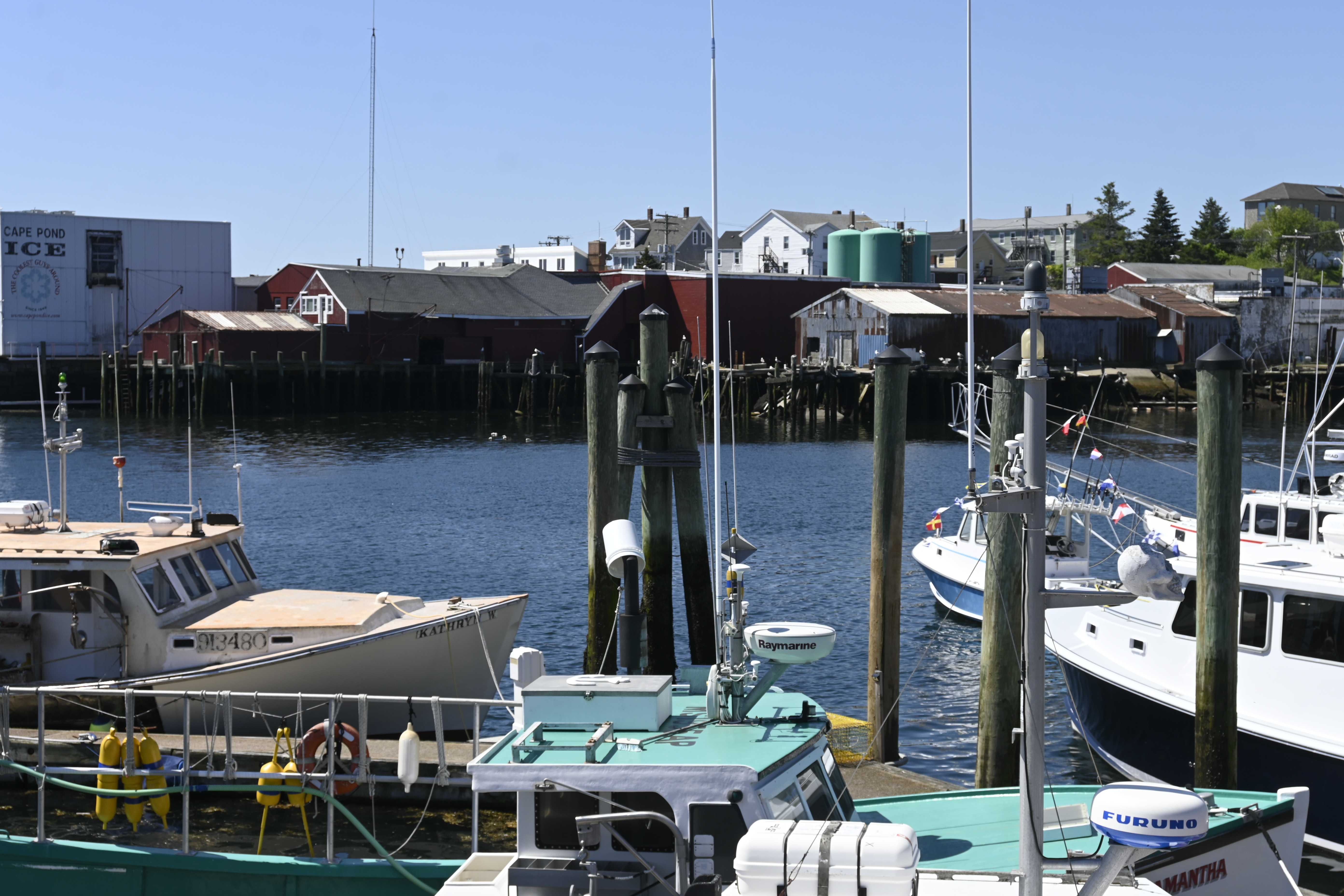
6. Beauport, the Sleeper-McCann House, Gloucester
A short drive from Hammond Castle, tucked on Eastern Point, stands one of the most extraordinary houses in New England: Beauport, the Sleeper-McCann House. Designed and continually reimagined by Henry Davis Sleeper, one of America’s first professional interior designers, Beauport is a labyrinth of themed rooms, each a carefully composed vignette of color, light, and historic reference. Built beginning in 1907 as Sleeper’s summer retreat, the house grew room by room over three decades, wrapping itself around the ledges above Gloucester Harbor like a shingled ship run aground.
Inside, the effect is mesmerizing. There is the China Trade Room, filled with blue-and-white porcelain and overlooking the water; the Golden Step Room, with its graduated shelves of amber glass catching the afternoon sun; the Octagon Room, with its nautical touches and harbor views that make you feel as though you’re standing on a ship’s bridge. Sleeper was an avid collector of Americana, and he wove old paneling, doors, and decorative fragments into his designs in ways that feel both playful and reverent. When the McCann family acquired the house after Sleeper’s death, they preserved it largely as he left it. Today, under the care of Historic New England, Beauport remains a remarkably intact time capsule of early 20th-century taste and collecting culture.
Tours are small and intimate, allowing visitors to move slowly through the rooms, noticing details—a carved ship’s figurehead here, a cluster of colored glass there. Outside, terraces and gardens step down toward the rocky shore, offering some of the finest coastal views on Cape Ann. The best time to visit is a clear summer or early autumn day when the harbor is alive with fishing boats and sailboats, and Beauport’s windows frame moving tableaux of maritime life. Photographers should watch for the way light slants through the colored glass collections in late afternoon, turning stairwells and mantels into stained-glass compositions. For those interested in design history, pairing Beauport with a visit to the Isabella Stewart Gardner Museum in Boston reveals fascinating parallels in how early 20th-century collectors curated their worlds.
7. Historic Waterfront Districts: Gloucester & Newburyport
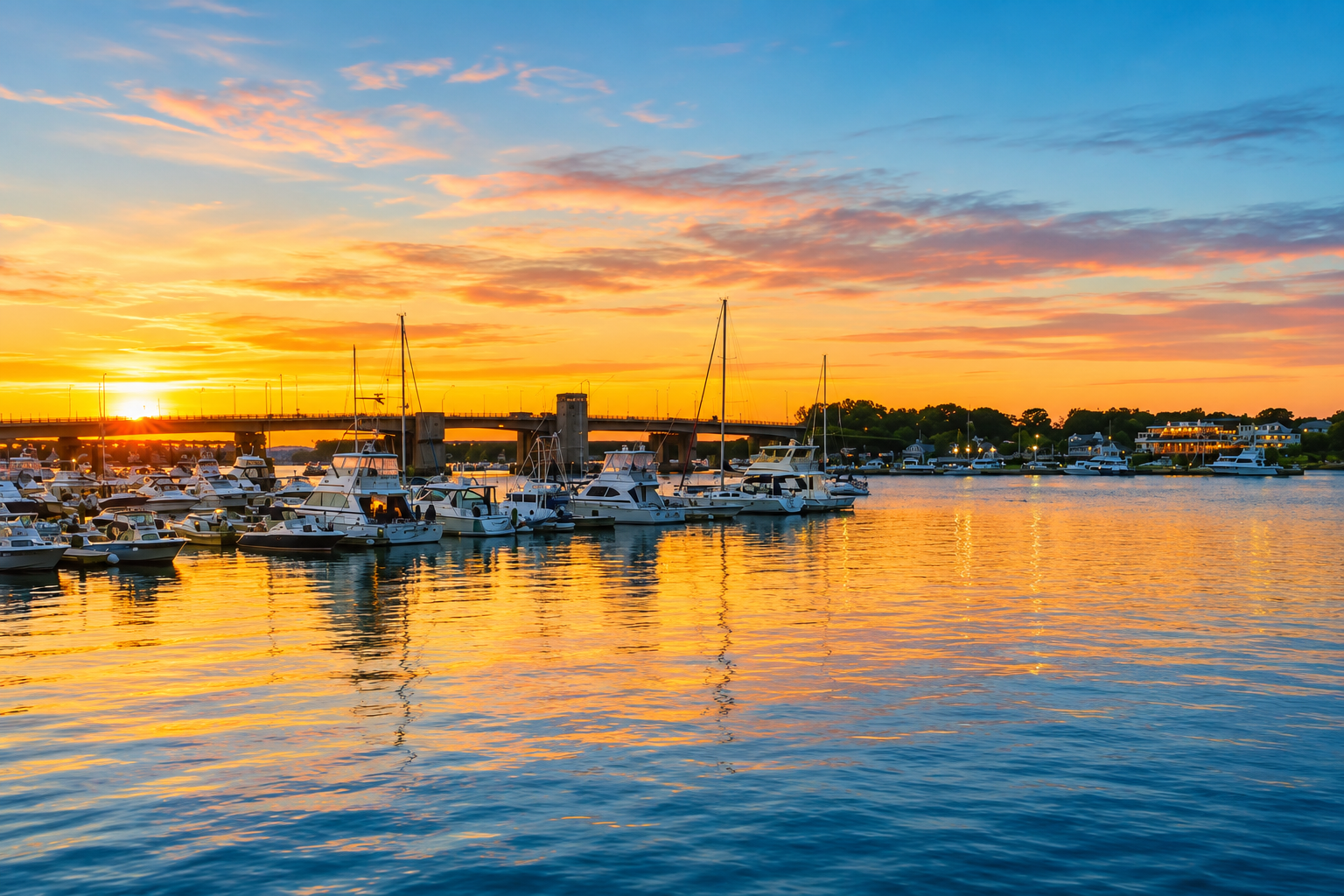
While individual landmarks tell powerful stories, it’s often the fabric of an old waterfront district that most convincingly collapses time. On the North Shore, both Gloucester and Newburyport offer streetscapes where brick warehouses, narrow lanes, and working piers knit together into living historic districts that still hum with daily commerce. In Gloucester, America’s oldest seaport, the HarborWalk leads past fish processing plants, net lofts, and the bronze figure of the Fishermen’s Memorial, whose bowed head commemorates thousands lost at sea. The smell of diesel and salt, the clatter of gulls, and the sight of draggers unloading their catch root the place firmly in the present, yet the outlines of 19th-century industry are unmistakable in the brick, stone, and timber all around.
Newburyport, upriver on the Merrimack, tells a slightly different story. Once a major shipbuilding and trading port, the city suffered devastating fires in the early 1800s, after which it rebuilt its downtown in brick. Today, the historic waterfront district is a tight-knit grid of Federal-era and Victorian commercial blocks, many converted into shops and restaurants but still bearing the hallmarks of their working past: loading doors, granite lintels, and narrow alleys leading to the wharves. Walk along the boardwalk and Waterfront Park at dusk and you’ll see the river catch the last light while church steeples and cupolas darken against the sky—an urban maritime scene that would be entirely recognizable to a sea captain returning home 200 years ago.
Both districts reward wandering without an agenda. In Gloucester, detour up the hill to the Cape Ann Museum campus and the narrow streets of the Fort neighborhood; in Newburyport, slip into side streets lined with 18th-century houses and follow them inland to the green of Brown Square. The best times to visit are early morning, when working harbors are most active, and early evening, when brick and water take on a warm, nostalgic glow. Photographers will find endless compositions in reflections, weathered textures, and the juxtaposition of old hulls and new masts. These are not museum pieces; they are living, working places where history is still being layered, board by board and tide by tide.
Q&A: Historic Places on the North Shore
What is the most historic place on Boston's North Shore?
That depends on your interests, but Castle Hill on the Crane Estate in Ipswich, Salem Maritime National Historic Site, and Gloucester's working waterfront are among the most historically significant places on the North Shore. Each offers a different perspective on New England's past.
Why is Bearskin Neck in Rockport so popular?
Bearskin Neck combines a working harbor, historic fishing village atmosphere, art galleries, and stunning ocean views. It remains one of the best places to experience the character of an old New England fishing community.
Can you visit Castle Hill year-round?
Yes. Castle Hill on the Crane Estate is open throughout much of the year, although certain tours and events are seasonal. Every season offers a different experience, from summer lawn concerts to dramatic winter coastal views.
What is special about the Essex Shipbuilding Museum?
The museum preserves the story of a town that built thousands of wooden vessels over several centuries. Visitors can learn how Essex became one of the most important shipbuilding centers in America.
Is Salem Maritime National Historic Site worth visiting?
Absolutely. Salem Maritime is the first National Historic Site created by the National Park Service and offers visitors a chance to explore Salem's global trading history through historic buildings, Derby Wharf, and the Friendship of Salem.
What makes Hammond Castle different from other historic homes?
Hammond Castle was built by inventor John Hays Hammond Jr. and combines medieval-inspired architecture with cutting-edge technology of its era. It is one of the most unique historic properties in New England.
What is Beauport, the Sleeper-McCann House known for?
Beauport is famous for its extraordinary interior design, eclectic collections, and stunning harbor views. The home is considered one of the most important examples of early American interior design.
Which North Shore location is best for photography?
Castle Hill, Bearskin Neck, Hammond Castle, Gloucester Harbor, and Newburyport's waterfront all provide outstanding photography opportunities. Sunrise and sunset are particularly beautiful times to visit.
Are these places family-friendly?
Yes. Most of the locations featured in this guide welcome visitors of all ages and offer a combination of history, outdoor exploration, waterfront scenery, and educational experiences.
Why do these places still feel timeless today?
Because many of them continue to serve the same purpose they did generations ago. Fishing boats still leave Gloucester Harbor, visitors still walk Derby Wharf, and the landscapes around Castle Hill remain largely unchanged. The combination of preservation and everyday use helps these places retain their authentic character.
Why the North Shore Feels Timeless
What ties these places together—Castle Hill’s formal lawns, Bearskin Neck’s shingled shacks, Essex’s shipyards, Salem’s long wharf, Hammond’s eccentric castle, Beauport’s jewel-box rooms, and the working waterfronts of Gloucester and Newburyport—is not just age. It is continuity. These are landscapes where historic preservation and everyday use overlap, where the past is not sealed behind glass but woven into the routines of dog walkers, fishermen, commuters, and curious visitors. Organizations like The Trustees, Historic New England, and the National Park Service have played crucial roles in protecting these sites, but so have the quieter choices of local families who kept old houses intact, rebuilt beloved landmarks like Motif No. 1, and continued to work harbors and shipyards rather than turning them entirely over to condos and parking lots.
To walk these places is to feel that layered history underfoot: the worn threshold of a Custom House door, the groove in a shipyard beam where lines once ran taut, the smooth stone of a castle stair polished by many hands. The North Shore’s magic lies in how readily it invites you into those layers. Stand alone on the Grand Allée at Castle Hill or at the end of Derby Wharf in a winter gale; lean on the rail above Essex marshes or on a Newburyport boardwalk bench at sunset; pause on Bearskin Neck before the shops open or in a dim Beauport stair hall lit only by colored glass. In those small, quiet moments, the centuries seem to thin, and you are reminded that while the details of life change, the pull of the sea, the shape of the land, and the human urge to build something lasting along this rugged coast remain remarkably the same.


