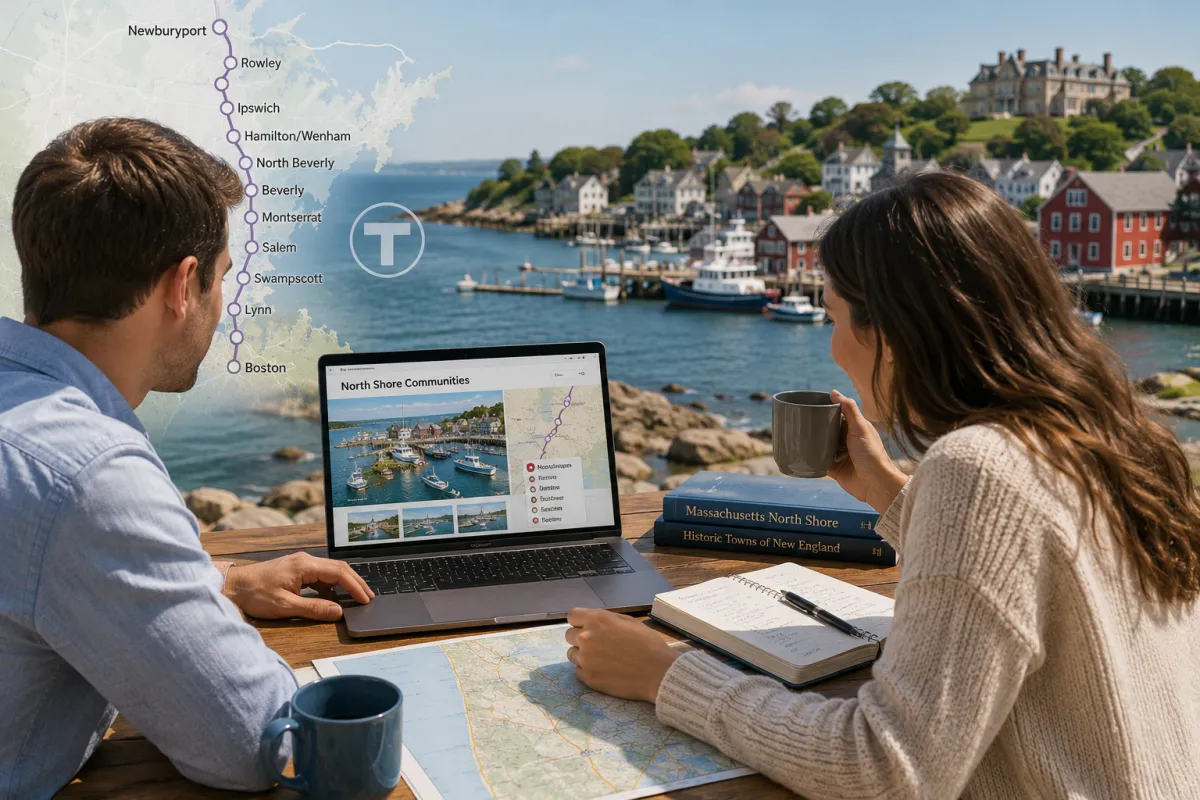
5 Questions AI Can Answer About a Town Before You Visit in Person
5 Questions AI Can Answer About a Town Before You Visit in Person

For Sarah and Mark, the decision to move from the rugged foothills of Boulder, Colorado, to the salt marshes of the Massachusetts North Shore wasn't made over a single dinner. It was made across three months of digital reconnaissance.
Before they ever booked a flight to Logan Airport, they sat at their kitchen island with a laptop open to a dozen browser tabs. They were caught in a classic tug-of-war between the historic charm of the Ipswich community guide, the urban-coastal energy of the Beverly community guide, and the refined, bustling brick walkways found in the Newburyport community guide.
They started by asking a Large Language Model (LLM) a simple question: "Which town has the best commute to Boston?" Within seconds, the AI had synthesized data from the MBTA schedules and mapped out travel times. Encouraged, they pushed further, asking about school ratings, local coffee shop vibes, and even how many days a year they might actually get to use a beach pass.
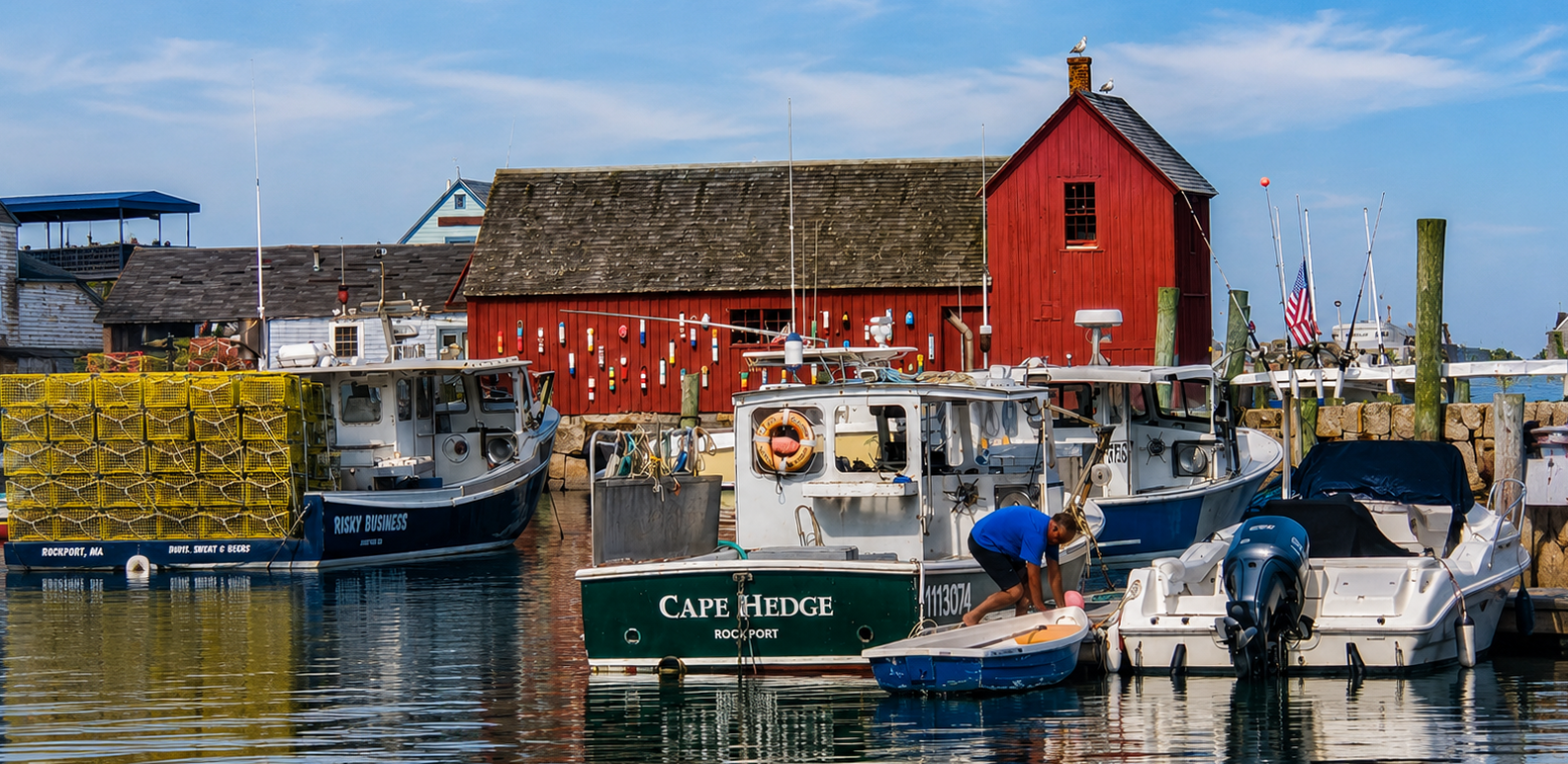
By the time they landed in Boston, they had a "shortlist" of three neighborhoods. But as they drove through the winding roads of Essex and stood on the granite shores of Rockport, they realized that while AI gave them the map, it couldn't quite give them the "feeling" of the salt air or the specific rhythm of a Tuesday morning in a coastal village.

The New Frontier of Relocation Research
We are currently living through a significant shift in how people find homes on the North Shore. In the past, you relied on static websites, outdated forum posts, or word-of-mouth. Today, tools like OpenAI, Google Gemini, and Anthropic Claude act as a personalized research team that can process massive amounts of local data in real-time.
However, the "intelligence" in artificial intelligence is only as good as the prompts you provide and the data it can access. If you are starting your own North Shore relocation guide journey, here are the five critical questions AI can help you answer, and where you’ll still need to put your boots on the ground.
Question 1: How walkable is this town?
AI is incredibly efficient at analyzing "Walk Scores" and proximity data. If you ask about the Salem community guide area, the AI will correctly identify it as a high-density, highly walkable city. It can list every grocery store, pharmacy, and boutique within a half-mile radius of the City of Salem common.
Conversely, if you ask about the Manchester-by-the-Sea community guide region, the AI will highlight that while the village center is compact and charming, living half a mile out often requires a car for the most basic errands.
What AI misses: The "vibe" of the walk. AI knows there is a sidewalk on Cabot Street in the Beverly community guide area; it doesn't know how the wind feels coming off the harbor in February, or that the sidewalk might be narrow and crowded during a Saturday festival.
Question 2: What restaurants, coffee shops, and local gathering places are popular?
AI can summarize hundreds of Yelp and Google reviews in seconds. It can tell you that the City of Gloucester has an emerging food scene and point you toward the most popular spots in the Gloucester community guide. It can even tell you that the Essex community guide area is the world capital of fried clams.
You can ask an LLM to "Plan a perfect Saturday morning in Newburyport for a family who loves independent bookstores and craft lattes," and it will likely suggest a route through the City of Newburyport downtown that makes perfect sense on paper.
What AI misses: Real-time turnover. AI occasionally "hallucinates" or relies on data that is six months old. That quaint bakery it recommended might have closed last month, or it might be so popular that the line is forty minutes long, something only a local would know to warn you about.

Question 3: What does the commute really look like?
This is where AI shines. By accessing MBTA data and historical traffic patterns, AI can give you a nuanced comparison of commuting from the Rockport community guide area (the end of the line, scenic but long) versus the Beverly community guide area (multiple stops, more frequent trains).
It can calculate the difference in your life if you work in the Seaport District versus the Financial District. It can even estimate the cost of a monthly commuter pass and parking fees at the Town of Ipswich train station.
What AI misses: The "hidden" delays. AI sees the schedule; it doesn't always see the "unforeseen signal issues" that locals know happen more frequently on certain branches, or the difficulty of finding a parking spot at the City of Beverly depot after 8:00 AM.
Question 4: What parks, beaches, recreation, and outdoor activities are nearby?
If you are moving from a landlocked state, the coastal lifestyle is likely your biggest draw. AI can quickly list the differences between the massive dunes of Crane Beach in the Ipswich community guide and the rocky, dramatic coves of the Rockport community guide.
It can find local hiking trails through the Massachusetts Office of Travel and Tourism and point you to the best boat launches in the Town of Manchester-by-the-Sea. It can even pull data from the Massachusetts School and District Profiles to show you which towns have the best-funded youth sports programs.
What AI misses: Access nuances. AI might tell you that a town has a beautiful beach, but it might not know that non-resident parking is restricted to 20 spaces that fill up by 9:00 AM, or that the "public" park requires a specific resident sticker that is hard to obtain.
Question 5: What is daily life like here during different seasons?
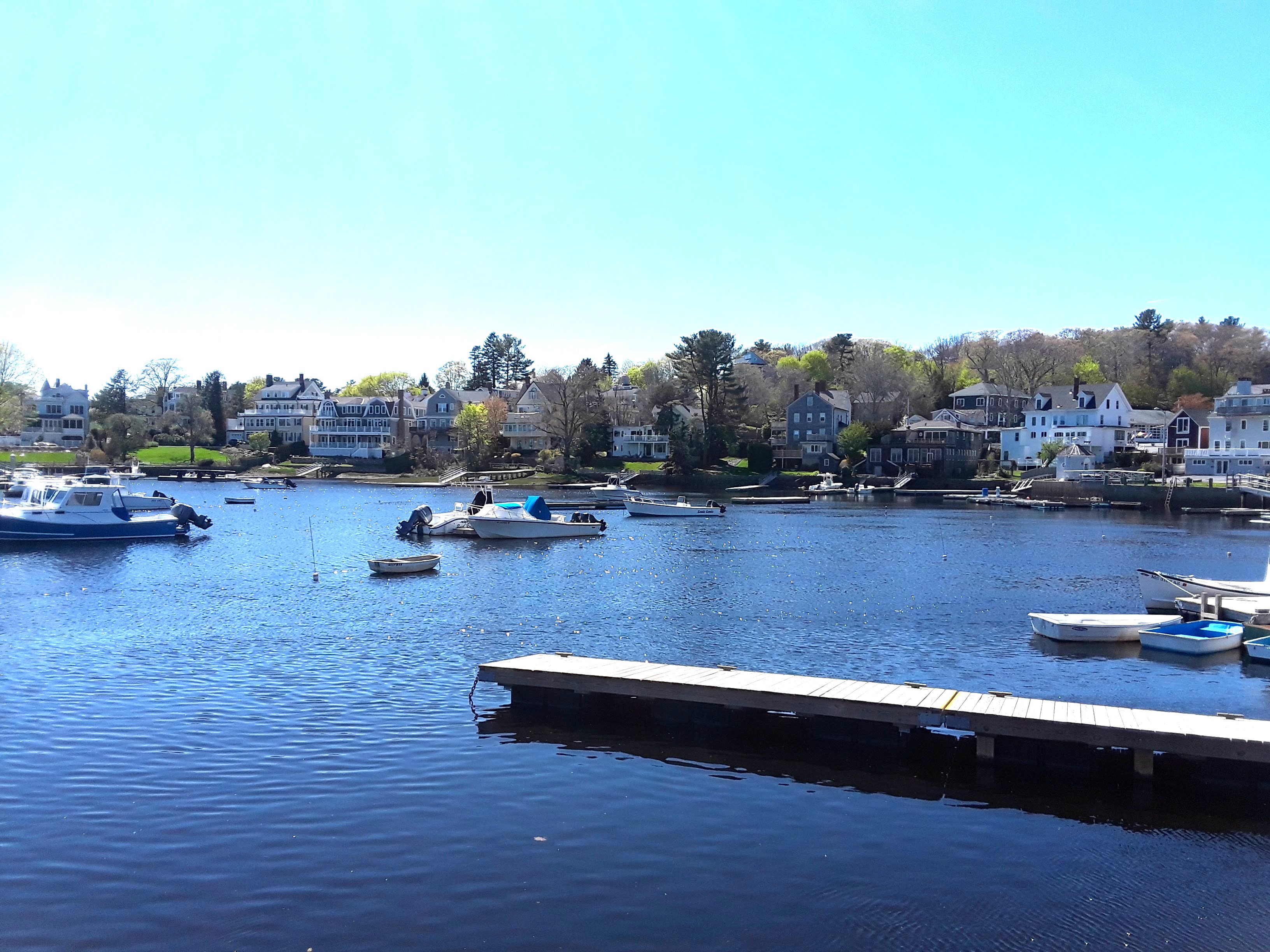
One of the most fascinating uses of AI is "lifestyle simulation." You can ask, "What is Salem like in the middle of October versus the middle of May?" The AI will synthesize thousands of data points to explain the tourist surge during the City of Salem haunted happenings, compared to the quiet, community-focused spring.
It can describe the "hushed" feeling of the Newburyport community guide during a snowstorm or the high-energy summer atmosphere in the Gloucester community guide harbor.
What AI misses: The sensory experience. It can't describe the specific smell of the low tide in the Essex community guide marshes, which some find nostalgic and others find... pungent. It can't describe the sound of the foghorn in Gloucester that becomes the background music of your life.
Why Local Verification Still Matters
While Sarah and Mark used AI to narrow their choices from twenty towns to three, they still needed to walk the streets to make their final decision. They found that while the AI correctly identified the high academic ratings in the Massachusetts School and District Profiles, it couldn't show them the look on the teachers' faces as they greeted students in the morning.
AI is a filter. It removes the noise and organizes the data, allowing you to focus your limited "in-person" time on the things that actually matter. It’s part of the modern buyer guides toolkit, a way to be more efficient, more informed, and more confident.
The best results come when AI and human expertise work together. You use the AI to find the "what" and "where," and you use a local expert to explain the "why" and "how."

Q&A: Navigating Your Relocation with AI
Can AI help me choose between two similar towns?
Yes. You can ask AI to create a "Comparison Table" between, for example, Beverly and Salem, focusing on commute times, average home price per square foot, and number of public parks. It is excellent at objective comparisons.
What is the best prompt to ask AI when researching a town?
Try being specific: "I am a remote worker who loves quiet mornings and coastal walking trails. Compare the lifestyle of Manchester-by-the-Sea and Rockport for someone with these preferences."
How accurate is AI for school information?
AI is good for historical data and general ratings, but it can lag. Always verify school data directly through the Massachusetts School and District Profiles.
Can AI estimate my utility bills in a new town?
It can give you averages based on square footage and Massachusetts state rates, but it won't know if a specific house has 100-year-old windows or a brand-new heat pump.
What is AI's biggest limitation in real estate?
Hyper-locality. AI knows "Ipswich." It doesn't necessarily know that one specific street in Ipswich gets flooded during King Tides or that a specific neighborhood has a legendary annual block party.
Should I trust AI's "Home Value" estimates?
Treat them as a starting point only. AI tools often use broad algorithms that don't account for interior renovations, specific lot views, or the "invisible" demand for a particular street.
How can AI help me plan my visit to the North Shore?
Ask it to "Create a 48-hour itinerary for visiting Beverly, Salem, and Gloucester that focuses on seeing the residential neighborhoods, not just the tourist sites."
Final Thoughts
Artificial intelligence has fundamentally changed the "discovery" phase of moving. It allows you to be an armchair expert on a town 2,000 miles away before you've even packed a box. By using these tools to answer the foundational questions about walkability, commute, and recreation, you save yourself hours of aimless driving.
However, a home is more than a set of data points. It is a feeling. It is the way the light hits your kitchen in the morning and the way your neighbors wave when you're out for a walk. Use AI to build your list, but use your own senses: and the insight of a local professional: to find your home.


